Scent of Writers in a Land of Literature in Gyeongsangbuk-do Yeongyang-gun · schedule Other · distance 53.4km · 4 stops · highlights Yeongyang Dudeul Vi…
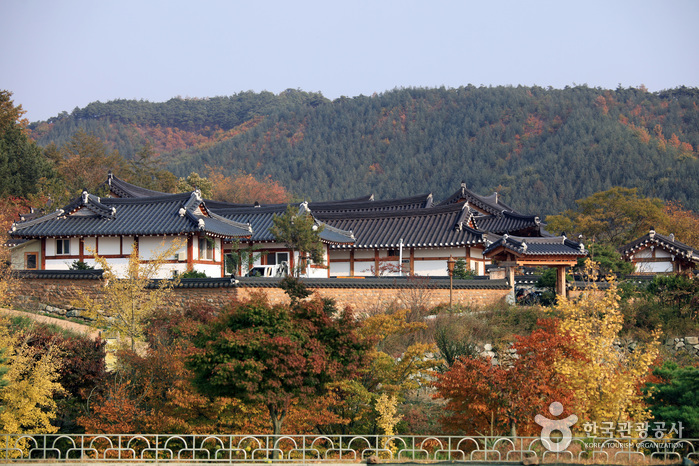
Yeongyang is a land of literature that has produced writers such as poet Jo Ji-hoon and novelists Lee Moon-yeol and Oh Il-do. Jusil Village, where the Cheongrokpa poet Jo Ji-hoon was born, and Dudeul Village, the ancestral village of the Jae-ryeong Lee clan and the hometown of novelist Lee Moon-yeol, are not only known for literature but also for their beautiful village history and scenery, attracting countless tourists.
This course is a sample one-day itinerary. Save it as-is or expand it into an AI itinerary.
Dudeul Village means 'a village on a hill.' In 1640, scholar Seokgye Lee Simyeong fled the Byeongjahoran and settled here, and his descendants, the Jaeryeong Lee family, formed a clan village. During the Joseon Dynasty in 1899, there was a national hospital equivalent called Gwangjewon here, so the village was also called 'Wondudeul' and 'Wonri.' The village includes Seokgye Old House where the scholar lived and Seokcheon Seodang where he taught students, about 30 traditional houses, a monument commemorating Lady Jang of the Andong Jang clan, who wrote the first Korean cookbook "Eumsikdimibang," and the Gwangsan Literature Research Institute founded by Lee Mun-yeol. On the cliff rock around Hwamaecheon flowing in front of the village, there are clear inscriptions such as Dongdae, Seodae, Nakgidae, and Sesimdae carved by Lee Sungil, the fourth son of Seokgye. In 1994, it was designated a cultural village by the government.
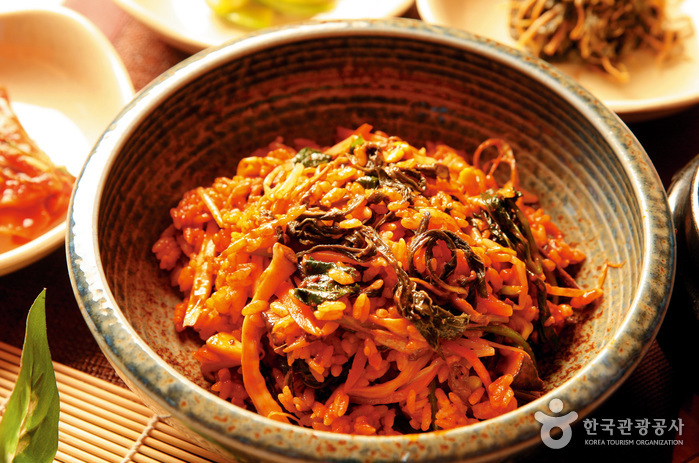
일교차가 심한 영양군에서 자라나는 고추는 과피가 두껍고 식물성지방도 많고 빛깔도 진하고 선명하다해서 빻으면 가루가 많이 나고 국물에도 빛깔과 맛이 잘 우러난다. 이 때문에 전국적인 명성을 얻어 '영양고추'가 유명한데 동시에 산채도 많이 나기로 유명하다.
* Jusil Village of Jo Ji-hoon Jusil Village, located in Jugok-ri, Ilwol-myeon, Yeongyang-gun, is bordered by Ilwol Mountain to the north, Cheonggi-myeon to the west, Subi-myeon to the east, and Yeongyang-eup to the south. The village, where poet Jo Ji-hoon was born, is a traditional village that preserves a very historic and progressive culture connected to exchanges with practical scholars and enlightenment reforms. In the heart of Jusil Village stands the Ho-eun Jongtaek (壺隱宗宅, Gyeongsangbuk-do Monument), the birthplace of poet Jo Ji-hoon, along with cultural resources such as Okcheon Jongtaek (玉川宗宅: Gyeongsangbuk-do Folklore Material) and Wolnok Seodang still intact. * Jo Ji-hoon Birthplace Poet and Korean literature scholar Jo Ji-hoon (1920–1968) was born here. His real name was Dong-tak (東卓). Jo Ji-hoon, from Yeongyang, Gyeongsangbuk-do, sang mainly about the context of national history, the world of classical beauty, and Zen in poems published in the Cheongnok collection he co-edited with Park Mok-wol and Park Doo-jin. His work is valued for its high moral Confucian natural understanding and historical significance in poetry literature. The house is divided into main quarters and servants' quarters, with a 7-kan by 7-kan front and side and a ㅁ-shaped floor plan. The roof is an octagonal hip-and-gable style typical of northern Yeongnam yangban houses. The front and inner gates feature color-painted Taegeuk patterns, and the house is surrounded by an old-style wall. Built during King Injo's reign (1623–1649) by Jo Jeong-hyeong, it was partially damaged in the Korean War and restored in 1963. This place is also the birthplace of Jo Seung-gi, an independence activist in the late Joseon period, and Jo In-seok, Jo Ji-hoon's grandfather, notable patriots. * Jugok-dong Okcheon Jongtaek The old home of Han-yang Jo clan’s Jo Deok-rin is a representative late 17th-century yangban house composed of the main living quarters (Jeongchim), a study pavilion (Chodang), and an ancestral shrine (Sadang). The main quarters have a ㅁ-shaped floor plan typical of Andong region homes, with a central door on the 5-kan front, a left inner room (An Sarangbang), and a right ondol room converted from a stable plus kitchen and storage rooms. The building body is elevated compared to the side parts with a 6-kan large open wooden hall (Daecheong) facing the inner yard; right of the hall are the dojoengbang and main room (Anbang), with a one-kan floor extension to create two kan. While the placement of dojoengbang on top of the Daecheong and Anbang is sometimes seen in northern Gyeongsangbuk-do ㅁ-shaped houses, the wooden floor rather than ondol heating is rare. The Chodang was built in 1695 (Sukjong 21) for teaching children and providing a resting place for elders. It displays the typical layout of this region and was surrounded by walls. Built in 1790 (Jeongjo 14), it features a wider middle kan, positioned on the right rear of the main quarters. While following Andong region’s typical layouts, the arrangement with the main room facing east and the sarangbang west differs, reflecting an 18th-century floor plan style where the main room and kitchen are placed westward. * Wolnok Seodang This seodang (private Confucian academy) was established to educate and train disciples. Proposed by scholar Wolha Jo Undo (1718–1796) and built mainly by the Hanyang Jo, Yaseong Jeong, and Hamyang Oh clans in 1773 (Yeongjo 49). It is a single-line building with 4 kan front and 2 kan side, offering great views and a quiet study environment. The middle two kan are an open wooden hall (Daecheong), flanked by rooms named Geugbokjae (克復齋) on the right and Jonseongjae (存省齋) on the left. The building well preserves late Joseon architectural style in a scenic setting.
The Southern Regional Forest Service established the Geumgang Pine Ecological Management Forest, guided by ecotours, in three locations: Uljin Sogwang-ri, Yeongyang Bonsin-ri, and Bonghwa Goseon and Daehyeon-ri, to restore the declining Geumgang pine forests, which have deteriorated due to artificial logging and environmental changes, to their late Joseon Dynasty state. In the Bonsin-ri area of Subi-myeon (1,839ha), the Geumgang pines (금강소나무) grow with straight trunks, long nodes, and uniquely reddish bark, regarded as the best among pines, unlike the typical twisted pines nearby. In addition, 27 other tree species of exceptional aesthetic value line the forest, creating a beautiful landscape that pleases visitors. Ecological trails of 1.5 km (2-hour course) and 4 km (4-hour course) have been arranged to provide a natural ecosystem experience, offering a sense of comfort rarely felt in daily life when entering the forest along small paths and becoming one with nature.
Good places to stop and rest after the course

Booking and payment continue on a partner site.
Check rooms & price
Booking and payment continue on a partner site.
Check rooms & price
Booking and payment continue on a partner site.
Check rooms & price
Booking and payment continue on a partner site.
Check rooms & priceSign up to feature your channel.
(As a member, you can add your Instagram, YouTube, and blog links in My Page, and we’ll show them with every comment you write.)
““Stayed near Hongdae and did a night café tour. Perfect city views and vibes.””
Guest comments do not display social media links or profile cards.
Share a short tip about this place.
Or leave a quick comment as a guest.
Photo attachments are available after login.
No reviews yet. Be the first to share your experience!