Following the exile route of King Danjong in Gangwon Special Self-Governing Province Yeongwol-gun · schedule Other · distance 8.5km · 6 stops · highligh…

Danjong, who was dethroned and became the retired king by Grand Prince Suyang, was downgraded to Nosangun due to the Danjong Restoration Movement and exiled to Cheongnyeongpo. The path passing Jucheon, Gundeungchi, and Baeilchi to Cheongnyeongpo is a journey filled with Danjong's sorrow and regret. From Jangneung after passing Seondol, to Gwanpunghun and Jalryeokru in Yeongwol-eup, and finally the place of exile, Cheongnyeongpo, this trip is both poignant and bleak.
This course is a sample one-day itinerary. Save it as-is or expand it into an AI itinerary.
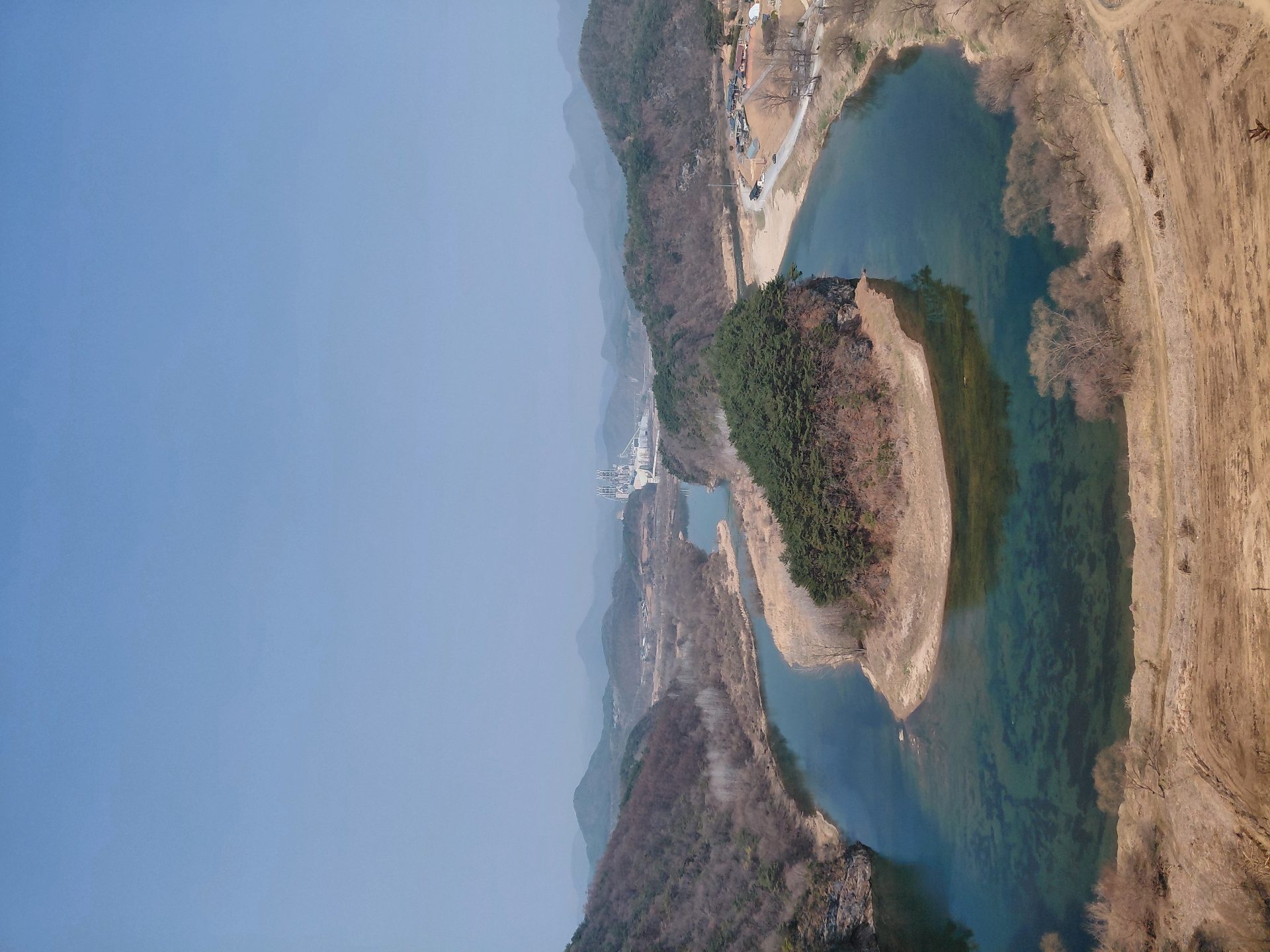
At Seondol, a huge uniquely shaped rock appears together with a river winding like the letter ㄱ. Seondol is also called Sinseonam (Immortal Rock), where the blue river and layered cliffs blend to give the impression of a picturesque painting. Located at Bangjeolli in Yeongwol-eup, Seondol is a standing stone formation on a cliff inside the Seogang River, resembling a large knife splitting the cliff midway. It is believed to be a landform formed by the dissolution of joints in limestone bedrock due to water erosion. (Source: Gangwon Paleozoic National Geopark)
Jangneung is the tomb of Danjong, the 6th king of Joseon (reign 1452–1455). After Danjong passed away in 1457 (Sejo 3) with the title Nosangun, Yeongwol magistrate Eom Heung-do secretly collected his body and temporarily buried it at this site. In 1516 (Jungjong 11), a burial mound was made, and in 1580 (Seonjo 13), stone monuments were erected and memorial rites performed. In 1698 (Sukjong 24), Danjong's royal status was restored and the tomb was named Jangneung, being reconstructed in its current form. Unlike typical Joseon royal tombs, Jangneung includes structures dedicated to loyal subjects of Danjong. At the entrance is Nakchonbigak, erected for Park Chung-won, Yeongwol magistrate, who honored Nosangun’s tomb with memorial rites. Beside the ritual house is Jeongryeogak for Eom Heung-do who retrieved Danjong's body. Jangpanok houses memorial tablets for 268 loyal subjects, relatives, eunuchs, court ladies, and servants who sacrificed their lives for Danjong, with a Baesikdan altar for their memorial rites.
Bodeoksa Temple was established in the 8th year of King Munmu of Silla (668) by Uisangjosa under the name 'Jideoksa.' In 1161 (15th year of Uijong), Unheo reconstructed it, and later Wongyeongguksa rebuilt Geungnakbojeon, Yeombuldang, Gopbeopdang, and Chimunru. In 1457 (3rd year of Sejo), when Danjong was exiled to Nosang-gun, the temple's name was changed to 'Noreungsa (魯陵寺).' In 1705 (31st year of Sukjong), Hani and Cheonmil built Daegumdang. Later, designated as the original temple of Danjong’s tomb Jangneung (a historic site), its name was changed back to Bodeoksa in the 2nd year of Yeongjo (1726). Existing buildings include Geungnakbojeon, the dilapidated Daehyeonjeon, Mokuasil, Sanshingak · Simgeomdang, Chilseonggak, Saseonggak, and guest rooms. Among these, Geungnakbojeon is designated as a cultural heritage material of Gangwon-teukbyeoljachi-do. The current Geungnakbojeon is a building with late Joseon period architectural style. Inside it is enshrined the wooden Amitabha Triad statue seated, designated as a tangible cultural heritage of Gangwon-teukbyeoljachi-do. The triad consists of the main Amitabha Buddha flanked by Avalokiteshvara and Mahasthamaprapta Bodhisattvas. According to inscriptions found in the statue’s core, it was created in 1687 (13th year of Sukjong, 26th year of Kangxi) by the monk Takmilbigu. Bodeoksa's haewuso (toilet) differs from ordinary restrooms. Haewuso means 'a place to solve worries' in temples. This haewuso retains traditional form, arranged in two rows front and back with six stalls each, separating male and female usage, allowing twelve people to use it simultaneously, showing clever design. According to the beam inscription, it was built in 1882 (19th year of Gojong) and has maintained its original form despite its age.
장능보리밥집은 토속음식점답게 외관부터 아담한 전통식 기와집이 인근 풍경과 잘 어울리며 고풍스러운 멋을 간직하고 있다. 대표 음식은 보리밥과 두부이다. 메뉴 이름만 보아도 단출하면서도 구수한 정감을 느끼기에 충분하다. 보리밥은 식사 메뉴로 적정한 가격대에 도시에서는 맛볼 수 없는 토속적인 찬들로 그득한 것이 특징이다. 밥은 감자 보리밥으로 밑반찬이 12가지 이상 제공된다.
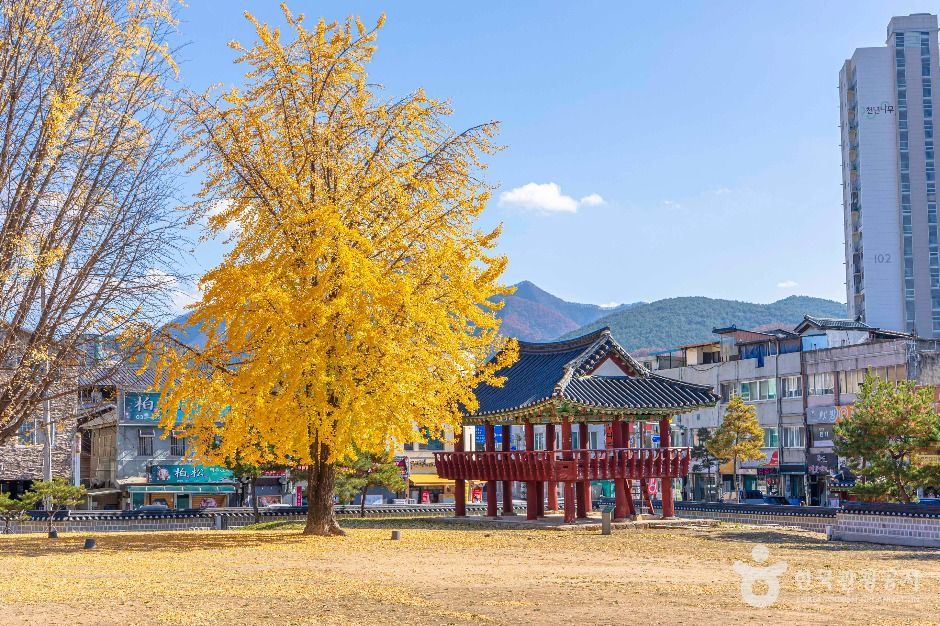
Gwanpungheon is a government office building from the Joseon Dynasty used for local administrative duties, consisting of a structure with 3 bays in front and 3 bays on the side, along with attached buildings. It is currently used as a temple lecture hall by the Jogye Order's Bodeoksa. About 50m away from here is a pavilion called Jagyuru. Jagyuru is where King Danjong (reigned 1452–1455) briefly stayed after King Sejo (reigned 1455–1468) usurped the throne and exiled him. Danjong is said to have frequently ascended this pavilion and composed Jagyu poems. Jagyu refers to a cuckoo that is said to cry sorrowfully while spitting blood, symbolizing his own plight. Originally built in the 10th year of King Sejong's reign (1428) by county magistrate Shin Gwongeun and called Maejukru, the pavilion's name was changed to Jagyuru because Danjong's Jagyu poems were so mournful. Later it fell into ruin, and houses were built on the site. In the 15th year of King Jeongjo's reign (1791), Gangwon-do governor Yoon Saguk found the site and restored it. (Source: Cultural Heritage Administration)
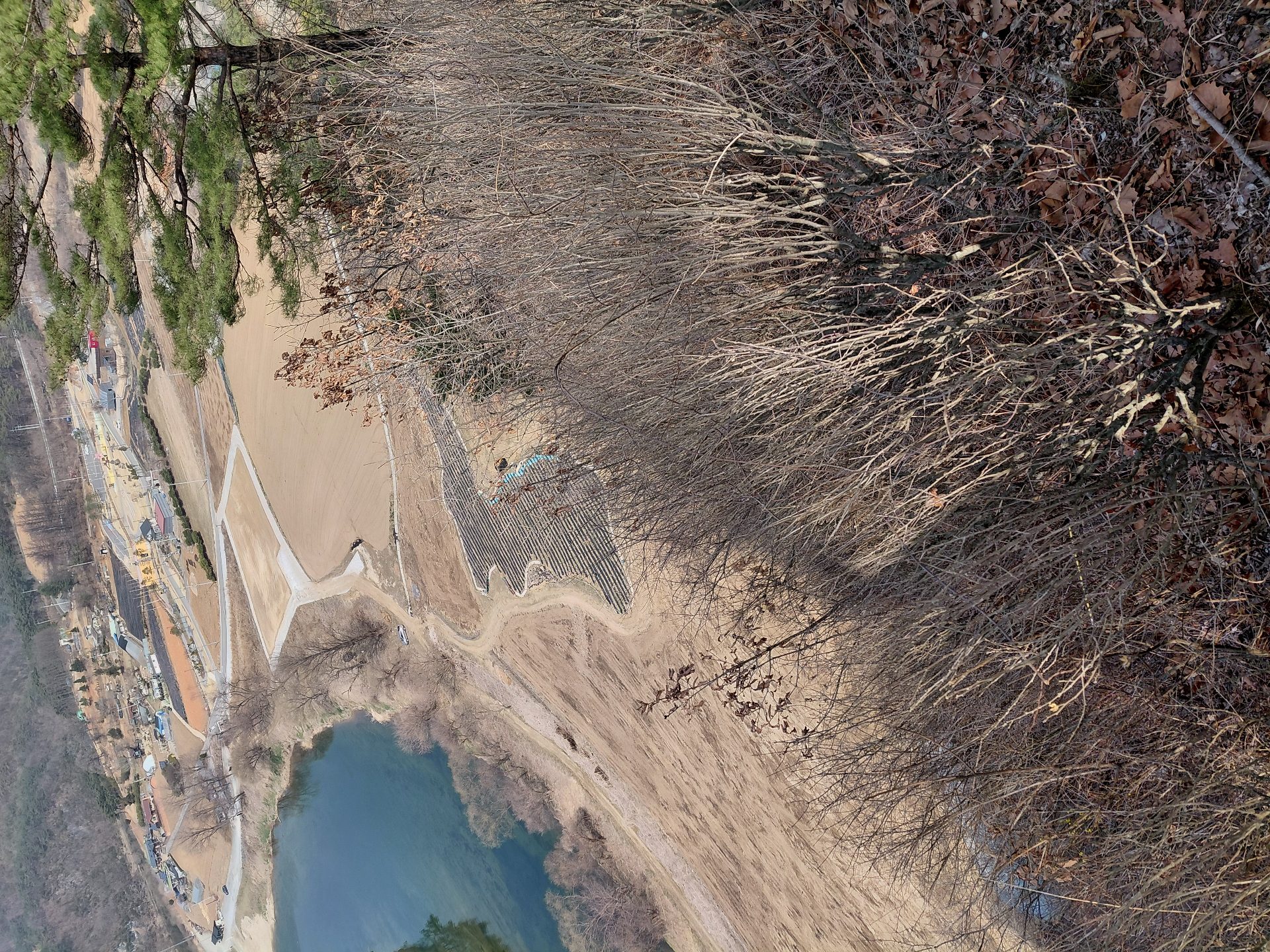
Located upstream of the Namhan River in Gwangcheon-ri, Nam-myeon, Yeongwol-gun, this place was where Danjong, who was dethroned and exiled to Yeongwol, stayed. Danjong, the 6th king of Joseon, abdicated the throne to his uncle Grand Prince Suyang and lived as the retired king. The following year, in 1456, the plot by Seong Sammun and the six martyred ministers to restore the retired king was leaked in advance, and so Danjong was demoted to Nosan-gun. Later, protected by 50 soldiers led by Eo Deokhae, a military official, he was exiled to Cheongryeongpo via Wonju and Jucheon. Cheongryeongpo is surrounded by water on the east, south, and north sides, and a rugged cliff called Yukyukbong rises to the west, making it like an island accessible only by boat. Danjong lived a secluded exile life here, cut off from the outside world. At that time, there was a house for him to stay, and it is said that the local headman Eom Heung-do secretly visited him at night. Because it is like an island with beautiful scenery, it is a famous attraction frequently visited by tourists. (Source: Yeongwol Culture and Tourism Homepage)
Good places to stop and rest after the course
Sign up to feature your channel.
(As a member, you can add your Instagram, YouTube, and blog links in My Page, and we’ll show them with every comment you write.)
““Stayed near Hongdae and did a night café tour. Perfect city views and vibes.””
Guest comments do not display social media links or profile cards.
Share a short tip about this place.
Or leave a quick comment as a guest.
Photo attachments are available after login.
No reviews yet. Be the first to share your experience!


![Yeongwol Jangneung [UNESCO World Heritage] 1](https://tong.visitkorea.or.kr/cms/resource/92/3557192_image2_1.JPG)
![Yeongwol Jangneung [UNESCO World Heritage] 2](https://tong.visitkorea.or.kr/cms/resource/93/3557193_image2_1.JPG)
![Yeongwol Jangneung [UNESCO World Heritage] 3](https://tong.visitkorea.or.kr/cms/resource/95/3557195_image2_1.JPG)
![Yeongwol Jangneung [UNESCO World Heritage] 4](https://tong.visitkorea.or.kr/cms/resource/96/3557196_image2_1.JPG)