Along the Jucheon River, Feel the Mystery of Nature in Gangwon Special Self-Governing Province Yeongwol-gun · schedule Other · distance 38.4km · 4 stops…
Jucheon-myeon, Yeongwol, is a place whose name means a region where alcohol springs like a fountain. It preserves the beautiful scenery wrapped by the flowing Jucheon River. Following the Jucheon River upstream, there are natural monuments such as Yoseonam potholes and Yoseonjeong pavilion, as well as Beopheungsa Temple, one of the Gusan Seonmun and one of the five major Jeokmyeolbogung temples. About 10 km from Jucheon-myeon is the Korean Peninsula-shaped landform, making it a good place to visit together.
This course is a sample one-day itinerary. Save it as-is or expand it into an AI itinerary.
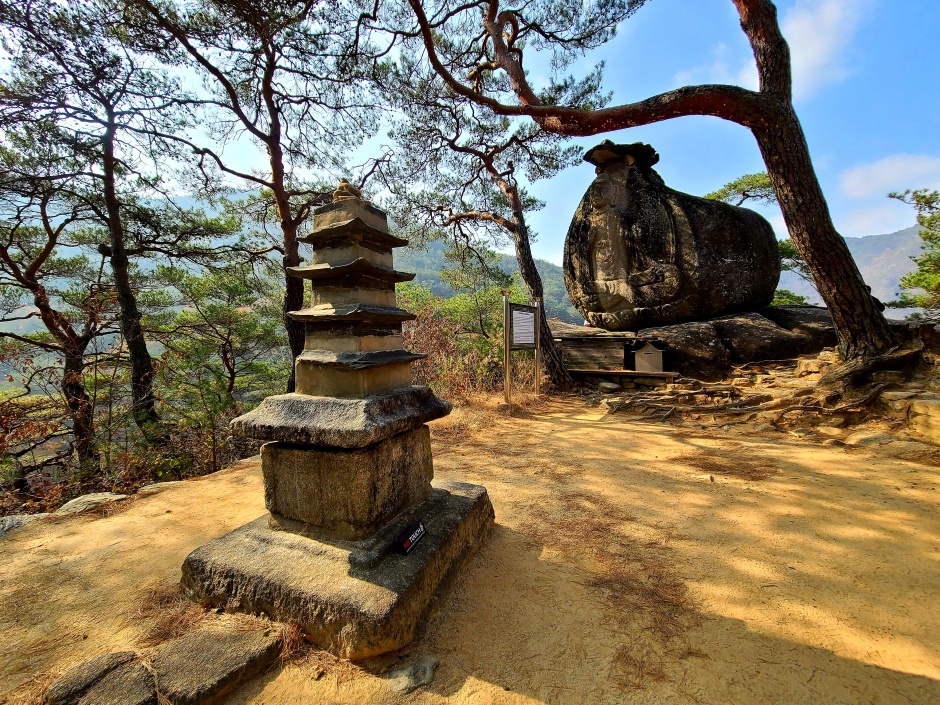
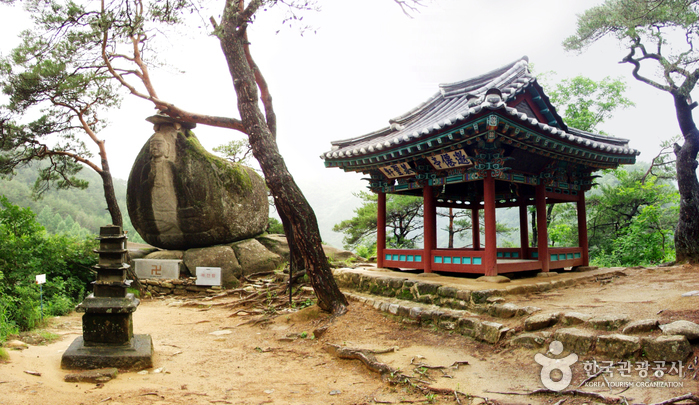
Yoseonjeong is a pavilion located in Suju-myeon Mureung-ri, with a clear water flowing valley in front. On a large riverside rock, there is an inscribed carving called Yoseonam. Yoseonjeong was a place frequently visited for Buddhist propagation by Cheolgam Guksa Doyun and Jinghyo Daesa, who in the Unified Silla period, a peak of Buddhism, opened Heungnyeong Seonwon at the foothills of Sajasan nearby. It is said there was a small hermitage at that time. Also, when Jinghyo Daesa attained nirvana here, over a thousand sarira (Buddhist relics) appeared, marking this place's deep Buddhist significance. Today, a Maaeyeorae sitting statue and a small stone pagoda remain near the pavilion. In front of Yoseonjeong, water from Chiaksan merges with Beophungcheon flowing past the old Heungnyeong Seonwon site, forming a clear valley. The riverbed has large water-smoothed rocks creating a beautiful valley. The riverside rock bears the carving Yoseonam, from which the place got its name. This calligraphy was inscribed by Yang Bongrae (楊蓬來), a Joseon dynasty poet and calligrapher, who visited here with celestial maidens during his term as Pyeongchang county magistrate. The characters 邀僊 (Yoseon) or 邀仙 (Yoseon) mean “inviting immortals.”
Beopheungsa Temple on Sajasan Mountain was established in 643 (Silla Queen Seondeok's 12th year) by the high monk Jajang Yulsa to promote the prosperity of the country and the peace of its people. It enshrined the Buddha's true relics on Yeonhwabong Peak and was originally called Heungnyeongsa. In 886, Jinghyo Jeoljung, a disciple of Silla Zen master Doyun Chilgamguksa who received Zen teachings from the Chinese Zen patriarch Mazu Daoyi, opened a Zen school here; this became Sajasanmun, one of the nine mountain schools of Ramal Buddhism. In 1902, it was renamed Beopheungsa and rebuilt by Monk Daewon Gak. After being destroyed again by fire in 1912, it was relocated and restored at its current site in 1933 as a Jeokmyeolbogung. (Source: Beopheungsa)
Named for its resemblance to the Korean Peninsula, this terrain was formed by the erosive action of an incised meandering river flowing around the Hanbando terrain. Here, you can observe limestone found in this region, the meandering Seogang River, the formation process of the Hanbando terrain, dolines, and the uses of limestone. (Source: Gangwon Paleozoic National Geopark)
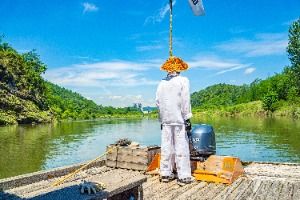
한반도 지형으로 유명한 강원 영월군 서면 옹정리 선암 마을의 평창강에 뗏목 체험장이 마련되었다. 선암마을 뗏목은 평창강 물줄기가 만들어 놓은 한반도 지형의 동해안을 출발해 서해안까지 1km 구간을 왕복한다.
Sign up to feature your channel.
(As a member, you can add your Instagram, YouTube, and blog links in My Page, and we’ll show them with every comment you write.)
““Stayed near Hongdae and did a night café tour. Perfect city views and vibes.””
Guest comments do not display social media links or profile cards.
Share a short tip about this place.
Or leave a quick comment as a guest.
Photo attachments are available after login.
No reviews yet. Be the first to share your experience!