Walking the Water Bending Museom Village and Narrow Wooden Bridge in Gyeongsangbuk-do Yeongju City · schedule Other · distance 80.1km · 6 stops · highli…

Yeongju is a region with many traces of old scholars besides Buseoksa Temple and Sosu Seowon. Above all, Museom Village is a water-turn village surrounded by water on three sides, featuring a unique landscape like an island village within the mainland. It is said that the Museom single-log bridge will soon disappear. Visit and step on the single-log bridge, filled with deep rural charm, before it is gone.
This course is a sample one-day itinerary. Save it as-is or expand it into an AI itinerary.
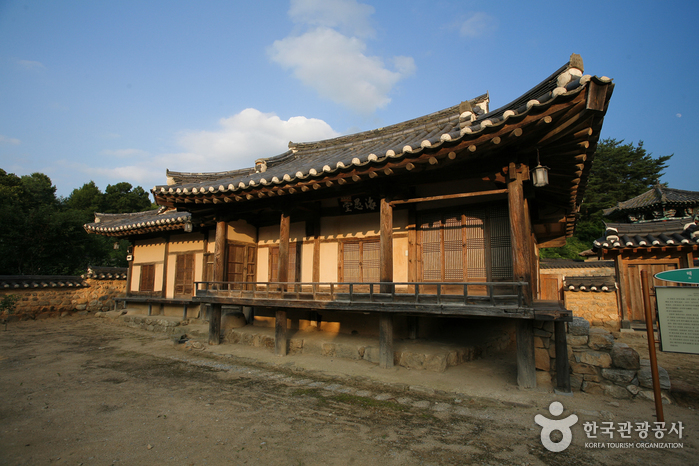
Museom Village is a traditional village named after the Korean word 'Mulsuri,' meaning an island floating on water. Sometimes, it is also called 'Seomgye Village' due to its resemblance to the terrain of the Seomgye region in China. The village consists of over 40 traditional houses, about 30 of which are Joseon Dynasty noble family residences. Sixteen houses are over 100 years old, preserving the traces of ancestors. The single-log bridge, which was the only route connecting the village with the outside until about 30 years ago, is the village's main symbol. Museom Village hosts festivals and events such as the Museom Single-Log Bridge Festival and cultural heritage celebrations. There are traditional hanok experiences and Museom Cultural Village traditional culture programs. The hanok experience includes visiting the Kim Wook House, Kim Cheonhan House, and Kim Taegil House, where visitors can stay overnight to feel the atmosphere of a hanok. Additionally, the Museom Cultural Village offers various programs such as pottery, dyeing, and Four Gentlemen painting experiences.
Museom Village is a traditional village beautifully preserved with old houses, surrounded on three sides by the Naeseongcheon River, creating a land island like a floating island. In the past, villagers used to connect wood to build a bridge crossing the Naeseongcheon River to work in the fields on the land. During the rainy season, the bridge would be swept away by the rising water, and villagers rebuilt it every year. Before the installation of a water supply bridge, the Museom Village’s only access was a single-log bridge measuring 150 meters in length and only 30 cm in width. Due to the narrow width, crossing required reliance on a long pole. The current single-log bridge was recreated by the village residents and expatriates to resemble the original, representing the only connection between the village and the land for over 350 years. Every autumn, the ‘Museom Single-log Bridge Festival’ is held here, a representative cultural festival of the Yeongju region aimed at preserving and enjoying the fading traditional culture. The event features Museom Village night tour, autumn concerts, old house cultural experiences, traditional craft experiences, traditional game experiences, traditional wedding reenactments, and various other sights and activities.
영남의 관문 죽령고개 정상에서 16년째 소백산산나물을 이용한 음식과 장아찌를 만들어 음식점을 운영하고 있으며 2012 영주삼계요리경연대회에서 “홍삼삼계떡갈비”로 금상을 수상한 경력이 있다. 이 집 음식은 소백산아래 위치해서 산나물을 많이 사용하고 있으며 “산나물 무침”, “산나물 장아찌”등 정말 토속적인 음식을 취급하고 있을 뿐만 아니라 특히 5~6월에만 취급하는 특선산나물전은 산나물향이 가득한 이 집만의 특색 있는 음식이다.
문수면 수도리는 아름다운 자연과 옛 고가가 그대로 보존된 전통마을이다. 수도리는 이름 그대로 내성천이 마을의 3면을 감싸 안고 흐르고 있으며, 그 가운데 섬처럼 떠 있다. 안동 하회마을을 연상시키는 이 마을에는, 휘감아 도는 강을 따라 은백색 백사장이 펼쳐져 있으며 맞은편에는 소나무, 사철나무 등이 숲을 이룬 나지막한 산들이 강을 감싸 안고 이어진다. 또, 강 위로는 견실한 다리가 놓여 마을과 마을을 잇고 있다.
Yeongju Seonbi Village is located adjacent to Sosu Seowon in Sunheung, Yeongju, the birthplace of Korean Confucian culture. It is a place that recreates the study area and traditional living spaces of the ancient scholars. It was established as an experiential education center to inherit the Seonbi spirit, establish correct values, and promote a clear sense of history. This site embodies the Seonbi spirit rooted in our nation's life philosophy, aiming to revive fading traditional culture to address social issues such as the collapse of ethics and loss of humanity. It is also used as a living educational venue for inheriting the Seonbi spirit and establishing proper values and historical awareness. Through various planned programs (sensory exhibition experiences, participatory events, traditional culture experiences, etc.), visitors can experience the lifestyle of ancient Seonbi and feel the refined spirit of Seonbi culture that is fading away.
Sunheung Hyanggyo's exact founding date is unknown, but it is estimated to have been established in the late Goryeo or early Joseon Dynasty. Initially built north of Geumseong in Sunheungbu, it was relocated eastward to Yadong in 1718 (44th year of King Sukjong), then southward to Seokgyo-ri in 1750 (26th year of King Yeongjo), and again moved to its current location in 1770 (46th year of King Yeongjo). It was renovated in 1971 and the pavilion and dancheong were restored in 1975. Originally, Sunheung Hyanggyo served as a Confucian school where local scholars of Sunheung studied, and a site for memorial rites honoring Confucius and other sages. Later, it was used as a local self-governance institution, but from the 16th century onward, due to operational difficulties and socio-economic changes, its educational role diminished, leaving only the memorial rites function. Existing buildings include a 7-room Daeseongjeon, a 6-room Myeongnyundang, 5-room Dongmu and Seomu, 4-room Dongjae, a 7-room gate tower, a Sammun, a Hyepum, and a Jusa. The Daeseongjeon enshrines tablets of the Five Sages and Ten Wise Men; the Dongmu and Seomu enshrine tablets of six Confucian scholars from the Song dynasty and 18 Korean scholars. Additionally, records such as Jipsa-an, Myeonbunryuwonim-an, and Gyojungjaprok, created during the late Joseon period for managing the hyanggyo, are preserved.
Good places to stop and rest after the course

Booking and payment continue on a partner site.
Check rooms & priceSign up to feature your channel.
(As a member, you can add your Instagram, YouTube, and blog links in My Page, and we’ll show them with every comment you write.)
““Stayed near Hongdae and did a night café tour. Perfect city views and vibes.””
Guest comments do not display social media links or profile cards.
Share a short tip about this place.
Or leave a quick comment as a guest.
Photo attachments are available after login.
No reviews yet. Be the first to share your experience!