
Camping Trip at Maguryeong and Gochiryeong on the Baekdudaegan Ridge in Gyeongsangbuk-do Yeongju City · schedule Other · distance 74.2km · 7 stops · hig…

The road from Punggi to Buseok is always accompanied by Baekdudaegan. You encounter valuable cultural heritage such as Sosu Seowon, Korea's first Confucian academy, Seonbi Village which gathers traditional houses of Gyeongbuk, and Muryangsujeon. You also reach Buseoksa Temple, a millennium-old temple with beautiful sunsets. This journey allows you to enjoy the Baekdudaegan Sobaeksan foothills, including Nahanjeon at Seonghyeolsa Temple with its beautiful lattice windows, and camping across Maguryung and Gochiryeong.
This course is a sample 2-day itinerary. Save it as-is or expand it into an AI itinerary.
This mural tomb, jointly excavated by the Cultural Heritage Administration and Daegu University in January 1985, is designated as a historic site and is a highly valuable academic and cultural heritage resource. The construction date is estimated to be around 539, based on the inscription 'Gimi Jungmyo Sanginmyeong' (己未中墓像人名) written on the south wall of the tomb chamber. Its internal structure is a stone chamber tomb with a corridor; entering through the corridor, one finds the burial chamber where the body was placed. To the east of this chamber is a relatively high coffin stand where the coffin was placed, and a smaller auxiliary coffin stand is located at the northwest corner of the chamber. The burial chamber measures approximately 3.5m east-west and 2m north-south, with all four walls tapering slightly upward, and the ceiling completed with two large flat stones. The murals cover all interior walls except the ceiling and the sides of the coffin stands, notably featuring muscular warrior figures on the corridor’s side walls. A warrior holding a snake on the west wall of the corridor is interpreted as the protector of the tomb. The tomb is presumed to be an ancient Silla mural tomb built under Goguryeo influence. The murals provide valuable insight into the painting styles of Korea’s Three Kingdoms period, as well as contemporary religious beliefs, views of the afterlife, and cultural exchanges with Goguryeo. Especially, this site is important evidence of Goguryeo's political and cultural influence penetrating this region up to the 5th century, making it a focus of current scholarly research.
Seonghyeolsa, believed to have been founded by Uisang during the Unified Silla period, is located on the southeastern foothills of Wolmyeongbong below Gukmangbong of Sobaeksan. It is a branch temple of Gounsa, the head temple of the 16th district of the Jogye Order of Korean Buddhism. The name Seonghyeol comes from a cave south of the temple, named because a saint was said to have emerged from this rock cave. The temple complex is freely arranged according to the terrain. Part of a narrow valley is made into the temple site, with the monks' quarters and Nahanjeon hall positioned facing south. The precinct includes Daewungjeon, Nahanjeon, Sansingak, Samseonggak, Simgeomdang, Hamdamjeong pavilion, and lodging quarters. Except for Nahanjeon, all buildings have been newly constructed recently, and several buildings have no hall names or plaques. There are no records after its founding until it is mentioned in the Joseon dynasty, indicating the temple maintained its influence until the late Joseon period. Important cultural assets on site include Seonghyeolsa's Nahanjeon, the stone seated Birojana Buddha statue, and the Sinjung painting.
In 1542 (37th year of King Jungjong), Punggi County Governor Joo Se-bung built a shrine to honor Anhyang, and in 1543 (38th year of King Jungjong), it was called Baekundong Seowon as it began educating students. In 1550 (5th year of King Myeongjong), by the request of Punggi County Governor Yi Hwang, it was granted the title 'Sosu Seowon' and officially recognized and supported by the state. In 1544 (39th year of King Jungjong), Anchuk and Anbo were enshrined, and in 1633 (11th year of King Injo), Joo Se-bung was added to those honored. The buildings of the Seowon are arranged relatively freely, likely because it is an early Seowon before the typical layout was established. Entering through the main gate, there is Myeongnyundang lecture hall, followed by Ilsinjae and Jikbangjae dormitories. Unlike the typical symmetrical east and west dormitories flanking the lecture hall, Sosu Seowon is distinguished by the names on the plaques. The shrine is located in a separate walled area northwest of Myeongnyundang. Originally, the site contained Suksusa temple from the Unified Silla period, with remnants such as the dangganjiju (flagpole supports) and stone foundations surviving. Sosu Seowon is one of the 47 Seowon that survived the nationwide abolishment decree by Daewon-gun in the late Joseon Dynasty and continues to hold ancestral rites every spring and fall.
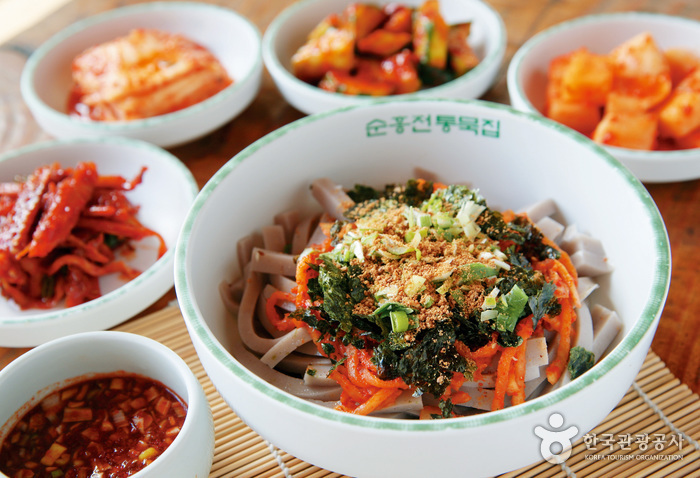
[순흥전통묵집] 옛날부터 전래되어 내려온 전통적인 방법으로 메밀묵을 제조하여 본래의 맛을 간직한 채 묵과 조밥이 함께 어울려 내는 맛은 일품이며, 고향의 맛을 풍기는 메밀묵이다. [선비촌종가집] 한국관광의 별로 선정된 영주선비촌 입구 저잣거리에 있으며 선비촌의 대표적인 음식점이다. 이 집 영주청국장은 지역 특산물인 부석태를 이용하여 만들어 콩이 굵고 고춧가루를 사용하지 않아 담백하고 구수한 맛이 일품이며 무엇보다 1인분씩 뚝배기에 담아 나와 위생적이다.
Yeongju Seonbi Village is located adjacent to Sosu Seowon in Sunheung, Yeongju, the birthplace of Korean Confucian culture. It is a place that recreates the study area and traditional living spaces of the ancient scholars. It was established as an experiential education center to inherit the Seonbi spirit, establish correct values, and promote a clear sense of history. This site embodies the Seonbi spirit rooted in our nation's life philosophy, aiming to revive fading traditional culture to address social issues such as the collapse of ethics and loss of humanity. It is also used as a living educational venue for inheriting the Seonbi spirit and establishing proper values and historical awareness. Through various planned programs (sensory exhibition experiences, participatory events, traditional culture experiences, etc.), visitors can experience the lifestyle of ancient Seonbi and feel the refined spirit of Seonbi culture that is fading away.
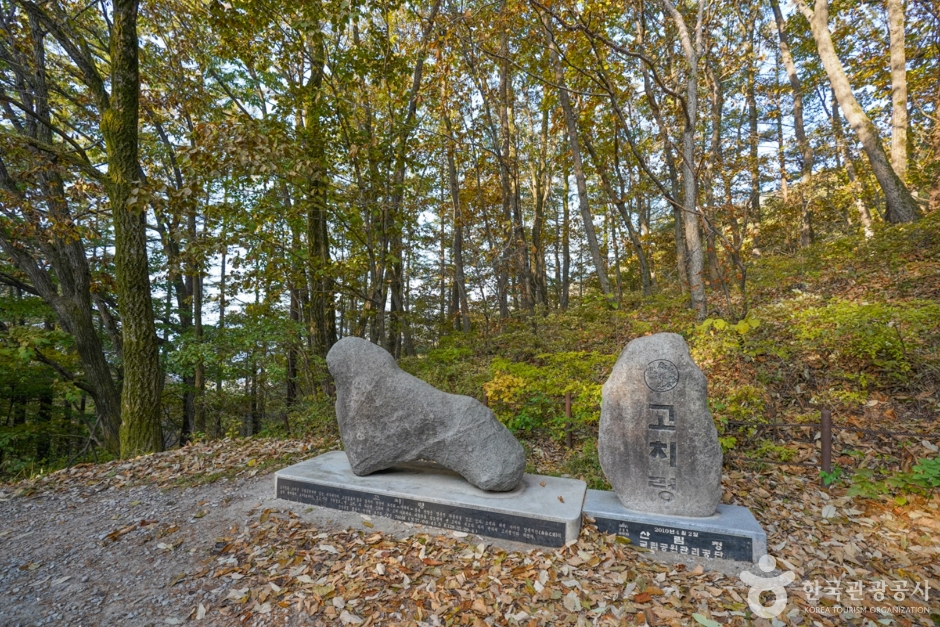
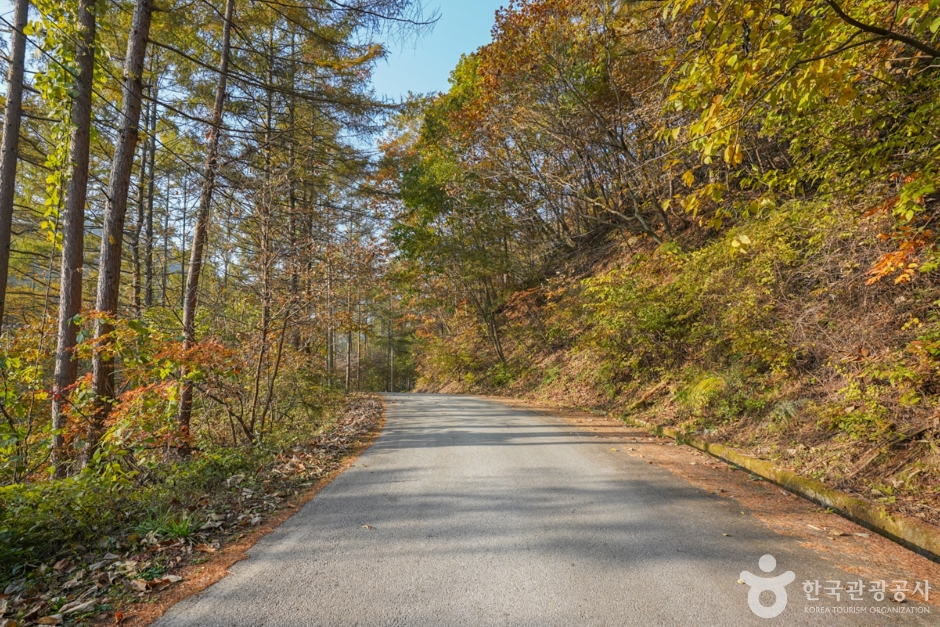
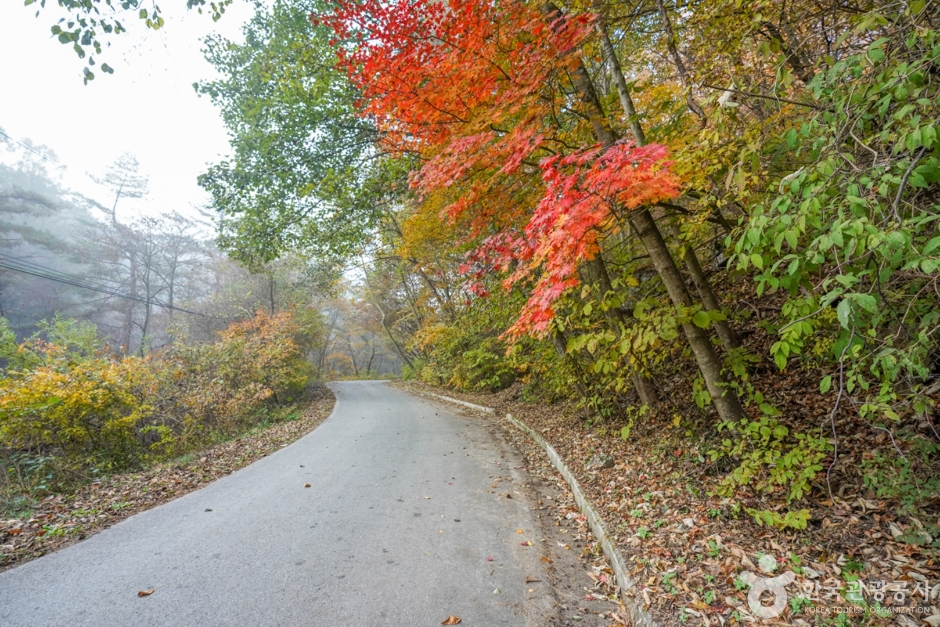
Maguryeong and Gochiryeong are representative mountain passes of Sobaeksan, located in the rugged area between Baekdudaegan and Sobaeksan. These two passes were routes for people and goods during the Goryeo and Joseon dynasties, carrying the hardships of peddlers along this old path in the Yeongnam region. Maguryeong is a pass situated at the easternmost boundary of Sobaeksan National Park, connecting Namdae-ri and Amgok-ri in Buseok-myeon, Yeongju-si. It is said to be named Maguryeong because merchants traveled on horseback here, and also called Maegijae because the steep slope made it as difficult as plowing a rice field. It is said that commoners from Uipung Valley in Danyang-gun, Chungcheongbuk-do, crossed Maguryeong to attend the Buseok Market. Gochiryeong is a pass connecting Marak-ri and Jwaseok-ri in Dansan-myeon, Yeongju-si, and was historically a transportation route to the northern Gwandong and Hoseo regions. In the Silla period, there was an attempt to build a palace beneath the pass, and the old pass was then transformed into what is now called Gochijae. This pass marks the meeting point of the Sobaeksan and Taebaeksan mountain ranges, with the Sobaeksan range continuing westward toward Hyeonjebong, Gukmangbong, and Birobong peaks.
Buseoksa Temple is a head temple of the Hwaeom Sect, founded in the 16th year of King Munmu’s reign in Silla (676) by the sect’s patriarch Uisang Daesa under royal command. While studying in Tang China, Uisang Daesa heard of the Tang emperor's invasion of Silla, reported this to the king, and returned home to unify the national sentiment and overcome hardships through Hwaeom philosophy, founding this temple as the origin of Korea’s Hwaeom thought. The name Buseoksa comes from a large rock west of the Buddha hall that floats without touching the lower rock, called the “floating rock.” In the Goryeo period, it was called Seondalsa or Heunggyeosa Temple. A manuscript found during restoration in 1916 reveals that Muryangsujeon and others were rebuilt in early Goryeo, but were destroyed by fire in the 7th year of King Gongmin’s reign (1358). Muryangsujeon was rebuilt in the 2nd year of King U’s reign (1376), and Josadang in the 3rd year (1377). The temple grounds contain Unified Silla relics such as the stone lantern in front of Muryangsujeon, stone Buddha statue, three-story stone pagoda, flagpole supports, and stone pedestal, as well as Goryeo relics including Muryangsujeon, Josadang, a clay Buddha statue, Josadang murals, Goryeo woodblocks, and the stele of Wonhyungguksa. Notably, Muryangsujeon is one of Korea’s oldest wooden buildings, and the Josadang murals are the oldest known on wooden structures, now preserved in the artifact museum. The Buddha statue enshrined in Muryangsujeon is the finest clay statue in Korea. The well west of Muryangsujeon is said to be where Uisang Daesa’s guardian dragon lived.
Good places to stop and rest after the course

Booking and payment continue on a partner site.
Check rooms & priceSign up to feature your channel.
(As a member, you can add your Instagram, YouTube, and blog links in My Page, and we’ll show them with every comment you write.)
““Stayed near Hongdae and did a night café tour. Perfect city views and vibes.””
Guest comments do not display social media links or profile cards.
Share a short tip about this place.
Or leave a quick comment as a guest.
Photo attachments are available after login.
No reviews yet. Be the first to share your experience!


![Sosu Seowon [UNESCO World Heritage] 1](https://tong.visitkorea.or.kr/cms/resource/76/3499376_image2_1.JPG)
![Sosu Seowon [UNESCO World Heritage] 2](https://tong.visitkorea.or.kr/cms/resource/77/3499377_image2_1.JPG)
![Sosu Seowon [UNESCO World Heritage] 3](https://tong.visitkorea.or.kr/cms/resource/78/3499378_image2_1.JPG)
![Sosu Seowon [UNESCO World Heritage] 4](https://tong.visitkorea.or.kr/cms/resource/79/3499379_image2_1.JPG)


![Buseoksa Temple [UNESCO World Heritage] 1](https://tong.visitkorea.or.kr/cms/resource/42/3572442_image2_1.JPG)
![Buseoksa Temple [UNESCO World Heritage] 2](https://tong.visitkorea.or.kr/cms/resource/44/3572444_image2_1.JPG)
![Buseoksa Temple [UNESCO World Heritage] 3](https://tong.visitkorea.or.kr/cms/resource/45/3572445_image2_1.JPG)
![Buseoksa Temple [UNESCO World Heritage] 4](https://tong.visitkorea.or.kr/cms/resource/52/3572452_image2_1.jpg)