Spring Sunshine and Dancing Breezes in Chungcheongbuk-do Yeongdong County · schedule Other · distance 39km · 4 stops · highlights Yeongguksa Temple, 난계국…

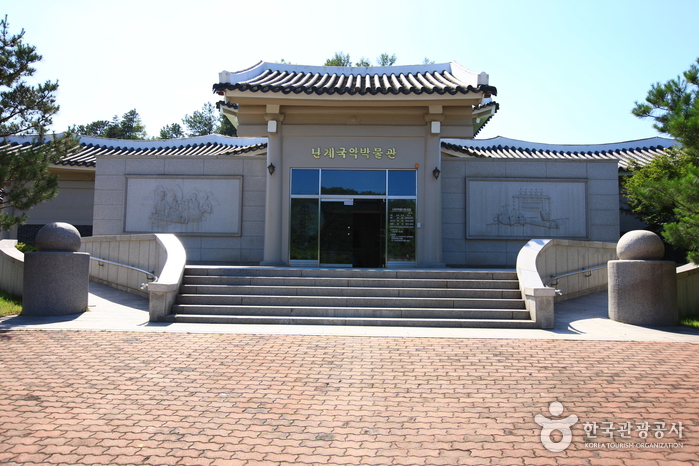
The Yeongdong-gun Nangye Gugakdan performs every Saturday. You can experience various gugak (traditional Korean music) including traditional gugak performances, gugak arranged to suit the new generation's sensibility, and gugak fused with modern music. The performances are not rigid; with explanations and laughter, if your excitement doesn't subside, you can even try playing the instruments yourself. The Nangye Gugak Museum offers an overview of Nangye Park Yeon's life, various instruments, and gugak-related materials.
This course is a sample one-day itinerary. Save it as-is or expand it into an AI itinerary.
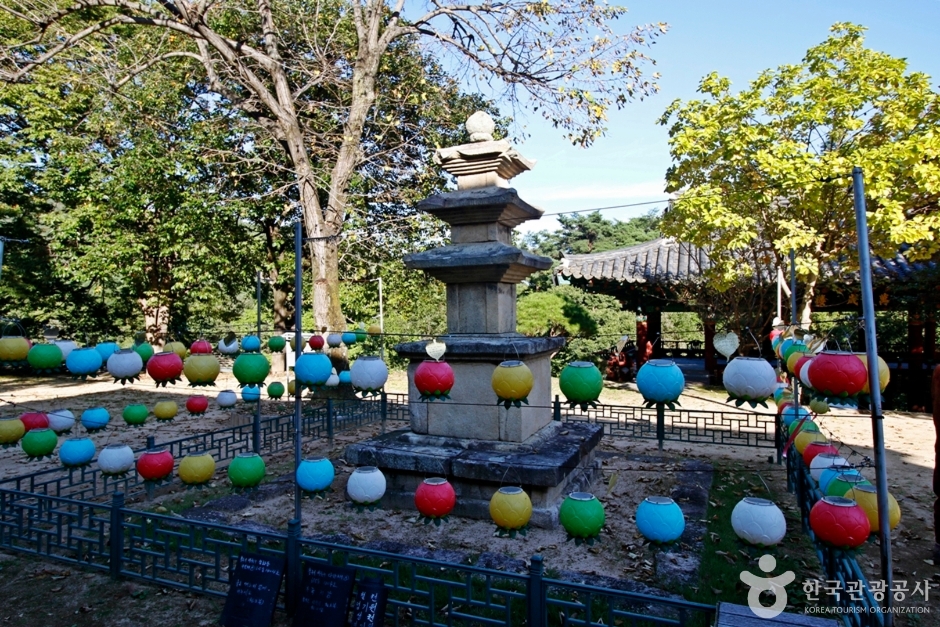
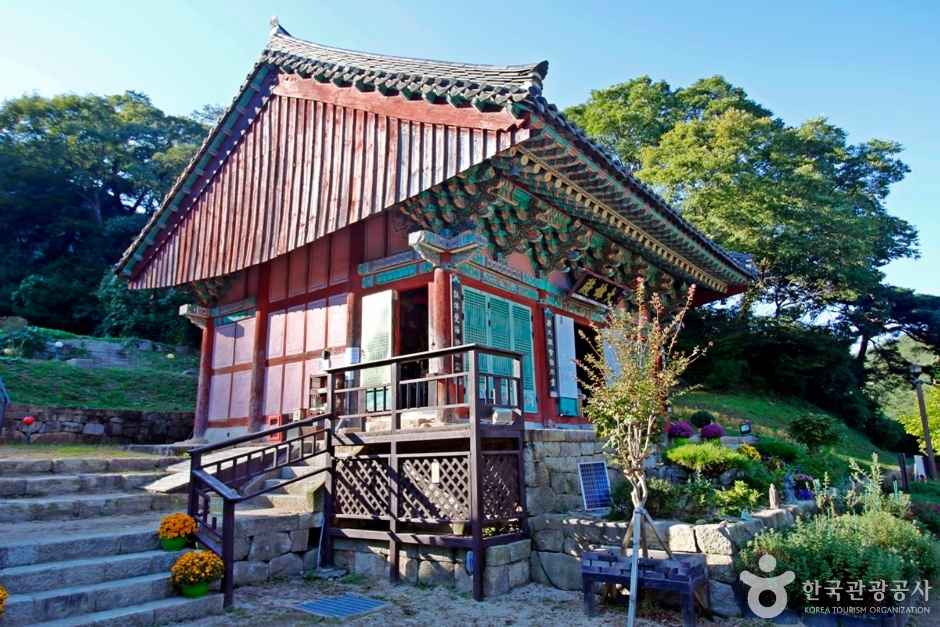
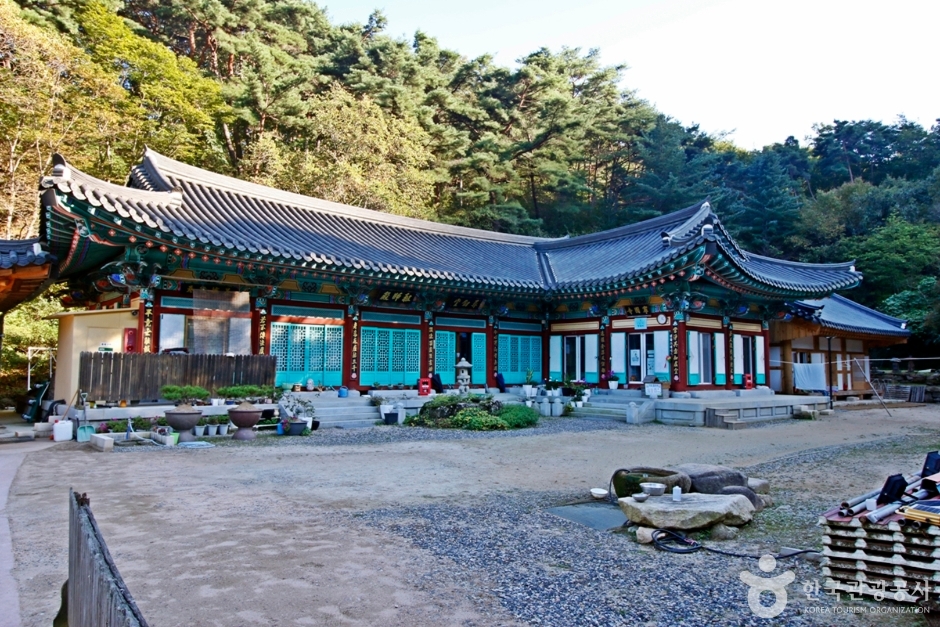
Yeongguksa Temple, the first scenic spot among the eight views of Yangsan in Yeongdong, Chungcheongbuk-do, is located on Cheontaesan Mountain (715m above sea level), one of the top 100 famous mountains, known for its outstanding natural scenery and rocky hiking trails. From the entrance of Cheontaesan, following the hiking trail leads to a wide basin. At the edge of the basin, two valleys flow and meet to form a three-tiered waterfall. This water forms a valley, along which the path to Yeongguksa Temple runs. Yeongguksa is situated on the southwestern slope of this basin, facing east. It is located on a wide land deep in Cheontaesan's mountains, with very beautiful surrounding scenery. Yeongguksa was founded in 668 during the 8th year of King Munmu of Silla. It is believed to have been reconstructed in the 12th century, during the reign of King Myeongjong of Goryeo, by Wongakguksa, who succeeded Cheontae Buddhism established by Daegakguksa Uicheon. In the reign of King Gojong of Goryeo, the temple was renamed Gukcheongsa after building a new pagoda, monk's stone pagoda, and main hall by royal decree. Later, King Gongmin renamed it Yeongguksa after praying for national peace here while escaping the Hong Geon-jeok rebellion, believing the country had overcome its crisis and achieved peace. Although it flourished until the early Joseon Dynasty, its power declined due to the suppression of Buddhism during that era, and it was restored to the present state in 1934 by Jubo Jongsa's reconstruction. Treasures at Yeongguksa include the Wongakguksa Stele, Yeongguksa Monk's Stone Pagoda, the three-story stone pagoda in front of the Daeungjeon Hall, and a three-story stone pagoda on Mangtapbong Peak. Local tangible cultural assets include the Daeungjeon Hall, stone pagodas shaped like sarira towers, and round pagoda-shaped burial markers. Existing buildings, besides the Daeungjeon Hall, include the monks' quarters, Sansingak Shrine, and pavilion, with an affiliated hermitage called Gyewolam. Also, Yeongguksa is home to an outstanding ginkgo tree that has protected the mountain for over 1,000 years. It stands 31m tall with an 11m circumference; one of its branches takes root in the ground and grows independently like a separate tree. It is designated as a natural monument. Currently, Yeongguksa offers traditional cultural experience programs called templestays, allowing visitors to experience the daily life of practitioners in a temple where 1,700 years of Korean Buddhist history and culture live on. For those who cannot stay long or foreigners with limited time, there is a one-day templestay at the monastery to experience Korean Buddhist culture. There is also a 1-night, 2-day stay program for self-reflection and new discovery while staying at Cheontaesan Yeongguksa. Additionally, relaxation programs are available for flexible durations as desired.
난계국악박물관은 난계의 숨결이 서려 있는 국악 전문 박물관이다. 난계국악박물관 영상실과 난계실에서 난계의 삶과 업적을 살펴볼 수 있다. 국악실에는 대금, 나발 등 관악기와 가야금, 해금, 비파 등 현악기 그리고 징, 북, 편종 등 타악기가 종류대로 전시되어 있다. 60여 점이 넘는 다양한 국악기를 만나볼 수 있는 드문 기회다. 민속자료전시실은 이미 고인이 되었거나 월북한 국악인들의 녹음 자료와 국악 공연 실황을 녹화한 비디오테이프 등 귀한 자료들이 많다. 찬찬히 둘러보다 보면 어느새 국악과 한층 가까워진 자신을 발견할 수 있다.
This shrine enshrines the memorial tablets of Nangye Park Yeon (1378–1458), a Joseon early period scholar and master musician. Park Yeon, who greatly contributed to organizing music under King Sejong, was well versed in musical principles and in 1425 compiled , a music book containing the rhythm, instrument illustrations, and musical notation of court music. In 1427, he created 12 pyeonggyeong stones and personally performed following the 12 tunes he composed. Around the shrine area are the Seduksa housing memorial tablets of Park Yeon and five others, Park Yeon's tomb, the tombstone of his cousin Kukdang Park Heungsaeng (朴興生), and Ssanghyogak pavilion. After entering the outer three gates, there is the shrine building with a signboard reading 'Nangyesa 蘭溪祠' measuring three kan wide and two kan deep. From the entrance with Nangye's statue and monument to the outer gates, green lawns and many trees provide a pleasant place for rest.
Along the street of gugak (traditional Korean music), heading towards Godang-ri on a single path, there is the house where Nangye Park Yeon was born. Nangye Park Yeon is counted among Korea's three great musicians alongside Goguryeo's Wang San-ak and Silla's Ureuk. He was a government official and musician in the early Joseon period, born and died in Yeongdong, Chungbuk. Park Yeon compiled music books organizing musical notations and instruments, created court instruments such as daego and seokkyeong, completed court music, and developed pyeonggyeong for instrument tuning, thus advancing and perfecting gugak, earning the title "father of gugak." In the second year of King Sejo (1456), his family was nearly punished for involvement in the restoration of King Danjong, but Park Yeon was spared due to his service under three kings, retired, and returned here, passing away on March 23, 1458, at age 81. When he returned home, he played the flute on a boat crossing the river, an event so moving that passing boats stopped and many wept. This story reflects the sorrow of a distinguished figure who influenced an era and shows Nangye’s lifelong relationship with music in joy and sorrow. To honor his legacy, the main house and sarangchae were restored in May 2000. The floor plan features three sections front and side, with one side section having a two-post (toekan) structure. The central two sections feature a well-floor (umulmaru) and one side includes a kitchen and grain storage under a gomi banja roof with a wujingak-style tiled roof. The wujingak roof has only ridge and eaves but no descending ridge, with trapezoidal front and rear and triangular sides. The roof’s short ridge and long descending parts are distinctive. An annex building has a thatched roof barn, shed, and one room.
Good places to stop and rest after the course

Booking and payment continue on a partner site.
Check rooms & price
Booking and payment continue on a partner site.
Check rooms & priceSign up to feature your channel.
(As a member, you can add your Instagram, YouTube, and blog links in My Page, and we’ll show them with every comment you write.)
““Stayed near Hongdae and did a night café tour. Perfect city views and vibes.””
Guest comments do not display social media links or profile cards.
Share a short tip about this place.
Or leave a quick comment as a guest.
Photo attachments are available after login.
No reviews yet. Be the first to share your experience!