Scents of history along the Namhan River in Gyeonggi-do Yeoju City · schedule Other · distance 39.2km · 5 stops · highlights Yeoju Yeongneung and Yeongn…
Traveling along the Namhan River in Yeoju is an encounter with history spanning many years. That meeting is so picturesque, like viewing a painting, that it lingers longer in the heart. It includes Yeongneung, the tomb of King Sejong the Great and Queen Sohyeon, and another Yeongneung, the tomb of King Hyojong and Queen Inseon. Visitors also enjoy the view of Yeongwolru overlooking the Namhan River, as well as attractions such as Silleuksa Temple, Godalsaji Temple Site, and Pasaseong Fortress, all while appreciating the beauty of the river.
This course is a sample one-day itinerary. Save it as-is or expand it into an AI itinerary.
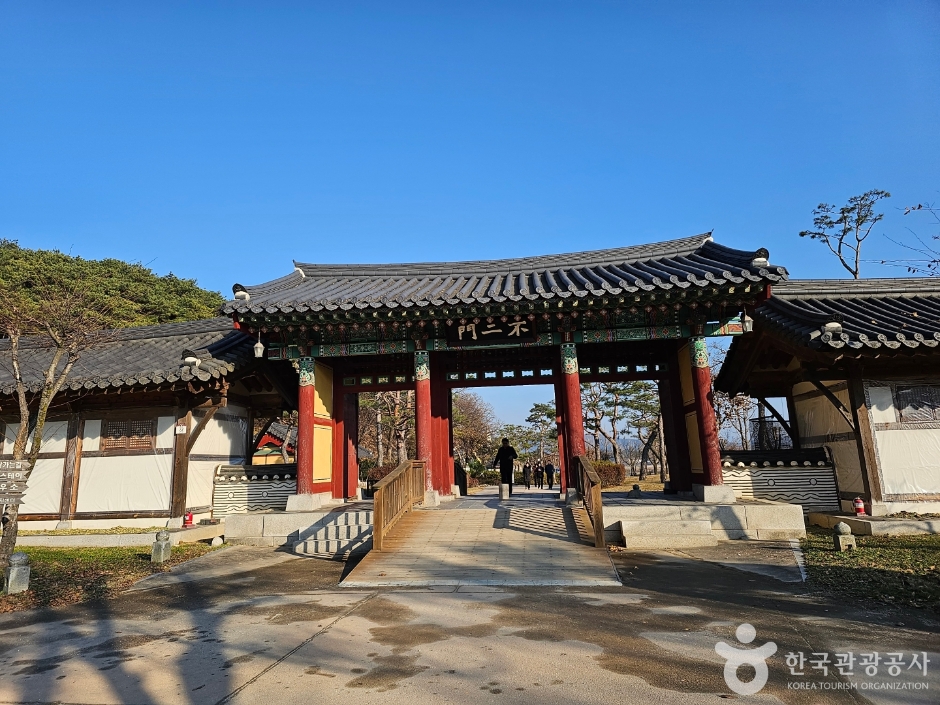
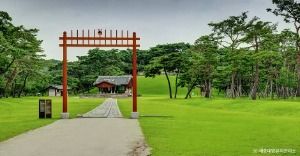
Yeongneung (英陵) is the tomb of the 4th Joseon King Sejong and Queen Sohun, Lady Shim. It is the first joint burial tomb among Joseon royal tombs where the king and queen are enshrined in the same mound, with King Sejong on the left and Queen Sohun on the right when viewed from the front. Originally, Yeongneung was created in 1446 after Queen Sohun passed away, located at the current site of Heolleung and Inneung in Seoul, and four years later, King Sejong was interred there. Due to feng shui concerns, there were attempts to move Yeongneung during King Sejo’s reign, but it was only relocated to its current site in 1469, burying the original stone structures and stele underground and remaking them at Yeoju. Yeongneung (寧陵) is the tomb of the 17th Joseon King Hyojong and Queen Inseon, Lady Jang. This tomb features the first same-hill vertical arrangement where the king’s and queen’s burial mounds are set one above the other, with King Hyojong’s mound above and Queen Inseon’s below when viewed from the Jeongjagak. This arrangement was due to feng shui reasons to preserve the vital energy from the correct geomantic point, unlike the side-by-side twin tomb style. After King Hyojong’s death in 1659, the tomb was initially established in Wonneung within the old Donggureung in Guri, but due to structural issues and water damage concerns, it was moved in 1673. However, no water intrusion was found when the tomb chamber was inspected during the move. The shrine at the entrance of Yeongneung is used for preparing memorial rites and is currently the best-preserved original jeosael among the Joseon royal tombs.
Yeongwolru is a two-story pavilion located inside Yeongwol Neighborhood Park, opposite the Sinneuksa National Tourist Site. From Yeongwolru, visitors can enjoy a panoramic view of the blue water flow of the Namhan River, distant Yang Island, and the beautiful scenery of Sinneuksa across the river, making it a beloved spot. It has been designated as a Gyeonggi-do cultural heritage material. Although the exact construction date of Yeongwolru is unknown, its architectural structure suggests it was built in the late 18th century. The pavilion features a two-story structure with an ikgong-style hipped and gabled roof, three bays in the front, and two bays on the sides. The proportions harmonize well with its low platform, elongated body on both sides, and the roof lifted upward. Originally, it was the main gate of Yeoju County Office, but around 1925, when the county office moved, the county magistrate Shin Heonsu relocated it to its current site. Historically, this place has been a renowned spot where poets and scholars gathered to enjoy poetry and leisurely pursuits. Just below Yeongwolru is a large cliff with the inscription Maam (馬巖). According to legend from the Silla period under King Gyeongdeok, two dragons called Hwangryongma and Yeoryongma appeared in the river below Maam, prompting the renaming of the county to Hwangryeohyeon; thus, the cliff became known as Maam. In the poetry of the great literary figure Lee Gyubo, born in Yeoju, it is written that "Two strange horses appeared at the water's edge, thus the county's name was Hwangryeo." Within Yeongwol Neighborhood Park are the Yeoju Hari Three-story Stone Pagoda from the Goryeo Dynasty, designated as a treasure, along with numerous commemorative steles including Seonjeongbi, Bulmangbi, relief stele, a memorial tower, and a monument for Greek participation. The park also offers fountains, exercise facilities, benches, and other rest areas, making it a pleasant place to stroll and relax.
Sinneuksa Temple is a representative temple of Yeoju located at the foot of Bongmi Mountain. It boasts a long history, grand scale, and excellent scenery. It is a branch temple of Yongjusa, the headquarters of the Jogye Order of Korean Buddhism's 2nd district, and is designated as a traditional temple of Gyeonggi-do. Unlike many temples built in the mountains, it was unusually established by the riverside overlooking the Namhan River. It is said to have been founded by the monk Wonhyo during the Silla King Jinpyeong era, though there is no definite evidence. It is famous as the place where the monk Naong stayed during the late Goryeo period and was said to have been a large temple with over 200 rooms. In the 3rd year of King Seongjong of Joseon (1472), it was made the original temple of Yeongneung, the tomb of King Sejong the Great, and was called Boeunsa [報恩寺], but later the name returned to Sinneuksa as the meaning of original temple weakened. It was sometimes called Byeokjeol because of the multi-story brick stone pagoda. It is about a 13-minute drive from Yeoju IC and Seoyeoj u IC. The area around Sinneuksa is developed as a national tourist attraction with many restaurants nearby and is close to Yeoju Ceramic World, the largest ceramic specialty shopping mall in Korea, as well as the Hwangpo Sail Boat Cruise.
Located on the foothills of Hyemoksan, Godalsa Temple Site is one of the two major abandoned temple sites that showcase the features of an ancient great temple. It was established in 764 (23rd year of King Gyeongdeok of Unified Silla). It was a central temple of the Bongnim Mountain Sect, one of the nine mountain schools (Gusan Seonmun) that gained new power at the end of Silla. Hyeonuk (787–868), the founding monk of the Bongnim Sect, rebuilt the temple. Wonjong Dae-sa Chanyoo (869–958) resided here for 28 years, and under the royal patronage, it grew into one of the three great temples of Goryeo. The great temple covered 30-ri in all directions and housed hundreds of monks. The reason and time of its abandonment are unknown but it appears to have been deserted in the late 17th century, around the time after the Imjin War. The site holds one National Treasure, four Treasures, and one Registered Tangible Cultural Property among other important designated cultural assets. These all convey a powerful and grand spirit, preserving the splendid and majestic energy that allows us to imagine the temple’s historical dignity. Highlights include the largest stone pedestal at Godalsaji (Treasure), the lively turtle-back and headstone of Wonjong Dae-sa's pagoda stele (Treasure), the Godalsaji Seungt’ap (national treasure) with its superb balance and beauty, Wonjong Dae-sa Pagoda (Treasure), and a huge stone bowl-like sculpture. However, the twin lion stone lantern (Treasure) found fallen at Godalsaji is housed in the National Museum of Korea. The Wonjong Dae-sa pagoda stele was toppled in spring 1915, leaving the turtle back and head on site, while the broken main stele was moved to the National Museum of Korea. The restored original stele is displayed at Yeoju Museum, and a replica stele along with the original turtle back and head are erected at the temple site. Behind the Godalsaji Seungt’ap and Wonjong Dae-sa Pagoda lies the Yeoju Sanggyo-ri Goryeo stone chamber tomb, designated as a Gyeonggi-do monument, making it convenient for visitors to explore together.
Pasaseong Fortress is a mountain fortress built along the ridge centered on the summit of Pasasan, with a circumference of about 1800m, and its walls are relatively well preserved. It is said to have been built during the reign of Silla King Pasa (reigned 80–112). During the Japanese invasions of Korea (Imjin War), the monk Uiam gathered a monk army and expanded the fortress. In the late Joseon period, the importance of Namhansanseong increased, which led to a decreased importance of Pasaseong. Currently, the sites of the East and South gates remain. Part of the fortress extends to the Han River, allowing a panoramic view of the river stream, making it a stronghold ideal for controlling opponents. (Source: National Heritage Administration website)
Sign up to feature your channel.
(As a member, you can add your Instagram, YouTube, and blog links in My Page, and we’ll show them with every comment you write.)
““Stayed near Hongdae and did a night café tour. Perfect city views and vibes.””
Guest comments do not display social media links or profile cards.
Share a short tip about this place.
Or leave a quick comment as a guest.
Photo attachments are available after login.
No reviews yet. Be the first to share your experience!