Cultural Trails Around Chiaksan in Wonju in Gangwon Special Self-Governing Province Wonju City · schedule Other · distance 17.4km · 5 stops · highlights…

Wonju City is a historically significant area that includes Chiaksan National Park, the majestic Seomgang River, and a wealth of cultural heritage sites reflecting its wise overcoming of national crises. Experiencing these historic sites in a single day makes for a valuable journey. After a temple visit passing through Bomunsa Temple in Chiaksan, the day concludes with a cultural exploration of Wonju by visiting historical sites such as Seokgyeongsa, Unkok, the tomb of Woncheonseok teacher, the memorial for Lee Eunchan, and the Chungnyeolbi monument.
This course is a sample one-day itinerary. Save it as-is or expand it into an AI itinerary.
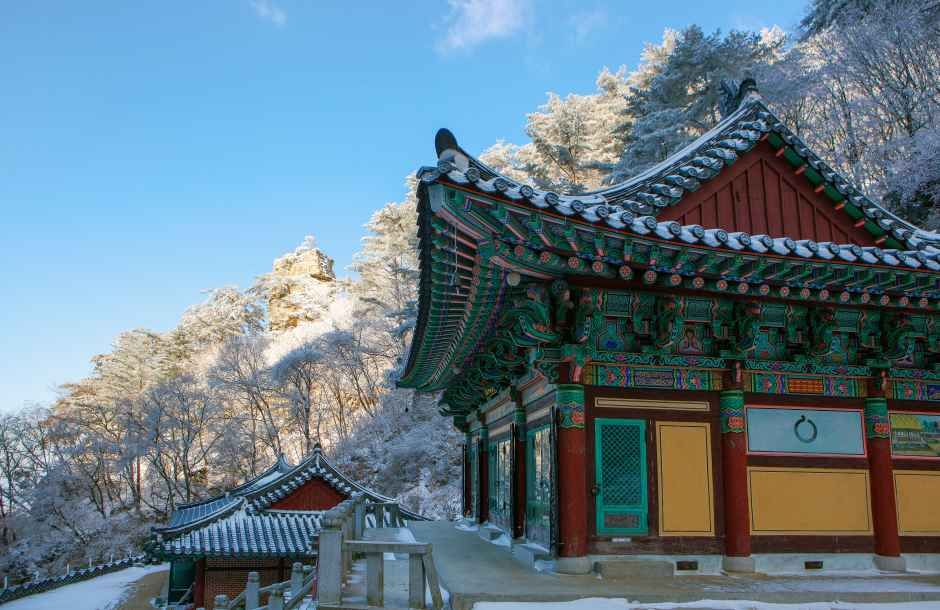
Bomunsa Temple was founded by Muchak during the reign of King Gyeongsun of Silla, but no further historical records remain to detail its history. According to the Bomunam Changkki, it was burned during the Japanese invasion of 1592 (Imjin War) and later rebuilt. When reconstructed, it enshrined Avalokitesvara Bodhisattva and was used as a temple for a religious practice community, named Bomunryeonsa. It is also called "Upper Gomunjol" as it is located above Gukhyeongsa (Lower Gomunjol). In 1930, Kang Sang-jun reconstructed it, and in 1971, the head monk Lee Baek-ryeonhwa restored it to its current form. Major buildings include the Main Buddha Hall, Yaksa Hall, Sanshingak, Yongwanggak, and temple dormitories.
This is the grave of Ungok Woncheonseok (1330~). From a young age, Woncheonseok was bright in scholarship and played a major role in spreading Neo-Confucianism alongside Mokeun Yi Saek. He was also the childhood teacher of King Taejong of Joseon. When politics became corrupt at the end of Goryeo, he lamented this and retreated to Chiaksan Mountain. After the Joseon dynasty was established and he was given office, he did not fully maintain loyalty to Goryeo. Within the gravesite, there is a tombstone and a stone table (sangseok) in front of the burial mound for placing ritual food, and at a short distance is a modest stela (sindobi). (Source: National Heritage Agency)
운채는 토속음식을 주로 취급하며 주 메뉴로는 곤드레밥과, 감자옹심이, 청국장, 닭만두국이 제공되며 통나무집에서 편안하게 즐기시면서 쉴 수 있는 공간이다.
Chiaksan, a peak of the Charyeong mountain range, features peaks over 1,000m including its highest peak Birobong (1,288m), Sambong, Hyangrobong, Namdaebong, and Cheonjibong stretching north to south like a folding screen. The Chiak ridge extends 14km from Birobong to Namdaebong, covering a total area of 182.09㎢ and was designated a national park in 1984. Known as a famous eastern mountain since ancient times, it is a historic site with temples such as Guryongsa and Sangwonsa (reflecting a thousand years of Silla history), and fortress sites like Yeongwonsanseong and Haemisanseong tied to wartime history. Jagged rocks and dense forests create a magnificent natural landscape. The name Chiaksan comes from a pheasant’s gratitude legend previously calling it Jeokaksan. Beautiful valleys formed by unique rock formations including Guryong, Geumdae, and Bugok valleys, and numerous attractions like Taejongdae, Guryongso, Seryeom Falls, Guryongsa, and Sangwonsa are scattered throughout. The seasons bring diverse changes, with azaleas and rhododendrons in spring, lush forests and clear waters at Guryongsa in summer, colorful autumn foliage, and especially spectacular winter snow scenes, attracting hikers year-round.
Ipseoksa Temple is a traditional temple located on Chiaksan Mountain in Wonju, positioned below Ipseokdae, the midpoint on the route to Sangwonsa and Birobong. It is said that Uisang (義湘), a great Buddhist monk of the Silla period, built a cave here and practiced asceticism. The lotus pedestal and halo within the temple grounds, along with the lotus pedestal base of the stone pagoda in front of the temple, show carving styles and techniques from the early Goryeo period. Especially, beside Ipseokdae to the northwest of the temple, there is a seated rock-carved Buddha with an inscription reading ‘元祐五年庚午三月日’ (5th year of Wonyu, the 3rd month of the year Gyeong-o). This record confirms that Buddhist construction took place around 1090 (the 7th year of Seonjong) in the early Goryeo period. In modern times, the meditation hall was built in 1957 and the Daeungjeon Hall was built in 1992.
Good places to stop and rest after the course

Booking and payment continue on a partner site.
Check rooms & priceSign up to feature your channel.
(As a member, you can add your Instagram, YouTube, and blog links in My Page, and we’ll show them with every comment you write.)
““Stayed near Hongdae and did a night café tour. Perfect city views and vibes.””
Guest comments do not display social media links or profile cards.
Share a short tip about this place.
Or leave a quick comment as a guest.
Photo attachments are available after login.
No reviews yet. Be the first to share your experience!