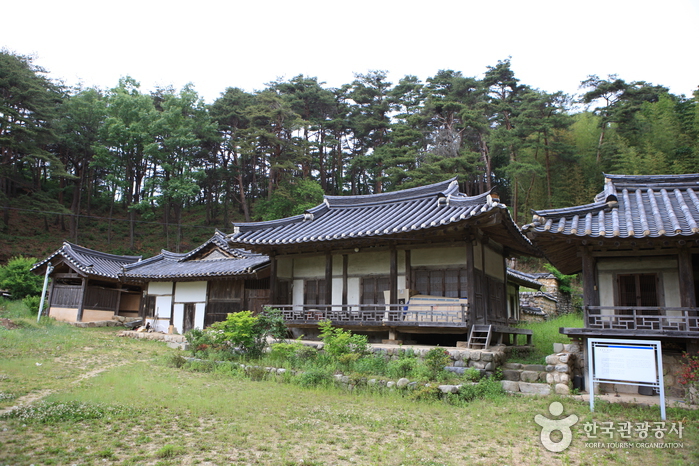
Walking Beautiful East Coast Beaches at Uljin Gwando Palgyeong in Gyeongsangbuk-do Uljin County · schedule Other · distance 65.6km · 5 stops · highlight…
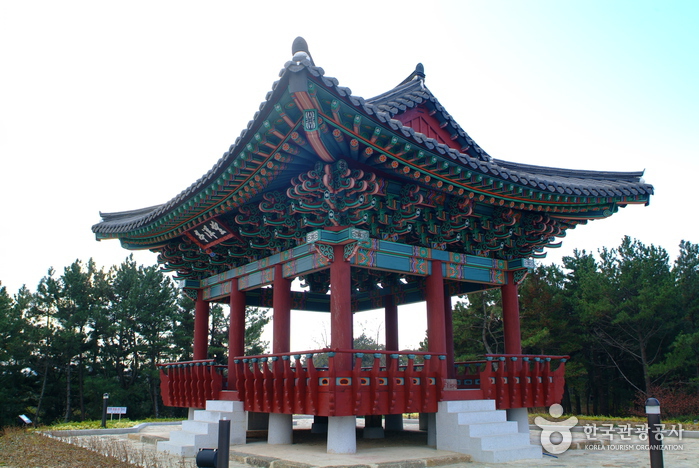
Mangyangjeong, located on a hill near Mangyang Beach, is considered one of the Gwandong Palgyeong (Eight Scenic Views of the Gwandong Region) and boasts beautiful scenery. Visit Uljin's representative sulfur hot springs to relax your body and mind while strolling along the East Coast beaches.
This course is a sample one-day itinerary. Save it as-is or expand it into an AI itinerary.
Mangyangjeong Pavilion, one of the Gwandong Palgyeong (Eight Scenic Views of the East), was originally located on a beach hill in Mangyang-ri, Giseong-myeon during the Goryeo period. During the Joseon Sejong era, Chae Shinbo moved it to the foothill of Hyeonjongsan in Mangyang-ri, stating the pavilion was old and worn. After being damaged by a storm in 1517, it was rebuilt in 1518 (the 13th year of King Jungjong) when Anryeomsa Yoon Heein requested the Pyeonghae County Governor Kim Sewoo to restore it. In 1860 (the 11th year of King Cheoljong), Uljin Governor Lee Heeho, along with county officer Im Hakyoung, relocated it to its current site in Dunsan-dong, Sanpo-ri, Geunnam-myeon. The pavilion sits on a hill overlooking the Wangpicheon River flowing in front of Seongryugul Cave and offers a panoramic view of the vast East Sea waves. It is considered the best scenic spot among the Gwandong Palgyeong, and King Sukjong honored it with a calligraphic plaque titled 'Gwandong Jeilru'. Poems by Kings Sukjong and Jeongjo, as well as writings by Jeong Chu, Jeong Cheol, and Chae Su about Mangyangjeong survive to this day.
해월헌은 선조 21년(1588)에 건립되어 헌종 13년 (1847)에 중수되었고 해월 황여일의 별구였다고 하며, 기성면 사동리 산정에 있었으나 후손이 현재의 위치로 이건하였다 한다. 해월헌은 정면 4칸, 측면 3칸의 팔작집으로 측면의 앞쪽 1칸은 마루를 깔고 난간을 돌렸으며 지면에서 떨어져 지었다. 황여일의 자는 회원, 호는 해월, 본관은 평해이다. 그는 응경의 아들로 어려서부터 문장으로 이름 났고 선조 9년(1576) 사마시를 거쳐 1585년 별시 문과에 을과로 급제한 후 여러 청환직을 지냈다.
Wolsongjeong, one of the historical sites of Gwandong Palgyeong, was established during the Goryeo Dynasty and was rebuilt in the mid-Joseon period by the governor Park Wonjong. However, it fell into ruin with only remains left until it was reconstructed in 1933 by local resident Hwang Manyoung and others. During the late Japanese occupation, the stationed navy demolished it fearing it would be a target for enemy aircraft. In April 1964, the Korean diaspora group Geumganghoe built a reinforced concrete pavilion, but as it lacked the old form, it was demolished in 1979 and rebuilt in 1980 based on Goryeo-era style. The name Wolsongjeong comes from four Silla Hwarang warriors, Yeongrang, Sullang, Namsok, and Anyang, who enjoyed the moon in the dense pine forest, or from the planting of pine trees brought from Wolguk. The area surrounding the pavilion is a forest of sea pines where visitors can feel refreshed looking out at the blue East Sea. Especially, the sunrise scene rising above the pines and sea at Wolsongjeong is widely known, attracting tourists and photographers, making it one of the few famous sunrise spots on Korea’s East Coast alongside nearby Mangyangjeong.
Uljin Baegam Oncheon Tourist Special Zone is a premier destination where you can simultaneously enjoy the lush mountains of Baekdudaegan and the majestic East Sea. This historic hot spring has been known since the Silla period, and in 1979, the area including Onjeong-ri and Sotae-ri in Onjeong-myeon, Uljin-gun, Gyeongsangbuk-do, was designated as Baegam Oncheon Tourist Special Zone. According to materials from the National Museum of Korean Contemporary History, until the Joseon Dynasty, locals used the hot spring for healing ailments, but during the Japanese colonial period, Japanese people constructed a modern-style inn called Pyeonghae Baegam Oncheon Hall, marking the full-scale development of Baegam Oncheon. Baegam Oncheon is the first hot spring associated with the phrase 'healed by immersing the body in hot spring water.' The colorless and odorless 53℃ water is suitable for hot spring bathing and is said to be effective for chronic skin diseases, asthma, neuralgia, and respiratory system illnesses.
Hupo Port, located at the southern end of Uljin-gun, Gyeongsangbuk-do, is a major fishing port in the central waters of the East Sea. It is a distribution hub for all fish species caught in the East Sea, including saury, squid, mackerel, snow crab, and flatfish. Near Hupo Port are the Hupo Fisheries Cooperative, built in the shape of a ship, the Hupo Fisheries Cooperative Seafood Distribution Center, the fish auction market, Hupo Fish Market, and sashimi restaurants. Behind these are Deunggisan Mountain and Hupo Lighthouse, and around them is Hupo Deunggisan Park. At the dock of Hupo Port, visitors can watch various seafood being unloaded from fishing boats early in the morning, enjoy the atmosphere of the fish market, and purchase fresh sashimi and seafood at reasonable prices.
Good places to stop and rest after the course

Booking and payment continue on a partner site.
Check rooms & price
Booking and payment continue on a partner site.
Check rooms & priceSign up to feature your channel.
(As a member, you can add your Instagram, YouTube, and blog links in My Page, and we’ll show them with every comment you write.)
““Stayed near Hongdae and did a night café tour. Perfect city views and vibes.””
Guest comments do not display social media links or profile cards.
Share a short tip about this place.
Or leave a quick comment as a guest.
Photo attachments are available after login.
No reviews yet. Be the first to share your experience!