Soaking in Culture and Scenery with Views of the Uljin Sea in Gyeongsangbuk-do Uljin County · schedule Other · distance 27.6km · 6 stops · highlights Ju…
Located at the northeastern tip of Gyeongsangbuk-do, it borders the East Sea to the east, Bonghwa-gun and Yeongyang-gun to the west, Yeongdeok-gun to the south, and Samcheok-si, Gangwon-do to the north. Therefore, it is a rare course where you can experience various natural attractions such as the sea, inland areas, and caves.
This course is a sample one-day itinerary. Save it as-is or expand it into an AI itinerary.
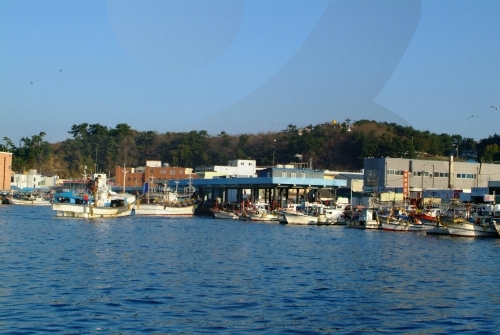
Jukbyeon Port, along with Hupo Port, is one of the major fishing ports on the East Coast located in the northern part of Uljin. It was designated as a national fishing port on December 29, 1995. It is especially known for abundant catches of squid, mackerel, saury, sandfish, and flatfish, and is famous as the largest snow crab fishing port in South Korea. Reflecting its large and varied seafood catches, many seafood processing factories line the area around Jukbyeon Port. Every November, the Jukbyeon Port Seafood Festival is held, offering fresh seafood and a variety of entertainment. Events such as barehanded live fish catching are also held during the festival. Around Jukbyeon Port, there is a vast white sand beach extending from Deokcheon-ri Baeksajang to Hujeong-ri and Jukbyeon Lighthouse southward to Bongpyeong-ri and Onyang-ri. This entire white sand beach is sometimes called Bongpyeong Beach, stretching about 10 km. Nearby are filming locations for the drama and the variety show .
The Uljin Bongpyeong-ri Silla Monument is a stone stele from the Silla period of the Three Kingdoms era. It was discovered and reported by local villagers in 1988 after being left unattended for 2 to 3 months during a farmland leveling operation in Bongpyeong-ri. Although the monument is not in great condition due to being buried underground for many years, it still retains its original form well. The stele measures 204 cm in length, with the inscribed area 32 cm wide at the top and 54.5 cm wide at the bottom. Though small in scale, its shape reflects Goguryeo characteristics similar to the Gwanggaeto Stele erected in the second year of King Jangsu of Goguryeo (414). The stone was used as found without trimming, and the overall shape is close to a trapezoid. It was erected as Silla expanded northeastward, estimated to have been set up in the 11th year of King Beopheung (524), providing important historical data to reconsider various aspects of Silla society. It also offers clues to understanding the promulgation of the code of laws and establishment of the Yukbu system during King Beopheung’s reign, as well as the state of royal authority. The inscription is only on one side, consisting of about 400 characters. The writing style is in regular script influenced by the Northern Dynasties of China during the Northern and Southern Dynasties period, with some clerical script features. The text, written in a unique Silla-style classical Chinese rather than typical classical Chinese, is difficult to interpret but the general outline is known. The main narrative is that when the Uljin region came under Silla territory, the local residents revolted, and Silla held a Yukbu council, sent officials to punish them, and erected the stele to prevent further resistance. This monument is highly valuable as historical evidence supporting records in the Samguk Sagi about the implementation of the Yukbu system and promulgation of laws by King Beopheung.
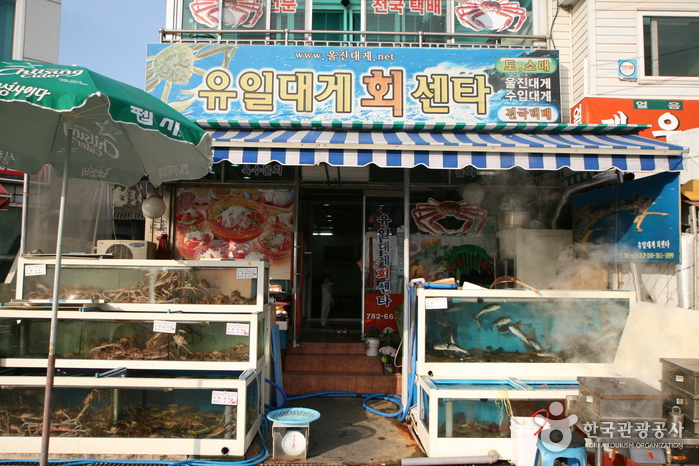
'영덕'하면 대게가 유명한 곳으로 알려져 있는데, 이는 예부터 그 주변에서 영덕이 가장 교통수단이 좋았기 때문이다. 그러다보니 상대적으로 '울진대게'는 영덕대게에 비해 가격이 저렴한 편이다. 요즘에 와서는 대게 매니아들 사이에서 그 맛과 가격이 입소문을 타기 시작해 바로 이곳 '울진유일대게' 식당을 찾는 사람들이 나날이 늘어나고 있다. 전국 어디라도 택배 서비스가 가능하다. 집에서 울진대게를 맛 보는 것도 권할만 하다.
Wangpicheon Park is a beautiful park that seems to have transplanted a scaled-down version of Korean nature onto a vast area of about 200,000 pyeong formed by rivers and the sea, adjacent to the East Sea overlooked by Mangyangjeong, one of the eight scenic spots of Gwandong, surrounding the natural ecosystem treasure of Wangpicheon. It is a rare ecological park in Korea that offers diverse attractions and experiences throughout all four seasons. The park consists of exhibition halls, indoor facilities, outdoor facilities, and experience facilities. The exhibition halls include the Uljin Insect Travel Hall and Uljin Aquarium, where visitors can interact with insects and marine life and learn the importance of nature. Indoor facilities feature the Wangpicheon Culture Center, a performance hall, and the horticultural therapy center housing various mysterious plants like guava and rock lions. Outdoor facilities include Wangpicheon Ecological Park for enjoying wildflowers and relaxation, an animal farm where visitors can feed animals and take photos, and playgrounds for children using the park. Key experience programs include agricultural product harvesting and salt making. The harvesting program allows families and neighbors to cultivate eco-friendly crops together, teaching children the value of agriculture and life. The salt making program offers a traditional cultural experience using disappearing traditional salt. Additionally, woodworking and pottery experiences are available.
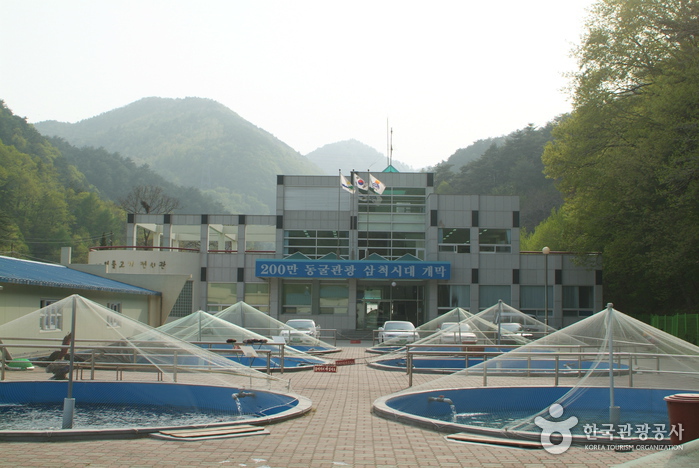
삼척시 근덕면 내수면개발사업소에 마련된 민물고기전시관은 살아있는 우리 민물고기를 한눈에 볼 수 있는 곳으로, 연면적 260㎡ 규모에 연어일생관, 체험관, 수초터널, 생태관 등을 갖추있다. 강원도 내에 서식하는 천연기념물 어름치, 황쏘가리와 희귀어종인 철갑 상어와 쉬리, 꺽지, 버들개, 꾹저구, 산천어 등 민물고기 44종을 전시 하고 있는 살아있는 자연생태학습장이다.
Uljin Seongnyu Cave is located near Bulyoungsa Valley and has a length of about 915m (including the underwater cave section). The cave is composed of limestone and displays pale pink, gray-white, and white colors. Inside the cave, there are 9 plazas and 3 water pools with depths of 4–5m. Various speleothems such as stalactites resembling icicles, stalagmites rising from the ground, and columns formed by the meeting of stalactites and stalagmites are evenly distributed. Seongnyu Cave was originally called Seonyugul, meaning a place where immortals leisurely played. It was renamed Seongnyusa after Bo Cheon-taeja, the son of Silla’s 31st king Sinmun, built a temple for ascetic practices inside, with 'Seong' meaning saint and 'Ryu' meaning to stay. It is also called Seongnyugul because of the small holes in the rock wall. During the Imjin War, more than 500 residents took refuge inside the cave, but the Japanese blocked the entrance, causing them all to starve to death. In Uljin’s Seongnyu Cave, you can see very beautiful and diverse formations typical of limestone caves, like a subterranean palace, including splendid stalactites, stalagmites, and columns. (Source: Cultural Heritage Administration)
Sign up to feature your channel.
(As a member, you can add your Instagram, YouTube, and blog links in My Page, and we’ll show them with every comment you write.)
““Stayed near Hongdae and did a night café tour. Perfect city views and vibes.””
Guest comments do not display social media links or profile cards.
Share a short tip about this place.
Or leave a quick comment as a guest.
Photo attachments are available after login.
No reviews yet. Be the first to share your experience!