
Camping Trip Enjoying Both Mountains and Sea in Gyeongsangbuk-do Uljin County · schedule Other · 6 stops · highlights 울진금강소나무림, 불영사, Mangyangjeong Pavilion
Uljin is a great place to enjoy both mountains and the sea as it has large mountains, deep valleys, and also faces the ocean. There is Sogwang-ri Geumgang Pine Forest, which is mostly untouched by humans, and following Bulyoung Valley where Bulyoungsa Temple is located, you encounter Wangpicheon River and the sea. The coastline leading to Hupo, passing Mangyangjeong and Wolsongjeong (also mentioned in Jeong Cheol's Gwandongbyeolgok), is good for camping and also features Hupo Port, known for its abundant seafood.
This course is a sample 2-day itinerary. Save it as-is or expand it into an AI itinerary.
경북 울진군 서면 소광리 금강소나무 집단 분포지는 숙종 때 황장봉산으로 지정 관리 하였으며, 1959년 육종림으로 지정된 후 2001년 산림유전자원보호림으로 지정할 정도로 유명한 숲으로 금강소나무 미인송이 있는 지역으로서 특별 보존 관리하고 있는 청정지역이다. 500년이 넘은 천연수림의 소나무 터널을 통과하면서 금강소나무들의 열병 사열을 받아 볼 수 있다. 소나무 숲이 품어내는 식물성 호르몬인 피톤치드도 느껴볼 수 있다.
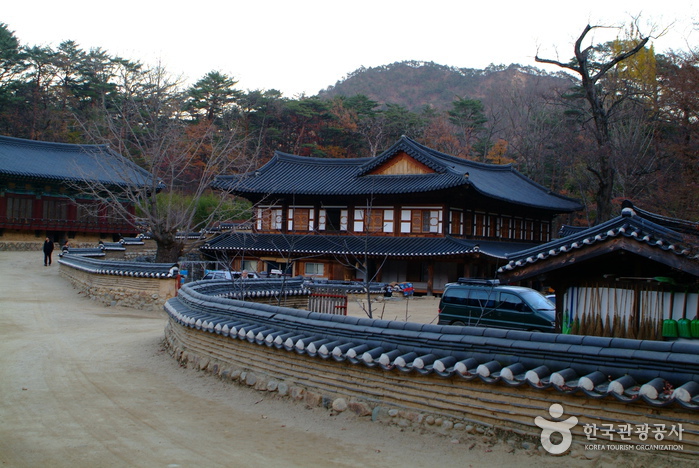
울진읍에서 서쪽으로 약 20km 떨어진 천축산의 서쪽기슭에 자리 잡은 신라의 옛 절로, 이 절을 중심으로 하원리까지 13km에 걸쳐서 비경을 이루는 불영사계곡이 펼쳐진다. 진덕여왕 5년(651)에 의상대사가 세웠는데, 연못에 부처님의 그림자가 비친다 하여 불영사라 했다. 조선 태조 5년(1396) 화재로 소실된 것을 이듬해 소운대사가 중건하였고 그 후 1500, 1608, 1724, 1899년에 중수가 있었다.
Mangyangjeong Pavilion, one of the Gwandong Palgyeong (Eight Scenic Views of the East), was originally located on a beach hill in Mangyang-ri, Giseong-myeon during the Goryeo period. During the Joseon Sejong era, Chae Shinbo moved it to the foothill of Hyeonjongsan in Mangyang-ri, stating the pavilion was old and worn. After being damaged by a storm in 1517, it was rebuilt in 1518 (the 13th year of King Jungjong) when Anryeomsa Yoon Heein requested the Pyeonghae County Governor Kim Sewoo to restore it. In 1860 (the 11th year of King Cheoljong), Uljin Governor Lee Heeho, along with county officer Im Hakyoung, relocated it to its current site in Dunsan-dong, Sanpo-ri, Geunnam-myeon. The pavilion sits on a hill overlooking the Wangpicheon River flowing in front of Seongryugul Cave and offers a panoramic view of the vast East Sea waves. It is considered the best scenic spot among the Gwandong Palgyeong, and King Sukjong honored it with a calligraphic plaque titled 'Gwandong Jeilru'. Poems by Kings Sukjong and Jeongjo, as well as writings by Jeong Chu, Jeong Cheol, and Chae Su about Mangyangjeong survive to this day.
Wolsongjeong, one of the historical sites of Gwandong Palgyeong, was established during the Goryeo Dynasty and was rebuilt in the mid-Joseon period by the governor Park Wonjong. However, it fell into ruin with only remains left until it was reconstructed in 1933 by local resident Hwang Manyoung and others. During the late Japanese occupation, the stationed navy demolished it fearing it would be a target for enemy aircraft. In April 1964, the Korean diaspora group Geumganghoe built a reinforced concrete pavilion, but as it lacked the old form, it was demolished in 1979 and rebuilt in 1980 based on Goryeo-era style. The name Wolsongjeong comes from four Silla Hwarang warriors, Yeongrang, Sullang, Namsok, and Anyang, who enjoyed the moon in the dense pine forest, or from the planting of pine trees brought from Wolguk. The area surrounding the pavilion is a forest of sea pines where visitors can feel refreshed looking out at the blue East Sea. Especially, the sunrise scene rising above the pines and sea at Wolsongjeong is widely known, attracting tourists and photographers, making it one of the few famous sunrise spots on Korea’s East Coast alongside nearby Mangyangjeong.
Hupo Port, located at the southern end of Uljin-gun, Gyeongsangbuk-do, is a major fishing port in the central waters of the East Sea. It is a distribution hub for all fish species caught in the East Sea, including saury, squid, mackerel, snow crab, and flatfish. Near Hupo Port are the Hupo Fisheries Cooperative, built in the shape of a ship, the Hupo Fisheries Cooperative Seafood Distribution Center, the fish auction market, Hupo Fish Market, and sashimi restaurants. Behind these are Deunggisan Mountain and Hupo Lighthouse, and around them is Hupo Deunggisan Park. At the dock of Hupo Port, visitors can watch various seafood being unloaded from fishing boats early in the morning, enjoy the atmosphere of the fish market, and purchase fresh sashimi and seafood at reasonable prices.
천연알칼리성 라듐성분을 함유한 국내 유일의 유황온천으로 1979년 12월 31일 관광특구로 지정되었다. 무색무취하며 사람 몸에 적당한 53도를 유지하고 있어 온천욕을 즐기기에 적당할 뿐만 아니라 신경통, 만성관절염, 중풍, 신경마비 등에 효험이 있다. 동해안의 대표적인 온천으로 손꼽히며 전국에서 온천객과 휴양객들이 줄지어 찾는 곳이다. 또한, 이곳은 회전그네, 바이킹, 펌프카 등 다양한 놀이시설을 갖추고 있어 가족단위의 휴식공간으로 더할 나위 없다. 주위에는 동해해수욕장과 백암산의 절경이 있어 해수욕과 등산도 곁들일 수 있다.
Good places to stop and rest after the course

Booking and payment continue on a partner site.
Check rooms & price
Booking and payment continue on a partner site.
Check rooms & priceSign up to feature your channel.
(As a member, you can add your Instagram, YouTube, and blog links in My Page, and we’ll show them with every comment you write.)
““Stayed near Hongdae and did a night café tour. Perfect city views and vibes.””
Guest comments do not display social media links or profile cards.
Share a short tip about this place.
Or leave a quick comment as a guest.
Photo attachments are available after login.
No reviews yet. Be the first to share your experience!


