Following the sources of Korea’s great rivers in Gangwon Special Self-Governing Province Taebaek City · schedule Other · distance 31km · 5 stops · highl…
Taebaek is often thought of as a city of plateaus and mountains, but on the other hand, it is also a special city of water. It is home to Hwangji Pond, the source of the Nakdong River, and Geomryongso, the source of the Han River, as well as Samsuryeong, the watershed for the Han River, Nakdong River, and Osipcheon. Take a special time to discover the sources of Korea's major rivers hidden throughout this plateau city.
This course is a sample one-day itinerary. Save it as-is or expand it into an AI itinerary.
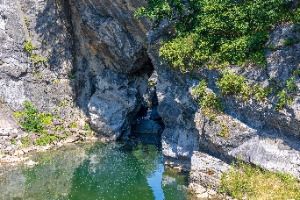
Taebaek Gumunso (求門沼) is located in the waterway at the estuary of Hwangji Stream. Gumun (求門) is an old word for hole or cave, meaning 'swamp with a cave.' Currently, Hwangji Stream flows through an erosion cave and Gumunso before joining Cheoram Stream and continuing to the Nakdong River. Previously, before the cave was formed, Hwangji Stream flowed broadly around the southwest of the cave, but the formation of the cave changed its course to the current flow. The limestone near Taebaek Gumunso contains sedimentary structures such as desiccation cracks, ripple marks, salt traces, and bird's eye structures, as well as diverse fossils including trilobites, brachiopods, and cephalopods, showing the sedimentary environment and biota of the early Paleozoic. Also, the waterway downstream through the cave with Hyeonnae Stream is academically significant for studying river channel evolution. Gumunso is recorded in old documents such as the Sejong Sillok Jiriji as Cheoncheon (穿川: hole-pierced river), and is famed for its beautiful scenery and various legends. The paleoenvironment and erosion landforms of Taebaek Gumunso possess diverse geological and geomorphological features and are of great academic value as important material for research on the early Paleozoic paleoenvironment. (Source: National Heritage Portal)
As the source of the Nakdong River, it is located in the city center, where the water springing from this pond flows majestically through the vast Yeongnam Plain. The pond is divided into Sangji, Jungji, and Haji, with a circumference of 100m, and about 5,000 tons of water emerge daily, which has also been used as a source for tap water. According to legend, the land where the Hwang family once lived turned into the pond after they gave manure to an old monk requesting alms instead of money, causing the earth to shake. This place is also one of Korea's top 100 famous waters.
Gimseobangne Dakgalbi is a popular restaurant specializing in Mul Dakgalbi, a local dish of Taebaek. Unlike Chuncheon-style Dakgalbi, which marinates and grills chicken on a hot plate, this Taebaek-style Dakgalbi cooks chicken and various vegetables in broth. This boiling-in-water method originated in Taebaek and was traditionally enjoyed by miners during the coal mining boom to relieve fatigue, with its spicy and mild soup and chewy Dakgalbi becoming a local food tradition. Many Dakgalbi restaurants are located around Hwangji Pond, with Gimseobangne Dakgalbi being especially famous. Near the entrance of Hwangji Pond, this place has been operated by the same family for three generations. The exterior is old-fashioned, but the interior is spacious and comfortable. Gimseobangne Dakgalbi is renowned for capturing the authentic taste of Taebaek-style Dakgalbi, with the owner's homemade seasoning and broth praised by many. The ingredients are simple with Mul Dakgalbi and add-ons, but portions are generous and flavorful. Vegetables used in the dish include perilla leaves, napa cabbage, and crown daisy, with the aromatic crown daisy particularly complementing the chicken. After finishing the Dakgalbi, you can add rice to the leftover broth to make fried rice. After meals, a walk around Hwangji Pond allows visitors to enjoy the warm charm of Taebaek.
Samsuryeong, located in Hwajeon-dong, Taebaek-si, Gangwon-do, is a watershed where rainwater splits and flows into the Han River, Nakdong River, and Osipcheon. This terrain was formed as Baekdudaegan reaches the center of Taebaek and turns direction, dividing the Nakdong Jeongmaek southeastward. Rainwater flowing down the western slope goes to the Han River, the south to the Nakdong River, and the east to the Osipcheon, each heading toward different seas. Located at about 935m above sea level, the peak area of Samsuryeong features cliffs and an open landscape that evoke awe. This place is also called 'Pijae,' meaning 'the pass where one flees,' with a legend that it was a path for people from Samcheok to escape to the Hwangji area in the past.
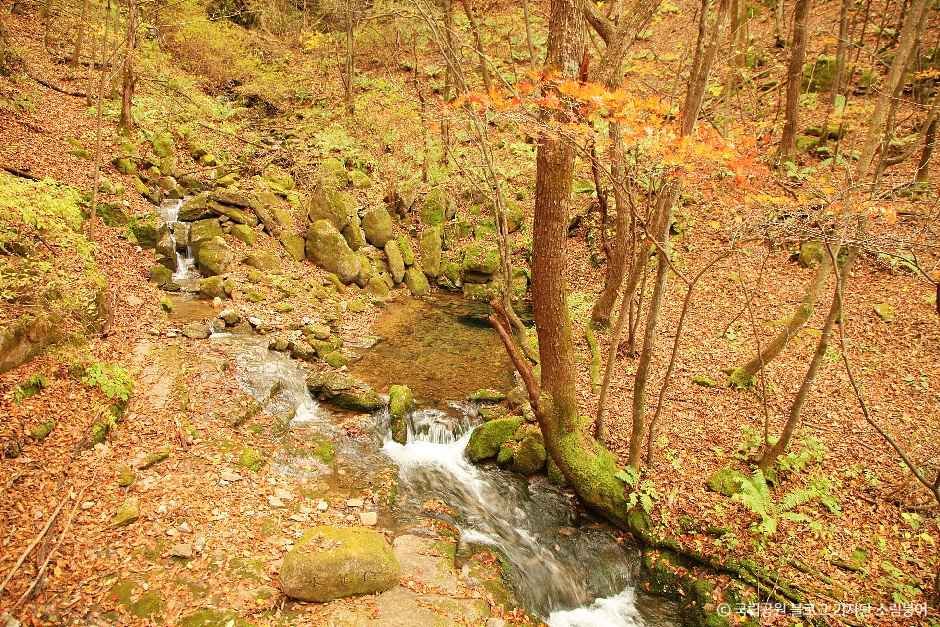
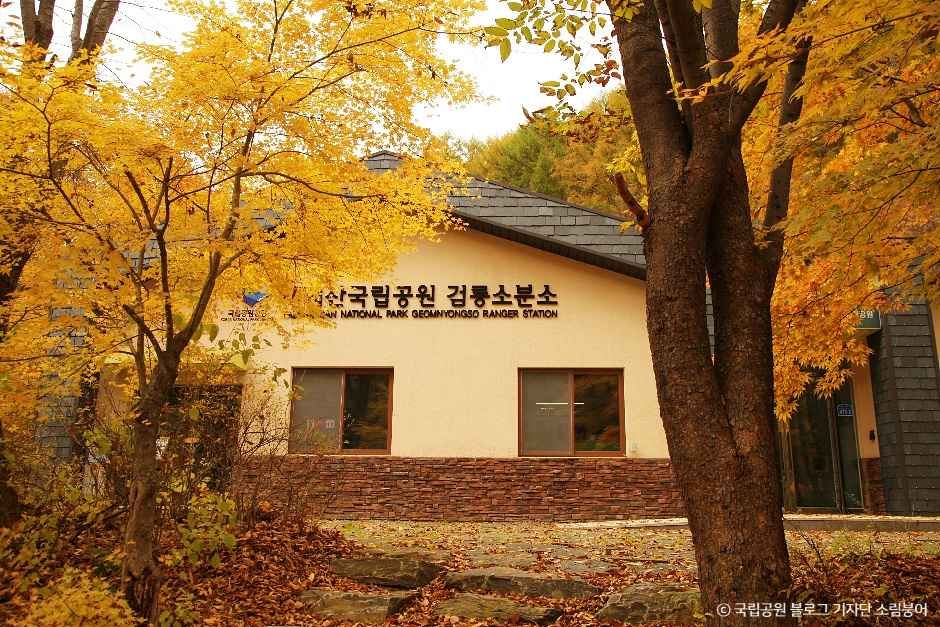
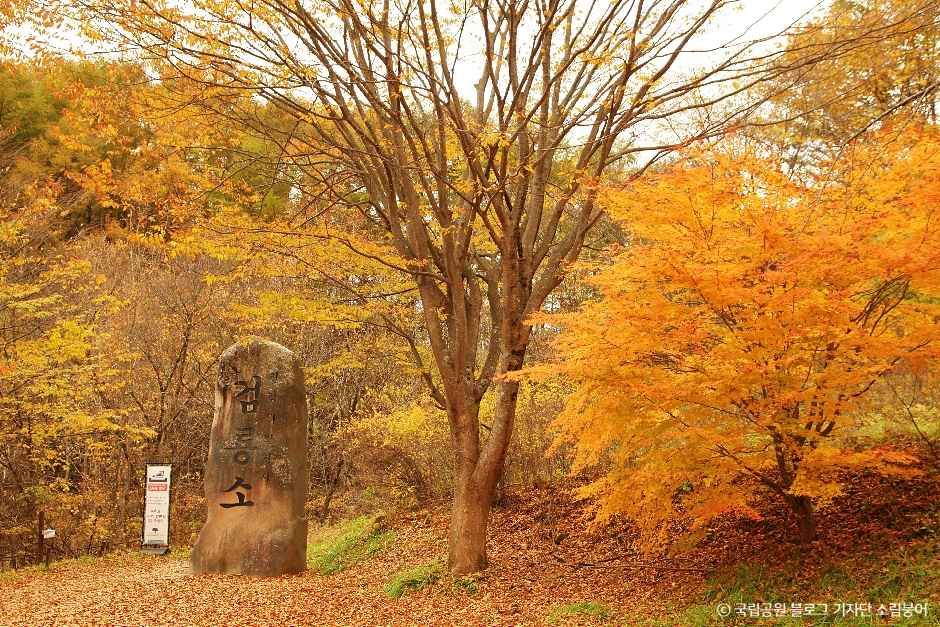
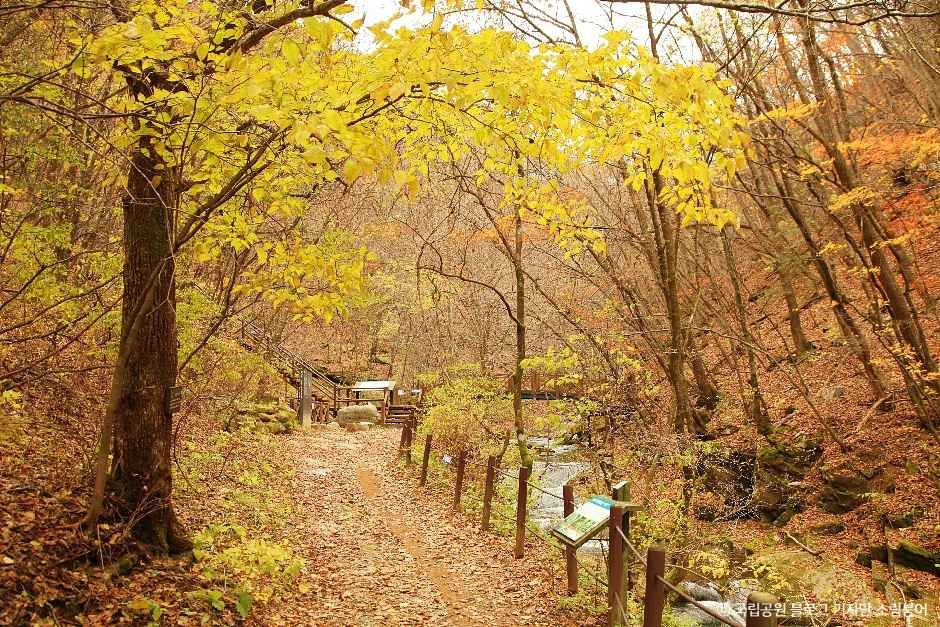
Geomryongso is named for being a pond where a dragon god lives. The Han River originates here and flows into the West Sea. Water rising from Geomryongso erodes limestone, creating potholes, and flows over the rock like a dragon crawling. The valleys around Geomryongso are made of limestone, which dissolves well in rainwater, forming caves underground. Valley water flowing from Geomryongso seeps into small caves beneath the surface, becoming groundwater. When an underground passage is blocked, the water rises again to the surface, flowing as valley water. Cracks in Geomryongso’s rocks are called bedding planes. Strong flowing water breaks the rock along these weak bedding planes, forming stepped pathways with round-shaped hollows. Such round holes frequently appear in rivers or valleys of limestone areas. Small gaps in the limestone floor allow sand and gravel to swirl with rapidly flowing water, carving out these potholes (portholes).
Good places to stop and rest after the course

Booking and payment continue on a partner site.
Check rooms & price
Booking and payment continue on a partner site.
Check rooms & priceSign up to feature your channel.
(As a member, you can add your Instagram, YouTube, and blog links in My Page, and we’ll show them with every comment you write.)
““Stayed near Hongdae and did a night café tour. Perfect city views and vibes.””
Guest comments do not display social media links or profile cards.
Share a short tip about this place.
Or leave a quick comment as a guest.
Photo attachments are available after login.
No reviews yet. Be the first to share your experience!