A Special Experience on Sokcho’s Coastal Lagoons in Gangwon Special Self-Governing Province Sokcho City · schedule Other · distance 15km · 6 stops · hig…

Sokcho features unique lakes created by the harmony of the sea, Cheongchoho and Yeongrangho. The areas around these two lakes offer numerous travel spots to fully enjoy the essence of Sokcho trips. Yeongrangho, where Hwarang once practiced, is perfect for Hwarangdo experiences as well as driving or trekking courses. The route leading to Cheongchoho includes Sokcho Lighthouse Observatory, Yeonggeumjeong, the raft ferry, and Abai Village, making it an indispensable part of any Sokcho visit.
This course is a sample one-day itinerary. Save it as-is or expand it into an AI itinerary.
Yeongrangho Lake is a natural lagoon formed by the development of coastal sand dunes, with a circumference of 7.8 km and an area of about 1.2 square kilometers. It is wide and deep, with a depth exceeding 8 meters. Water flowing from Jangcheoncheon connects to the East Sea through a waterway under Yeongranggyo Bridge. Surrounded by Jangsadong, Yeongrangdong, Dongmyeongdong, and Geumhodong in Sokcho-si, a walking trail perfect for strolls is built along the lakeshore. Along the trail, a lyrical and beautiful landscape flows with clear, calm water, cherry blossoms, azaleas, and reeds. According to the Samguk Yusa, Yeongrangho is said to be named after ‘Yeongrang,’ a Hwarang of the Silla dynasty. After finishing training at Geumgangsan, Yeongrang passed this lake on his way to a martial arts competition but became so captivated by the scenery that he forgot the competition and stayed here a long time. The lake is renowned for its outstanding scenery, as recorded in old documents. Especially Beombawi, one of Sokcho’s eight scenic spots, amazes all who see it, with a mysterious aura as if a tiger is quietly crouching. Gwaneumam and Bogwangsa, with several weirdly shaped rocks, are also unmissable attractions. The wetland ecological park located west of the lakeshore is also worth visiting.
It is a famous site considered the first of the eight scenic views of Sokcho. The white lighthouse exterior and the surrounding blue sea blend like a painting. Originally functioning only as a lighthouse, Sokcho Lighthouse Observatory is now open to the public and serves as an observatory. By climbing the wooden deck trail through a bamboo forest, visitors reach the observatory. From there, you can see the dark indigo East Sea, Cheongcho Lake where migratory birds come, and the beautiful scenery of Seoraksan Mountains surrounding like a folding screen. The East Sea viewed from above spreads widely like a vast ocean. The sea is calm like a lake but also shows vibrant life as waves dance and ripple. First lit in 1957, Sokcho Lighthouse still serves as a beacon for the night sea. The bright light and sound signals used since its construction guide vessels safely up to about 35 km out at sea. Right next to Sokcho Lighthouse Observatory is Yeonggeumjeong, making it convenient to visit both together.
Fishermen from Cheongho-dong Abai Village catch mackerel pike, squid, flounder, saechi, yellowtail gizzard shad, sandfish, Spanish mackerel, herring, flounder, and other different fish daily from the clean East Sea early in the morning. These are generously and variously served and grilled over charcoal fire instead of briquette or gas, resulting in a chewy texture and the fish’s original flavor fully preserved. The restaurant offers only one menu: assorted grilled fish set meal. When you order the assorted grilled fish, about 10 types of fish are grilled directly at the table. Despite being the same grilled fish, this place offers a taste that cannot be replicated when grilled at home.
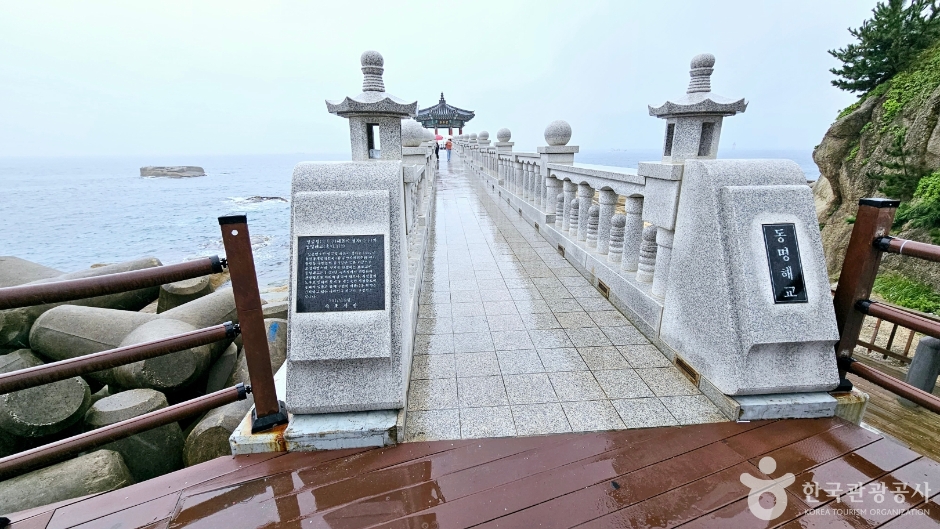
Yeonggeumjeong is a place with large and wide rocks spread along the seaside under Sokcho Lighthouse in Dongmyeong-dong, Sokcho-si. The origin of the name comes from the mysterious melody heard when waves hit the rocks, said to resemble the sacred sound of a 'geomungo' (traditional Korean zither), hence it is called Yeonggeumjeong. Located close to the city center, it offers beautiful scenery and is a popular spot year-round for Sokcho citizens to enjoy summer retreats and fishing. Currently, Sokcho-si has developed the Yeonggeumjeong area into a tourist site, and a pavilion was built near the southern breakwater. This pavilion is a maritime pavilion built on the Yeonggeumjeong rocks and can be reached by crossing a bridge of about 50 meters. The feeling of looking out at the sea from the pavilion is refreshingly different from the breakwater, but the pavilion itself is made of concrete, which is somewhat disappointing. It is generally called the Sunrise Pavilion, and the pavilion's nameplate bears the inscription Yeonggeumjeong (靈琴亭).
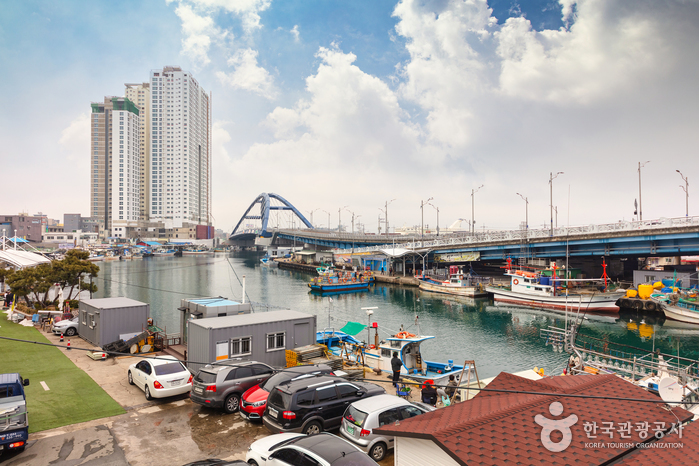
This is a unique means of transportation that crosses Abai Village, formed at the estuary of Cheongcho Lake. You can quickly cross the approximately 50-meter waterway between Sokcho city and Abai Village using the gaetbae. The gaetbae is a small barge-type, non-powered ferry that moves by people pulling a wire rope themselves. After securing sturdy iron wires on both sides of the waterway and hooking them with a hook, pulling hard moves the boat slowly forward. Since there is no separate ferryman, the passengers on the boat must work together to pull it. The time spent crossing the waterway on the gaetbae is about 5 minutes. It is a unique cultural experience only available in Sokcho, attracting many tourists even now, and it became known as a filming location for the drama , so Japanese and Chinese tourists can often be seen as well.
Located in Cheongho-dong, Sokcho-si, Abai Village is a settlement of displaced persons, also called Abaichon or Hamgyeong-do Abai collective village. It began in 1951 when refugees from Hamgyeong-do who retreated southward with the Korean army formed a settlement. 'Abai' is a Hamgyeong-do dialect word meaning grandfather or an elderly man. Abai Village offers a glimpse into the lives and living conditions of displaced persons. Although much of the original appearance has disappeared, scattered shanty houses without gates remain along alleys, and murals expressing longing for hometowns line the walls. As Korea's only collective settlement of displaced persons, Abai Village symbolizes division and the hope for reunification, evoking the hard life and sorrows of refugees who awaited return while working at fishing and labor jobs. Houses initially built by refugees have been restored at the Sokcho Municipal Museum Displaced Persons Cultural Village. Known as a filming location for the drama Autumn in My Heart, Abai Village became a major tourist attraction in Sokcho. Nearby restaurant alleys feature North Korean regional dishes like Hamheung naengmyeon, squid sundae, and Abai sundae guk, along with many cafes.
Good places to stop and rest after the course

Booking and payment continue on a partner site.
Check rooms & price
Booking and payment continue on a partner site.
Check rooms & price
Booking and payment continue on a partner site.
Check rooms & price
Booking and payment continue on a partner site.
Check rooms & priceSign up to feature your channel.
(As a member, you can add your Instagram, YouTube, and blog links in My Page, and we’ll show them with every comment you write.)
““Stayed near Hongdae and did a night café tour. Perfect city views and vibes.””
Guest comments do not display social media links or profile cards.
Share a short tip about this place.
Or leave a quick comment as a guest.
Photo attachments are available after login.
No reviews yet. Be the first to share your experience!