Seosan’s Essential History and Nature Course in Chungcheongnam-do Seosan City · schedule 1 night 2 days · distance 86.3km · 6 stops · highlights 마애여래삼존상…

A collection of Seosan’s key historical sites and natural tourist attractions boasting beautiful scenery! Begin with Seosan Maae Samjonbul, a late Baekje work, followed by the Gyeongju Kim clan House where the Gyeongju Kim family has lived for over 600 years, the birthplace of Empress Jeongsun, and the famous Joseon-period Haemi Eupseong fortress to spend a full day. The next day, end at Ungdo, which alternates between land and island with the tidal changes, and Samgilpo Port, known for its beautiful scenery and popular with photographers.
This course is a sample 2-day itinerary. Save it as-is or expand it into an AI itinerary.
서산마애삼존불(국보 제84호)은 백제의 미소가 어떤 것인지를 느낄 수 있는 백제 후기의 작품이다. 때로는 근엄하게, 때로는 온화해 보이는 얼굴은 해가 비치는 시간에 따라 달리 보여 더욱 신비롭다. 청정한 용현계곡을 건너 계단을 통해 바위산을 오르면 아슬아슬한 바위 위에 새겨진 삼존불을 만난다. 본존인 석가여래입상을 중심으로 오른편에는 가부좌를 틀고 있는 미륵반가사유상이, 왼편에는 제화갈라보살입상이 서 있다. 불상의 광배까지 생생하게 보존되어 있고, 특히 본존의 연꽃과 불꽃 무늬 광배가 꽃이 피어나는 듯 살아 있다.
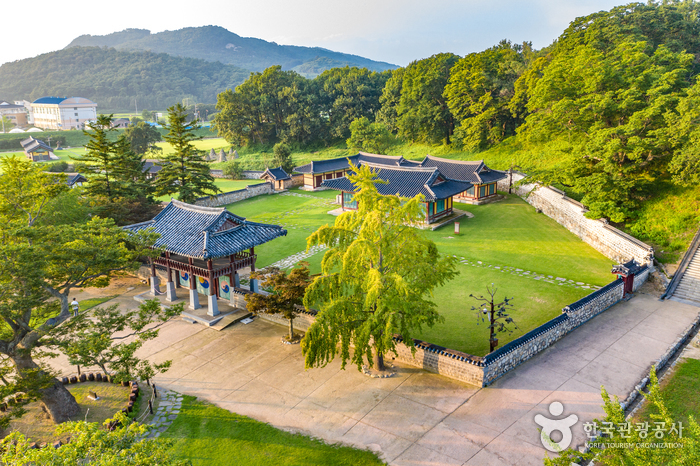
This old house is a traditional Korean wooden tiled house located next to the birthplace of Queen Jeongsoon. It is the residence of the Gyeongju Kim clan, which produced Queen Jeongsoon. Situated in a flat village called 'Handari' in Yugye-ri, Eumam-myeon, with a low hill in the background and facing east, the house is estimated to have been built in the mid-19th century based on architectural techniques, wood condition, and house layout. According to tradition, a Lee family who lived in Taean built the house, but based on feng shui principles, the site was meant for the Kim family, so an ancestor of current resident and caretaker Kim Ki-hyeon, of the Gyeongju Kim clan, purchased and moved into the house. The house is also called the Kim Ki-hyeon House as he currently resides there. The layout forms an overall square shape, combining a ᄍ-shaped main building and a ᄇ-shaped secondary building. It was designated a National Folklore Cultural Property in 1984, and traditional Hanok stay experiences are available. The house has a hill behind it and is located in front of Dodamcheon Stream and wide fields. Although now somewhat far from the West Sea, it is thought to have been near the sea before reclamation projects. Nearby attractions include the birthplace of Queen Jeongsoon, Haemi Eupseong, Haemi Catholic Martyrs' Shrine, Ganwol Lake, and Cheonsuman Migratory Bird Sanctuary.
This place is the home where Queen Jeongsun (1745–1805), the concubine of King Yeongjo of Joseon, was born and lived until she became queen. Queen Jeongsun was appointed queen in 1759 (the 35th year of Yeongjo) after the death of King Yeongjo's main consort, Queen Jeongseong of the Seo clan. This house is presumed to have been built between 1649 and 1659 during King Hyojong’s reign, as it was granted by him knowing that Hakju Kim Hong-wook, who served as royal secretary and minister of rites, was caring for his elderly parents here. Therefore, it is also called the Seosan Gyeongju Kim clan's old residence. The building has a square-shaped floor plan with five rooms at the front and two rooms on the side, with three additional rooms attached to the left and right, forming a U-shaped structure. To the south, there is a detached building with five rooms at the front and one room on the side, also square-shaped. The courtyard walls surrounding the house and backhouse are built with natural stone, and the main gate is flat. In 1988, it was designated a Chungcheongnam-do monument. The house has a hill behind it and is located in front of Dodamcheon stream and a broad plain. Although currently somewhat distant from the West Sea, before the land reclamation project, it is believed to have been closer to the sea. Nearby are Haemi Eupseong, Haemi Martyrdom Sacred Site, Ganwol Lake, and Cheonsuman Migratory Bird Sanctuary.
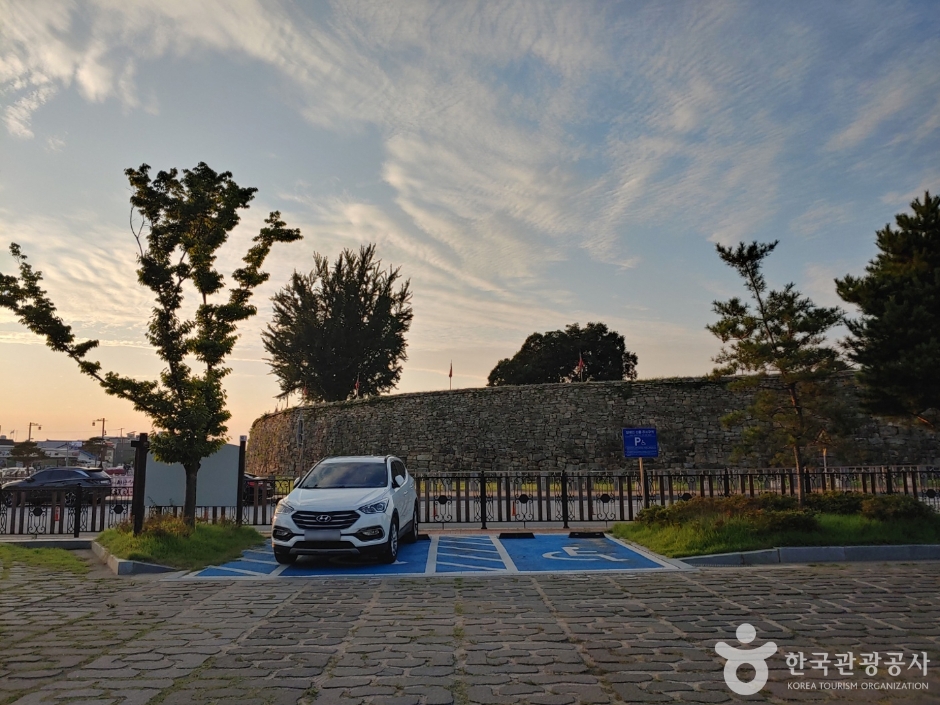
It is a representative eupseong (walled town) from the Joseon Dynasty. Eupseong are flatland castles built around an eup (town), with Haemi Eupseong being famous along with Gochang Eupseong and Nagan Eupseong. Haemi Eupseong is a stone fortress completed in 1491, the 22nd year of King Seongjong's reign. It has a circumference of about 1.8 km, a height of 5 m, and a total area of 196,381 m² (about 60,000 pyeong), featuring three gates: east, south, and west. Recently, restoration and purification projects have restored its original appearance and established it as a historic park. It is also famous as a martyrdom site for Catholics during the late Joseon period. During persecutions of Catholics, many believers from various parts of Chungcheong Province were captured, tortured, and killed at Haemi Eupseong, which had a government office. In particular, about 1,000 people were executed here during the 1866 persecution. In the plaza inside the fortress stands the site of a prison where Catholics arrested during the Daewon-gun regency were held, and an old pagoda tree under which they were brutally tortured by hanging. The 300-year-old tree at the prison entrance still bears iron wire marks from where victims’ hair was tied and hung. Just outside the fortress gate on the roadside is the Jari-gae-dol, where believers who resisted torture while hanging from the pagoda tree were beaten to death on stone slabs, making it a pilgrimage site for Catholics. Quince trees were once planted around the fortress walls to repel enemy troops, but now they are hardly seen.
웅도는 본래 서산군 지곡면의 관할지역에 편입되어 있었는데 1914년 행정구역 개편시 웅도를 하나의 행정리로 독립시켜 우도리라 하여 서산군 대산면에 편입시켰다.이후 1991년 대산면은 읍으로 승격되었다. 웅도는 섬의 모양이 웅크리고 있는 곰과 같이 생겼다 해서 웅도 또는 곰섬이라 불리우고 있다. 가로림만 내해의 정중앙에 자리하고 있으면서 대산읍의 7개 도서 중 유일한 유인도서이다.
In front of the Daeho Barrage on the northern tip of the Taean Peninsula, there are several ports. Samgilpo Port is the largest among them, attracting many tourists from the surrounding areas and the metropolitan region. Though it cannot be compared to the taste of sashimi prepared immediately after fishing on the boat or rocky shore, the taste of sashimi made from freshly caught fish is a unique delight that can only be experienced at West Sea harbors. This place is especially known for black seabream, which prefers the brackish water area where seawater and freshwater meet, and gobies are also frequently seen. Along the road connected to the harbor coast, various sashimi restaurants are located where you can enjoy the scenery while dining. Meanwhile, the Daeho Barrage is known as a paradise for winter migratory birds, and countless migratory birds gather here in winter, creating a spectacular view. Additionally, this place is the start and end point of the Seosan Aramegil Samgilnaru-gil (hiking trail and cherry blossom path), making it a good spot for linked tourism. Across the Daeho Barrage are Dobido Port and, in the adjacent sea, the West Sea Nanji Island.
Sign up to feature your channel.
(As a member, you can add your Instagram, YouTube, and blog links in My Page, and we’ll show them with every comment you write.)
““Stayed near Hongdae and did a night café tour. Perfect city views and vibes.””
Guest comments do not display social media links or profile cards.
Share a short tip about this place.
Or leave a quick comment as a guest.
Photo attachments are available after login.
No reviews yet. Be the first to share your experience!