One Night Feeling 300 Years with All Five Senses in Chungcheongnam-do Seosan City · schedule Other · distance 28.2km · 4 stops · highlights 서산 용현리 마애여래삼…

Handari Village in Seosan-si, Chungnam, is a clan village of the Gyeongju Kim family. About 500 years ago, Kim Yeon, who served as Anjumoksa and later as Seoheungbusa, came here based on the territory obtained after suppressing Im Ggeok-jeong, establishing the clan village. Do not forget to experience the vintage atmosphere of this place and the neat traditional food.
This course is a sample 2-day itinerary. Save it as-is or expand it into an AI itinerary.
서산마애삼존불(국보 제84호)은 백제의 미소가 어떤 것인지를 느낄 수 있는 백제 후기의 작품이다. 때로는 근엄하게, 때로는 온화해 보이는 얼굴은 해가 비치는 시간에 따라 달리 보여 더욱 신비롭다. 청정한 용현계곡을 건너 계단을 통해 바위산을 오르면 아슬아슬한 바위 위에 새겨진 삼존불을 만난다. 본존인 석가여래입상을 중심으로 오른편에는 가부좌를 틀고 있는 미륵반가사유상이, 왼편에는 제화갈라보살입상이 서 있다. 불상의 광배까지 생생하게 보존되어 있고, 특히 본존의 연꽃과 불꽃 무늬 광배가 꽃이 피어나는 듯 살아 있다.
This site was where Bowon Temple existed from the Baekje period to the Joseon dynasty, holding a thousand years of history and many Buddhist cultural assets. Major cultural properties here include the 4-meter-high Dangganjiju (flagpole supports) that suggest the temple's scale, the five-story stone pagoda, stone statues, the Beopin Guksa pagoda, and the Beopin Guksa monument, all designated as treasures due to their great value. At one time, the temple housed about a thousand monks, and even by today's standards, the temple site deep in the mountains is so vast that it cannot be seen all at once. The gilt-bronze standing Buddha, iron standing Buddha, and iron seated Buddha statues excavated from Bowon Temple Site were moved to the National Museum of Korea in Seoul, but traces that suggest the grandeur of this millennium-old temple can still be found scattered around the site. Recognized for its value, it was designated a historic site in 1987, and it is especially notable that this area was significant during the Baekje period. Today, it is being reconstructed as a branch temple of Sudeoksa Temple in the 7th district of the Jogye Order of Korean Buddhism. Nearby are the Maae Samjon Buddha Rock Carving of Yonghyeon-ri in Seosan, another Baekje Buddhist cultural asset, as well as Yonghyeon Valley, Gayasan Mountain, and Gopung Reservoir. The Seosan Arame-gil Millennium Smile Trail and its circular route also pass through here, making it favorable for linked tourism.
Gaesimsa Temple, located in Sinchang-ri, Unsan-myeon, is one of the four major temples in Chungnam. It was founded by Monk Hyegam in 654, the 14th year of King Uija of Baekje, and is said to have been renovated by Cheoneung Daesa in 1350, the 2nd year of King Chungjeong of Goryeo. Only the base of the Daeungjeon Hall dates back to Baekje, while the building was destroyed by a mountain fire in 1475, the 6th year of King Seongjong of Joseon, and was rebuilt in 1484, the 15th year of King Seongjong of Joseon. Daeungjeon Hall, Treasure No. 143, was reconstructed on the original base in 1484 with an architectural style combining Dapo and Jusimpo methods, exemplifying exquisite craftsmanship and architectural artistry. The dense forest, bizarre rock formations surrounding the temple, and cherry blossoms that bloom around Buddha's Birthday make the scenery even more beautiful, filling the temple area with cherry blossoms to evoke a feeling of stepping into a transcendent realm far from worldly worries. Source: Seosan City Cultural Tourism Homepage
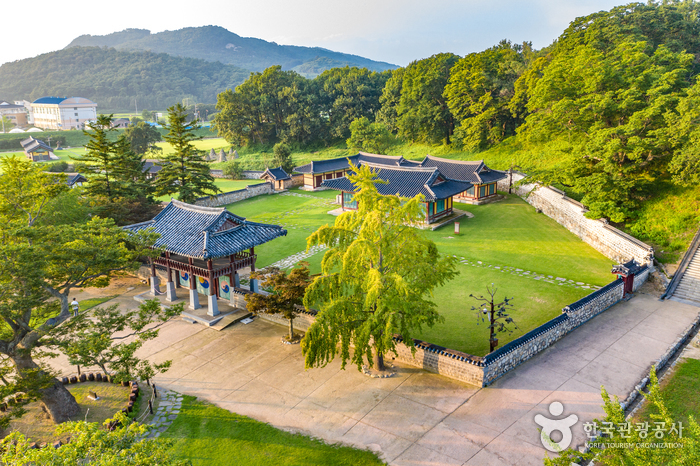
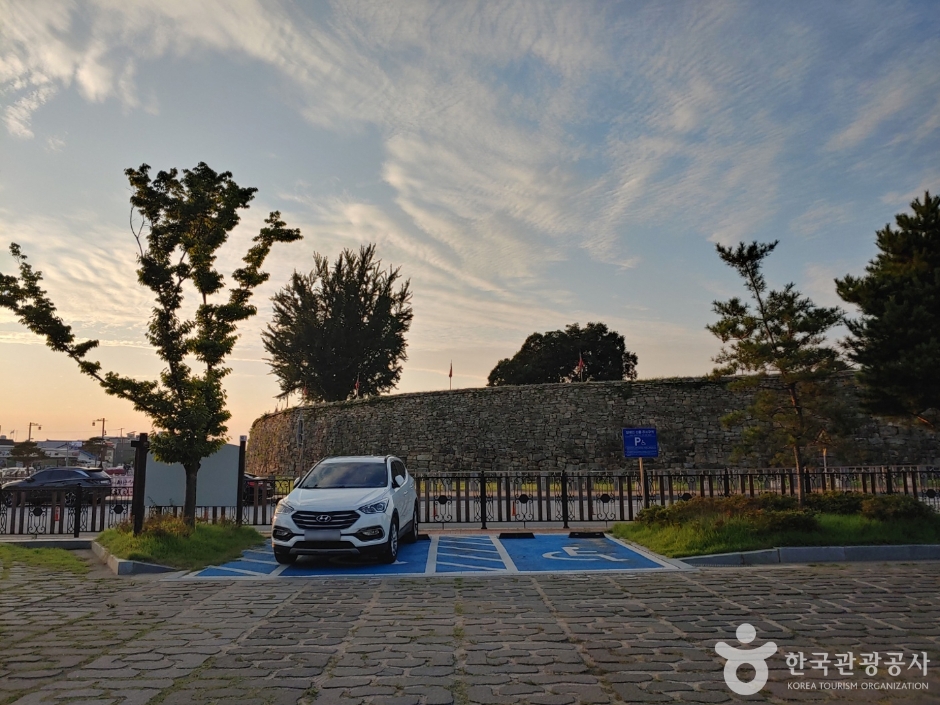
It is a representative eupseong (walled town) from the Joseon Dynasty. Eupseong are flatland castles built around an eup (town), with Haemi Eupseong being famous along with Gochang Eupseong and Nagan Eupseong. Haemi Eupseong is a stone fortress completed in 1491, the 22nd year of King Seongjong's reign. It has a circumference of about 1.8 km, a height of 5 m, and a total area of 196,381 m² (about 60,000 pyeong), featuring three gates: east, south, and west. Recently, restoration and purification projects have restored its original appearance and established it as a historic park. It is also famous as a martyrdom site for Catholics during the late Joseon period. During persecutions of Catholics, many believers from various parts of Chungcheong Province were captured, tortured, and killed at Haemi Eupseong, which had a government office. In particular, about 1,000 people were executed here during the 1866 persecution. In the plaza inside the fortress stands the site of a prison where Catholics arrested during the Daewon-gun regency were held, and an old pagoda tree under which they were brutally tortured by hanging. The 300-year-old tree at the prison entrance still bears iron wire marks from where victims’ hair was tied and hung. Just outside the fortress gate on the roadside is the Jari-gae-dol, where believers who resisted torture while hanging from the pagoda tree were beaten to death on stone slabs, making it a pilgrimage site for Catholics. Quince trees were once planted around the fortress walls to repel enemy troops, but now they are hardly seen.
Good places to stop and rest after the course

Booking and payment continue on a partner site.
Check rooms & priceSign up to feature your channel.
(As a member, you can add your Instagram, YouTube, and blog links in My Page, and we’ll show them with every comment you write.)
““Stayed near Hongdae and did a night café tour. Perfect city views and vibes.””
Guest comments do not display social media links or profile cards.
Share a short tip about this place.
Or leave a quick comment as a guest.
Photo attachments are available after login.
No reviews yet. Be the first to share your experience!