Engraving Patriotism at a Sacred Site of National Defense in Gyeongsangbuk-do Sangju City · schedule Other · distance 34km · 3 stops · highlights Sangju…
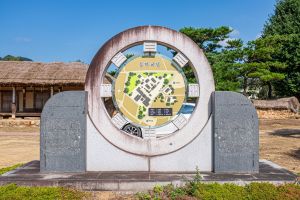
This place was established in 1924 by Kim Ju-hee, the Namjeopju (head of a Joep, the organizational unit of Donghak) to expand the religious influence. In 1925, Kim Ju-hee settled here, using it as a base to promote the revival of Donghak teachings in the northern Gyeongbuk region, including Sangju, Mungyeong, and Yecheon, while avoiding Japanese surveillance.
This course is a sample 2-day itinerary. Save it as-is or expand it into an AI itinerary.
This is a Donghak temple located in a flat village surrounded by mountains on all sides in a wide basin. The current owner's father, Kim Juhee (1860–1940), established his base here in 1915 and actively worked to propagate Donghak, a native Korean religion, and expand its followers, reportedly building it in 1924. Four buildings—Dongjae, Seojae, Namjae, and Bukjae—are arranged in the four directions, with the storage building located to the back left. The central building, Bukjae, served as the sacred room; the Dongjae, used as the host's quarters, served as the leader's room; the Seojae, the inner quarters, was used equally by male and female followers; and the Namjae, the side quarters, was used by male followers. Originally, all buildings had thatched roofs but were later changed to slate roofs. It is notable as a rare example of a Donghak headquarters building.
Sangju Imranbukcheon Battle Site is a patriotic sacred place where about 900 central and local troops of Joseon died defending against the main force of the Japanese army during the Imjin War. In 1592, when the Japanese landed at Busan, about 60 central troops of Joseon moved south to stop them. Together with Sangju magistrates Kwon Gil and Park Geol who assembled about 800 local men overnight, around 900 fought fiercely against 17,000 Japanese soldiers and all perished. To honor their patriotism, Chungnyeolsa Shrine was built, enshrining memorial tablets of the fallen including Yun Seom, Kwon Gil, Kim Jong-mu, Lee Gyeong-ryu, Park Ho, Kim Jun-shin, Kim Il, Park Geol, and an unknown martyr. Originally, only a commemorative monument (Sabi) recorded this in Sangju, but in 1990 a shrine and exhibition hall were established, relocating former Sangju government buildings to develop the site as a park. The site includes Taepyeongnu, the gate tower of Sangju Dongheon, Sangsan-gwan, a government guesthouse used by royal envoys, and Chimcheonjeong, a pavilion built in 1577 (10th year of Seonjo) outside Sangju fortress's south gate by magistrate Jeong Gonsu, used for scholars' rest and writing. Every year on June 4th (solar calendar), memorial rites are held to honor their spirits, and the site serves as a living history education center for future generations.
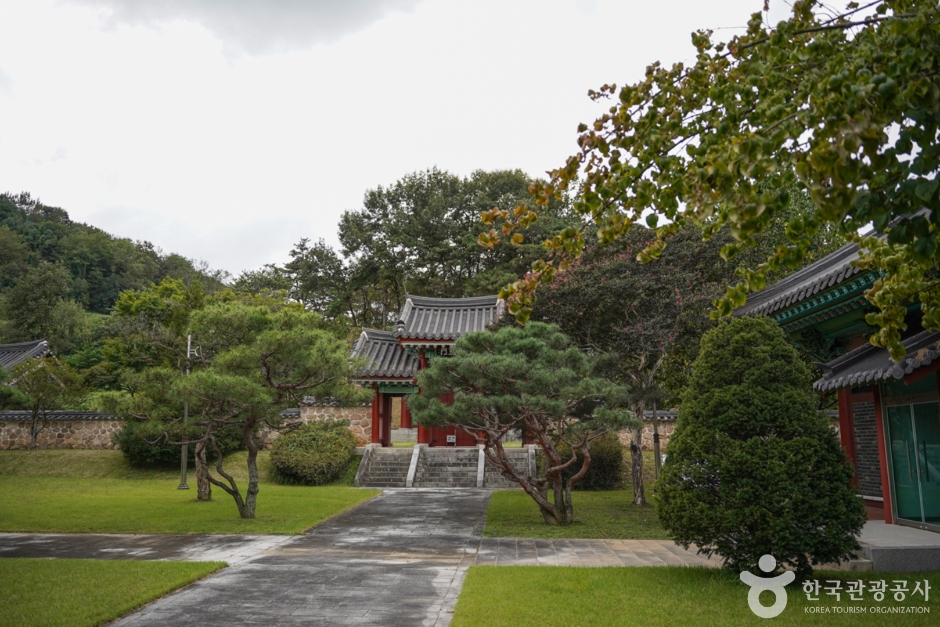
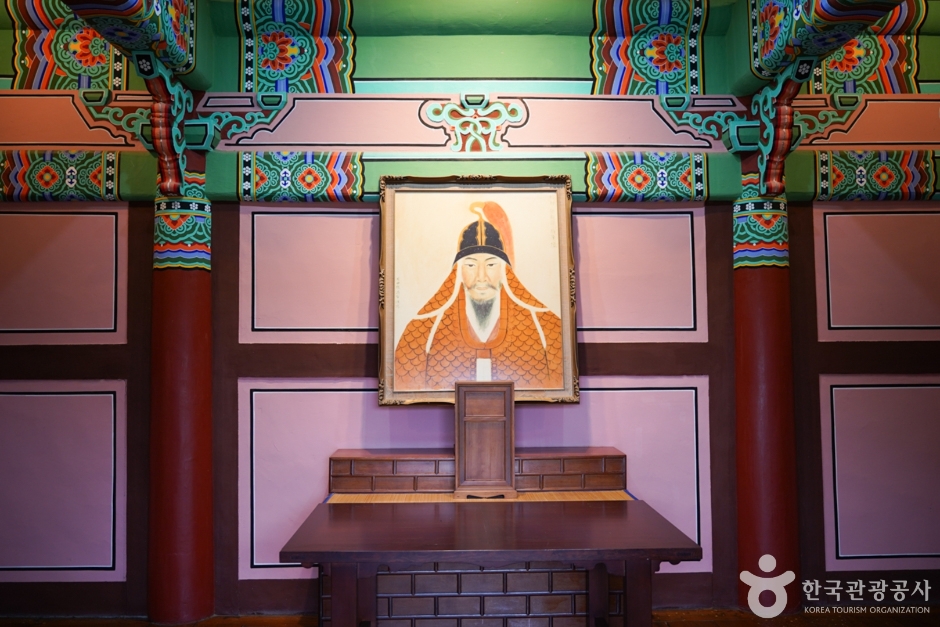
Chung-uisa is a shrine enshrining the memorial tablet of General Jeong Gi-ryong, a military commander during the reign of King Seonjo of Joseon, who achieved great feats as a master of land battles during the Japanese invasions of Korea (Imjin War). General Jeong was born in 1562 (Myeongjong 17) in Geumnam-myeon, Hadong-gun, Gyeongnam, was recommended to Sangju at age 20, passed the military examination at 25, and was renamed Gi-ryong by royal command. When the Imjin War broke out, he defeated many Japanese soldiers in more than 60 battles with a small army and reclaimed Sangju Castle after fierce fighting as Sangju Magistrate. He later served as Gyeongsang Udo Byeongma Jeoldosa, Gyeongsang-do Defense Commander, and 3-Do Tongjesa concurrently with Gyeongsang Udo Naval Commander until his death. His posthumous name is Chungui (Loyal and Resolute). The memorial stele and the general’s tomb were designated local cultural assets in 1974. In 1978, the original shrine of about 16.5㎡ was expanded to about 13,223㎡, including a shrine, exhibition hall, and administration office, in a patriotic historic site preservation project. The exhibition hall displays five treasure-level items (two royal commands, one royal decree, one memorial tablet, one jade belt) and wooden movable cultural properties (19 royal decrees and 58 woodblocks of Maehun Silgi). Every October, local residents reenact the scene of recapturing Sangju Castle during the Imjin War to promote and pass down the general’s patriotic spirit.
Good places to stop and rest after the course

Booking and payment continue on a partner site.
Check rooms & priceSign up to feature your channel.
(As a member, you can add your Instagram, YouTube, and blog links in My Page, and we’ll show them with every comment you write.)
““Stayed near Hongdae and did a night café tour. Perfect city views and vibes.””
Guest comments do not display social media links or profile cards.
Share a short tip about this place.
Or leave a quick comment as a guest.
Photo attachments are available after login.
No reviews yet. Be the first to share your experience!