Bicycle History Trip to Old Heritage Sites in Sangju in Gyeongsangbuk-do Sangju City · schedule Other · distance 74km · 4 stops · highlights 효자 정재수 기념관,…
This is a museum course where you can see the historic sites of the entire Sangju area and the history of bicycles. Although the distance is somewhat far, it is a course that can be visited within a day without difficulty. At the Hyoja Jeong Jesu Memorial Hall, reflect on the increasingly forgotten meaning of filial piety, and finish your Sangju trip by visiting the Imran battlefield sites and ancient temples.
This course is a sample one-day itinerary. Save it as-is or expand it into an AI itinerary.
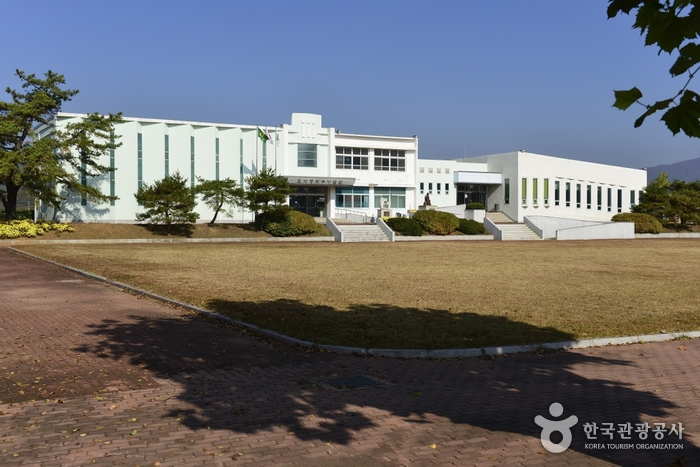
10살의 어린 나이에 아버지를 구하려다 숨진 정재수군의 효행을 기리기 위해 세운 기념관이다. 정재수군의 모교인 구(舊) 사산초등학교에 조성되어 2001년 6월 12일에 개관하였다. 전국에서 유일하게 "효"를 주제로 하는 효자 정재수 기념관을 경북 상주시 화서면 사산리 구 사산초등학교 (고 정재수 모교)에 건립하여 현대에 들어 잊혀져가고 있는 "효" 사상을 재정립함과 아울러 자라나는 어린이들에게 살아있는 효의 산 교육장으로 활용하고 있다.
Sangju Imranbukcheon Battle Site is a patriotic sacred place where about 900 central and local troops of Joseon died defending against the main force of the Japanese army during the Imjin War. In 1592, when the Japanese landed at Busan, about 60 central troops of Joseon moved south to stop them. Together with Sangju magistrates Kwon Gil and Park Geol who assembled about 800 local men overnight, around 900 fought fiercely against 17,000 Japanese soldiers and all perished. To honor their patriotism, Chungnyeolsa Shrine was built, enshrining memorial tablets of the fallen including Yun Seom, Kwon Gil, Kim Jong-mu, Lee Gyeong-ryu, Park Ho, Kim Jun-shin, Kim Il, Park Geol, and an unknown martyr. Originally, only a commemorative monument (Sabi) recorded this in Sangju, but in 1990 a shrine and exhibition hall were established, relocating former Sangju government buildings to develop the site as a park. The site includes Taepyeongnu, the gate tower of Sangju Dongheon, Sangsan-gwan, a government guesthouse used by royal envoys, and Chimcheonjeong, a pavilion built in 1577 (10th year of Seonjo) outside Sangju fortress's south gate by magistrate Jeong Gonsu, used for scholars' rest and writing. Every year on June 4th (solar calendar), memorial rites are held to honor their spirits, and the site serves as a living history education center for future generations.
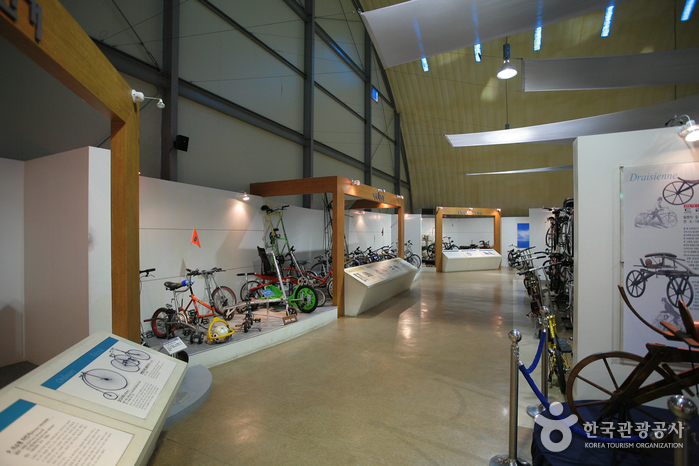
우리나라 최초로 자전거를 테마로 한 “상주자전거박물관”이 확장, 이전하여 경상북도 상주시 도남동에 새롭게 문을 열었다. 자전거 역사를 한눈에 볼 수 있는 상주 자전거 박물관은 말 그대로 자전거의 모든 것이 담긴 “자전거 천국” 이다. 전시되어 있는 60여 대가 자전거 역사를 한눈에 보여주고 있다. 주요시설은 지하 1층에 자전거대여소와 수장고, 기계실이 있고 지상 1층에는 기획전시장과 4D영상관, 지역농특산물 홍보코너가, 그리고 지상 2층에는 상설전시장과 다목적 홀, 관리사무실 등이 들어서 있다.
Namjangsa Temple is a traditional temple under the Jogye Order of Korean Buddhism. It was founded by Monk Jingam, who returned from Tang China in 830 (the 5th year of King Heungdeok's reign), and it was the first temple where he stayed. The original name of the temple was Jangbaeksa. In 1186 (the 16th year of King Myeongjong of Goryeo), Monk Gakwongwa changed the temple's name from Jangbaeksa to Namjangsa and renovated it. Monk Jingam learned Beompae (Buddhist music, songs praising Buddha's virtues) in Mount Zhongnan in China and, upon returning at age 57 in 830, stayed at Jangbaeksa. In 832, he built the Muryangjeon Hall (currently Bogwangjeon) and introduced Beompae to Korea for the first time. It is said that many gathered like clouds as patients previously gathered at clinics. This Beompae is one of Korea's three major vocal music genres, alongside Pansori and Gagok. Previously, Ssanggyesa Temple on Jirisan in Hadong, Gyeongsangnam-do was known as the original place of Beompae introduction, but the stele inscription of the 'Great Monk Jingam's Memorial Stele' written by Choi Chiwon at Ssanggyesa indicates Jangbaeksa in Sangju, so Sangju Jangbaeksa is now recognized as the earliest site of Beompae introduction. Namjangsa's major relics preserve masterpieces of Buddhist art, such as the Iron Seated Buddha (Treasure No. 990) and Wooden Posthumous Buddha Painting (Treasure No. 922). The Iljumun Gate is designated as Local Cultural Material No. 442 and is renowned as a treasure trove of Buddhist art. Within the temple grounds is the Gwaneum Seonwon, established in 1797 (the 21st year of King Jeongjo), which houses the oldest wooden posthumous Buddha painting in Korea (Treasure No. 923). This was created by the donor monk Hwiseon in 1694 (the 20th year of King Sukjong) at Sangyeonam behind Bukjangsa and was moved to its present location in 1819. It was first designated as Provincial Cultural Property No. 58 but was promoted to a treasure due to its evaluation as the oldest wooden posthumous painting in Korea. Until recently, it was known as the posthumous painting of Yaksuam at Silsangsa Temple on Jirisan carved in 1782 (Treasure No. 421), but it is now identified as the wooden posthumous painting of Namjangsa's Gwaneum Seonwon.
Good places to stop and rest after the course

Booking and payment continue on a partner site.
Check rooms & priceSign up to feature your channel.
(As a member, you can add your Instagram, YouTube, and blog links in My Page, and we’ll show them with every comment you write.)
““Stayed near Hongdae and did a night café tour. Perfect city views and vibes.””
Guest comments do not display social media links or profile cards.
Share a short tip about this place.
Or leave a quick comment as a guest.
Photo attachments are available after login.
No reviews yet. Be the first to share your experience!