Sancheong Cultural Heritage Tour 2 in Gyeongsangnam-do Sancheong County · schedule Other · distance 39.4km · 4 stops · highlights Dansoksa Jeongdangmae,…
The beautiful and scenic Jirisan Mountain has a deep history and profound 'han' (a unique Korean emotion). Enjoy the beauty of Jirisan by visiting the mysterious old plum blossom tree Jeongdangmae at the site of Dansoksa Temple and touring the historical sites of scholar Josik. Also, stop by the exhibition hall that contains the history of the guerrilla soldier suppression, an unforgettable sorrow of history.
This course is a sample one-day itinerary. Save it as-is or expand it into an AI itinerary.
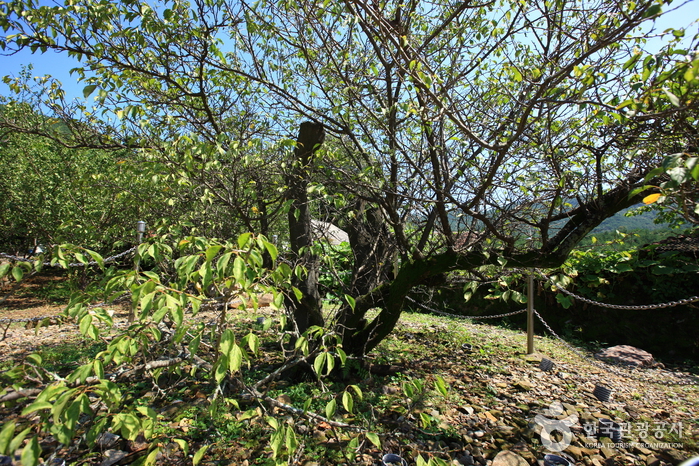
At the site of Dansoksa Temple located south-facing below Oknyobong, where the ridge of Jirisan Mountain powerfully descends and halts, in Un-ri, Danseong-myeon, Sancheong-gun, Gyeongnam, a plum tree stands amid the scattered three-story stone pagodas of the east and west and foundation stones. This is the Jeongdangmae (Jeongdang Plum Tree), the oldest plum tree in Korea. According to the flower cultivation book Yanghwa Solog by the talented Gang Heean (1419–1464), our ancestor Tongjeonggong planted a plum tree in front of the temple courtyard and composed a poem there during his youth while studying at Dansoksa of Jirisan. The ancestor mentioned by Gang is Tongjeong Kang Hoebaek (1357–1402), a civil official from the late Goryeo period, who passed the literary examination in 1376 and rose to the post of Jeongdangmunhak (a mid-second rank post in the central government) and Daesaheon. After Jeong Mongju was assassinated in 1392, he was exiled to Jinyang and later became Dobunmunsa of the northeast region in 1398 after the founding of Joseon. He was from Sancheong and grandfather of Gang Heean; he planted the Jeongdangmae in his youth, composing poetry with it. Another poem recorded in Tongjeong's collection was written when he visited the plum tree before his death at age 46, deeply moving readers. Monks of Dansoksa revered his talent and noble character, seeing the plum tree as his likeness. Every year they cared for and reinforced its roots and branches at the proper time. The tree's gracefully curved branches and moss-covered trunk match descriptions of ancient plums in the Maebo text, making it a precious old tree of Yeongnam. Since then, visitors on government business to Yeongnam would come to Dansoksa to admire the plum tree and write poems reflecting the spirit of our ancestors, hanging them on the temple gate. Monks carefully safeguarded this tree, and descendants of Tongjeonggong and visiting officials sought out Jeongdangmae. The plum tree’s age is recorded from when Tongjeonggong planted it before passing the exam before age 20, so it likely dates back to before 1376, making it over 630 years old. Currently, Jeongdangmae stands 8 meters tall with a trunk circumference of 1.5 meters, splitting at the base into four branches extending upwards or sideways. The flowers are white and single-petaled, blooming reliably around March 20 with a clear fragrance. Descendants built a pavilion with a monument to honor the tree. The Maegak (Plum Pavilion) was built in 1915 when the monument was established and displays a plaque inscribed with 'Jeongdang Maegak.' Inside the pavilion hang writings explaining the pavilion’s origin, Tongjeonggong’s poem Mehwawonun, and various descendant poems. Jeongdangmae was designated a protected tree of Gyeongsangnam-do on November 10, 1982 (heritage number 12-41).
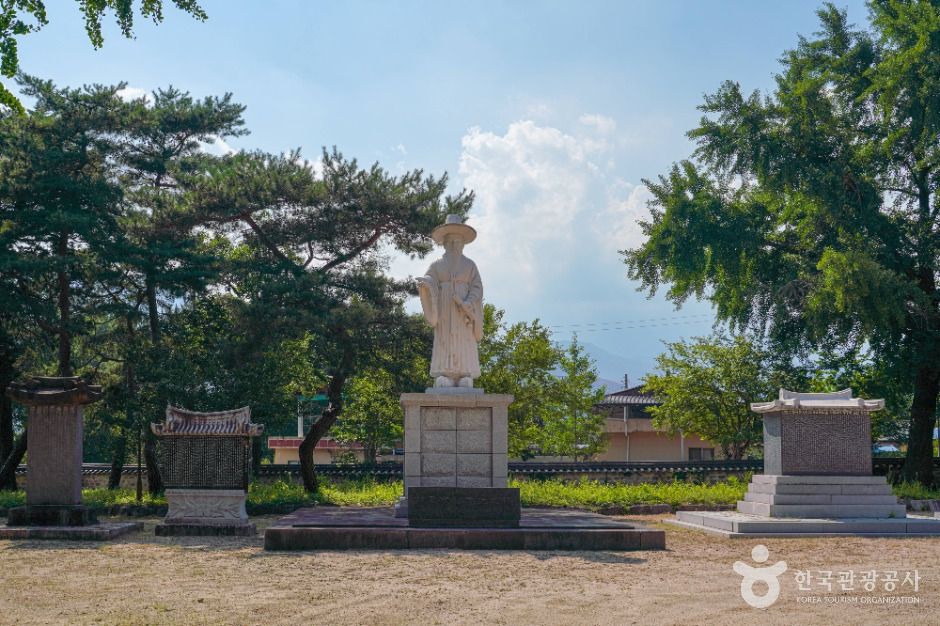
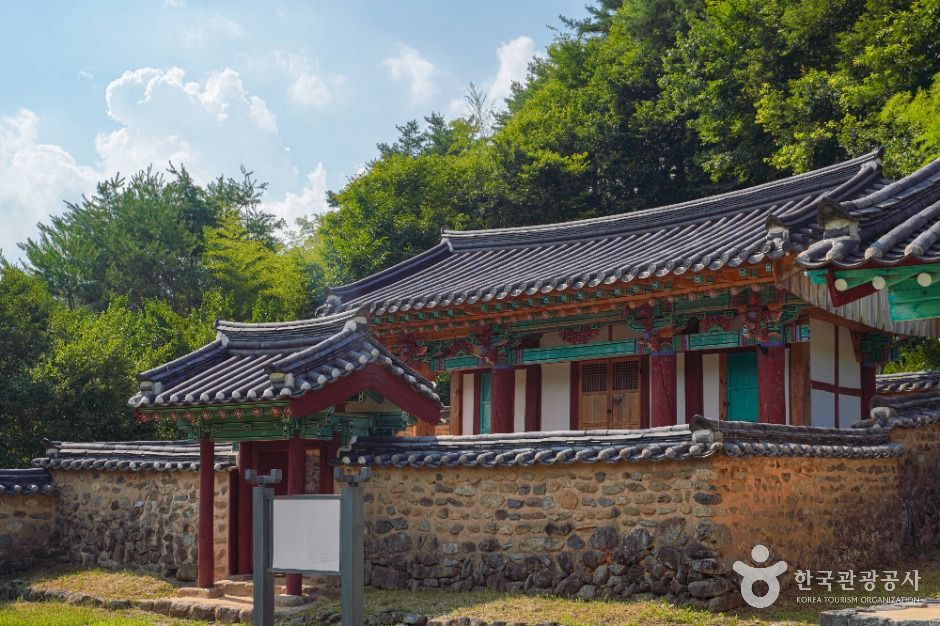
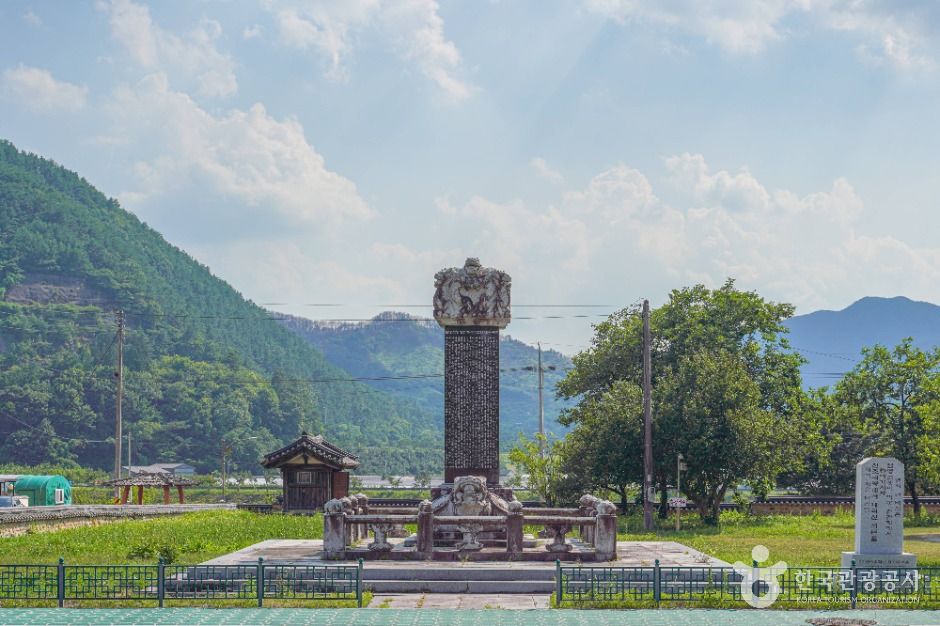
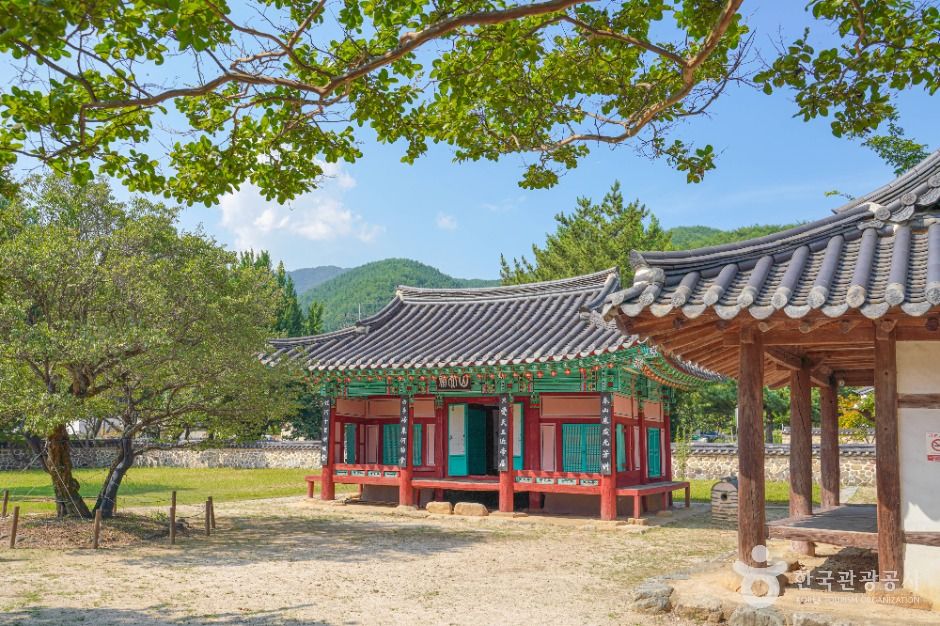
This is the historic site of Josik, a famous Confucian scholar of the mid-Joseon period. Although Josik was offered many government positions, he declined them all and spent his life in academic research and nurturing future scholars. The Josik historic site is divided into two areas: in Sari (Sari), there are Sancheonjae, Byeolmyo, Shindobi, and Myobi, and in Wonri (Wonri), there are Deokcheon Seowon and Sesimjeong. Sancheonjae, where Josik pursued his studies and research, was built in the 16th year of King Myeongjong’s reign (1561) and renovated in the 18th year of King Sunjo’s reign (1818). It measures two kan in front and two kan in the side. Deokcheon Seowon was established in the 9th year of King Seonjo’s reign (1576). The current building, five kan in front and two kan in the side, was rebuilt in 1926. Sesimjeong was first built in the 15th year of King Seonjo’s reign (1582). (Source: Cultural Heritage Administration)
민족의 영산 지리산을 중심으로 6.25 한국전쟁을 전후하여 지리산에서 활동한 빨치산을 테마로 빨치산들의 생활상, 군경의 토벌 상황과 양민들의 고통을 생생한 자료를 통하여 전시하고 있는 역사공간으로 빨치산의 실체와 역사를 돌아볼 수 있는 산 교육장이다.
This recreation forest in the Jirisan area, rich in tourist resources, allows for both hiking and sightseeing. It is an ideal spot for family relaxation and rest within the forest. In summer, it serves as a cool retreat; in autumn, visitors can enjoy the spectacular fall foliage; and in winter, it is a place to appreciate the snowy landscape. Located near the Jirisan National Park area, it offers the opportunity to combine forest activities with Jirisan hiking. It is also adjacent to the Jungsan-ri Valley, Natural Learning Center, Beopgyesa Temple, Jirisan Camping Ground, and Gyeongsangnam-do Environmental Education Center, making it perfect for linked tours after using the recreation forest.
Good places to stop and rest after the course

Booking and payment continue on a partner site.
Check rooms & price
Booking and payment continue on a partner site.
Check rooms & priceSign up to feature your channel.
(As a member, you can add your Instagram, YouTube, and blog links in My Page, and we’ll show them with every comment you write.)
““Stayed near Hongdae and did a night café tour. Perfect city views and vibes.””
Guest comments do not display social media links or profile cards.
Share a short tip about this place.
Or leave a quick comment as a guest.
Photo attachments are available after login.
No reviews yet. Be the first to share your experience!