Moonlit sweet Namwon trip in Jeonbuk Special Self-Governing Province Namwon City · schedule 1 night 2 days · distance 57.5km · 6 stops · highlights 남원 허…

This trip is a 'healing and soothing' journey in Namwon-si, the place known as Love No.1. Instead of our usual spicy, sweet, and salty daily foods, this course starts with herbal cuisine, filling the entire tourist spots with beauty and fragrance. Experience the romantic attractions throughout Namwon and add more sentiment with a bicycle trip. Enjoy the 'Dal(月)Dal(月)han' Namwon trip from the very name itself!
This course is a sample 2-day itinerary. Save it as-is or expand it into an AI itinerary.
남원의 허브요리 전문점이다. 돌솥산채비빔밥, 떡갈비정식을 메뉴로 한다. 허브동동주와 허브차는 무한리필이 가능하며 18가지의 반찬이 제공된다. 큰 도롯가에 자리 잡고 있다.
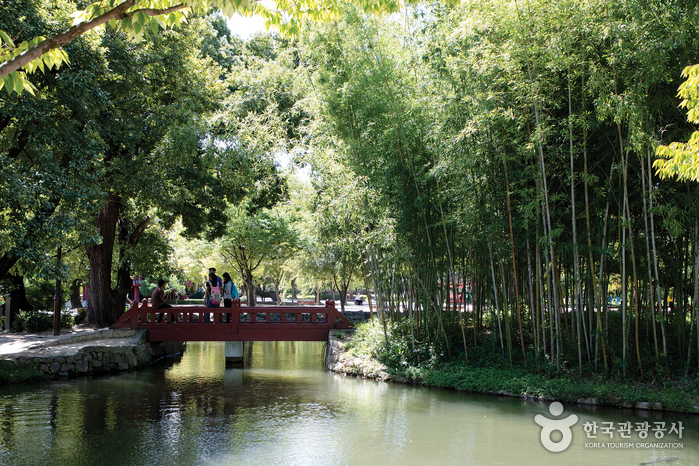
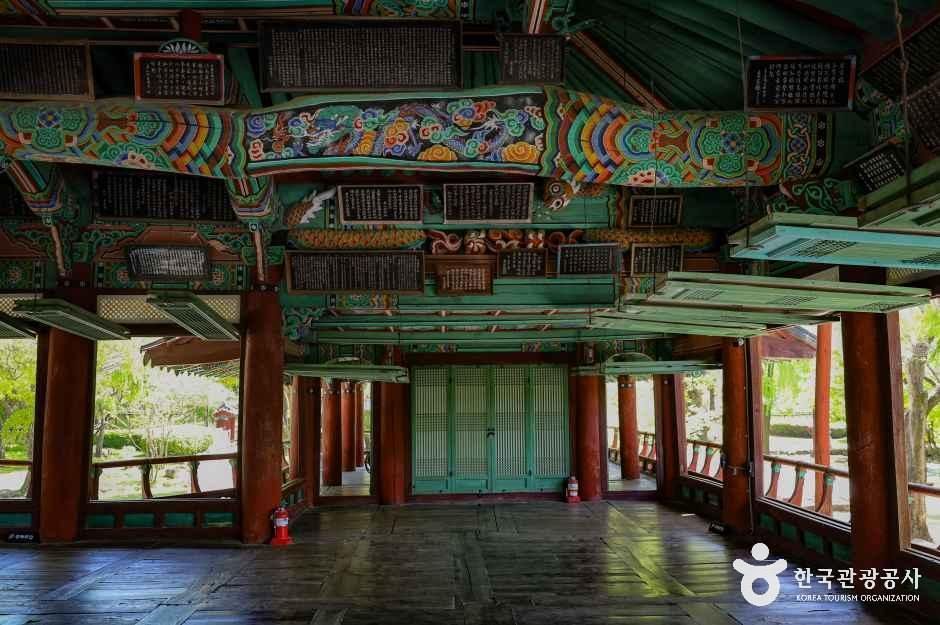
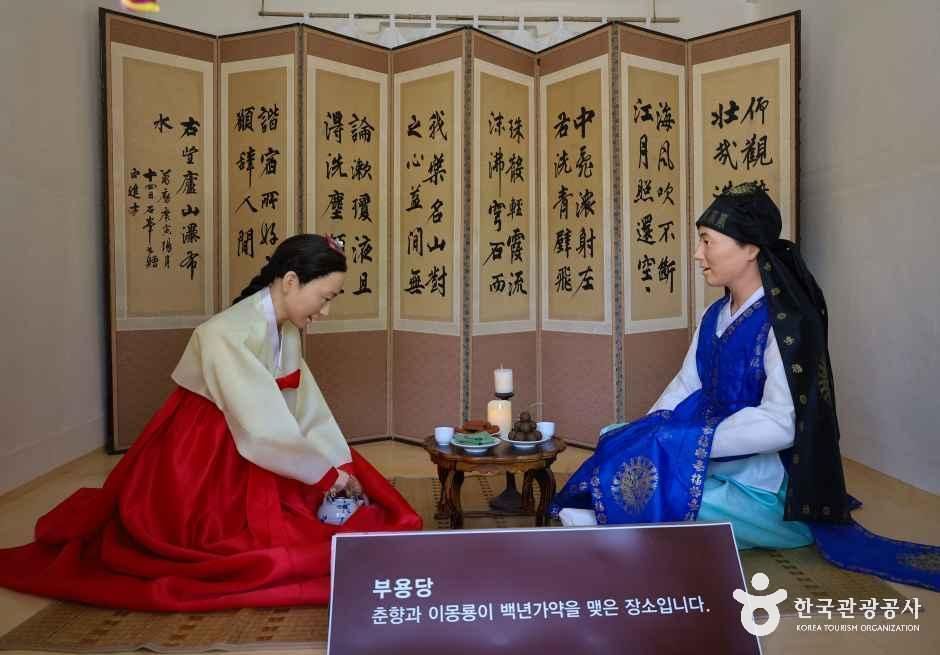
Gwanghallu Garden is the garden of Gwanghallu, created in the early Joseon period in Namwon-si, Jeollabuk-do. Near Namwon Station in the city, there is Gwanghallu where Chunhyang and Lee Doryeong met, and the garden containing this pavilion is collectively called Gwanghallu Garden. To the north of the garden stands Mount Gyoryongsan, and to the south is Geumam Peak, known as a treasure like gold, with distant views of Jirisan Mountain. Gwanghallu Garden is Korea’s top garden pavilion expressing a profound cosmic view where Gwanghallu, symbolizing the Moon Palace by the pond symbolizing the Milky Way, and Samsin Mountain, the earthly paradise, harmonize. It is one of Korea’s four great pavilions along with Gyeonghoeru, Chokseokru, and Bubyeokru. Inside Gwanghallu Garden are Gwanghallu, Ojakgyo Bridge, Wanwoljung Pavilion, Yeongjugak Pavilion, Chunhyanggwan, Chunhyang Shrine, and Wolmae House, along with accessory facilities such as crafts shops and cafes. Lotus flowers symbolizing the earthly paradise are planted in the pond, and on this pond stands Ojakgyo, the love bridge where Gyeonuu and Jiknyeo, separated by the Milky Way, meet only once a year on the seventh day of the seventh lunar month. This stone bridge has four rainbow-shaped holes that allow water flow between both sides and is the most representative bridge of Korean gardens. Chunhyang Shrine holds a portrait of Chunhyang painted by artist Kim Eun-ho. Every year on the 5th day of the 5th lunar month, the Dano Festival is held here. ◎ Travel info to experience the charm of Hallyu: This site recreates the palace of the heavenly Jade Emperor from legend and is Korea’s representative traditional garden pavilion. It has been a filming location for various dramas such as , , and , and is the setting of the classic Korean novel , making Gwanghallu Garden a historic narrative backdrop. It is highly recommended to stroll across Gwanghallu, one of the four great pavilions of Korea, and the love bridge, Ojakgyo.
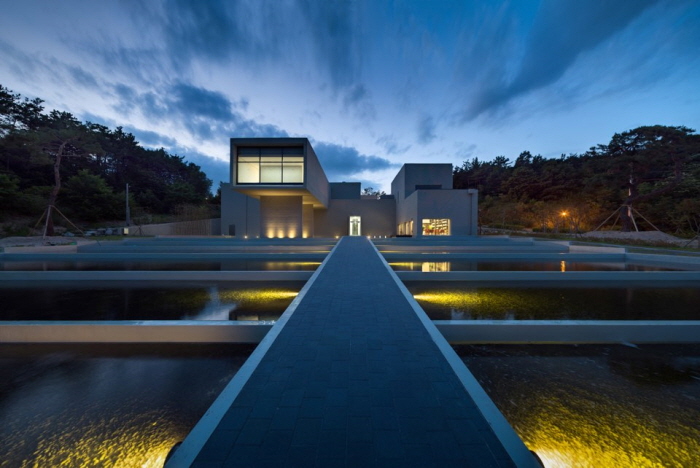
전북 남원시 춘향테마파크 내에 위치한 남원시립김병종미술관은 남원시에서 직접 운영하는 공립미술관으로 남원출신의 한국화가 김병종작가가 본인의 대표작을 남원시에 대량으로 기증하면서 콜렉션의 기반을 갖추었다.남원시립김병종미술관은 '어머니의 산'이라고 불리는 지리산을 향해 겸손히 엎드려 있다. 산을 따라 흐르는 구름이 가장 바쁘고, 새소리가 가장 소란스로운 곳이다. 사람이 느려지고, 말소리가 사치가 되는 곳이다. 이곳에 자연과 미술, 그리고 문학이 있다.
Jirisan Herb Valley is a herb tourism farm established in Yongsan-ri under Jirisan Unbong and was designated as the Jirisan Well-being Herb Industry Special Zone by the Ministry of Finance and Economy in 2005. Namwon is known as a treasure trove of herbs, with over 1,300 species of herbs growing naturally in its clean natural environment. Here, various herb products such as food and alternative medicine products using herbs, as well as eco-friendly herb raw materials, are produced. Namwon Herb Valley features a herb theme park full of sights, entertainment, and experiences centered around herbs, and a herb experiential tourism farm where visitors can engage in diverse activities such as herb flower picking, making herb tea, and crafting herb-scented candles. Additionally, there are herb product processing complexes, herb agricultural districts, and native plant ecological parks, offering various ways to enjoy herbs.
Old Seodo Station is the oldest wooden building closed station in Korea, established in 1932, located on the Jeolla Line between Sanseong Station (downbound) and Osu Station (upbound). It began operations as a staffed small station on October 1, 1934, and was upgraded to a regular station on October 1, 1937. On October 27, 2002, it was relocated to its current location during the Jeolla Line improvement work and newly built. Passenger services stopped on July 15, 2004, and from July 1, 2008, it was downgraded to an unstaffed simple station, with the station office closed. It is recently known as a filming location for the drama "Mr. Sunshine" and is also the main setting of the epic novel "Honbul" by writer Choi Myeong-hee. The station and facilities of the Jeolla Line are preserved and managed in their original state. Visitors can feel the history of that time through the preserved facilities and enjoy various emotional photo zones where nature and the railway harmonize.
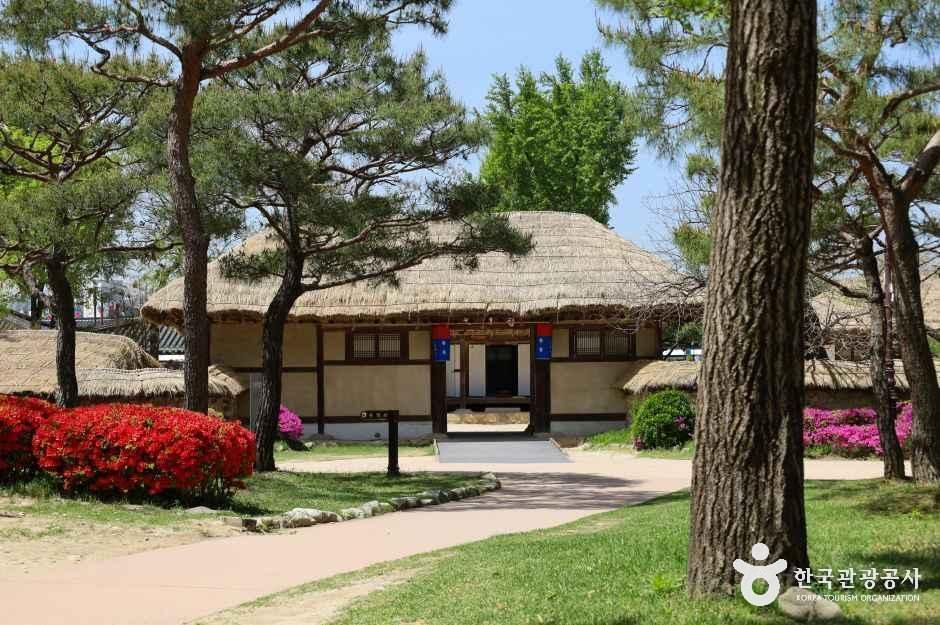
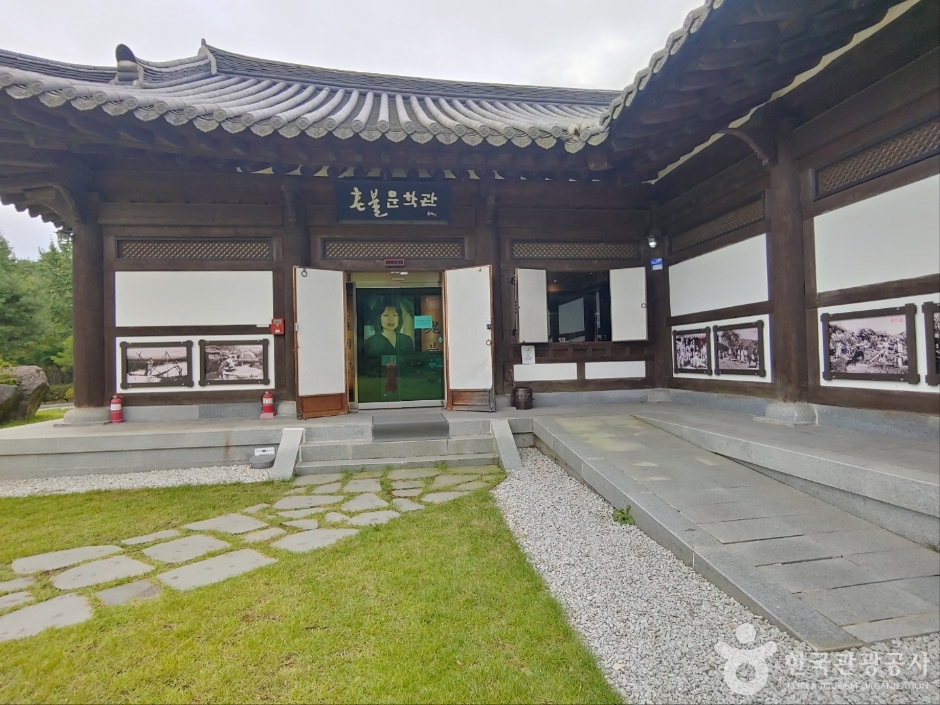
Honbul Literature Museum is a literary museum located in Nobong Village, Seodori, Samae-myeon, Namwon-si, Jeollabuk-do. Nobong Village, where the museum was built, is the setting of the novel 'Honbul,' known as Maeann Village, and the surrounding areas such as the ancestral house, Nobong Seowon, Cheongho Reservoir, Saeamba Rock, Hoseongam, Nojeokbong Mai-aebulsang, Dalmaji Hill, Seodo Station, Geunsim Rock, Neutbawi Pass, Danggolne House, and the Hong Pine Forest are vividly depicted in the novel. The Honbul Literature Museum is built in a hanok style and has exhibition halls and educational facilities. The exhibition hall houses the personal belongings of author Choi Myeong-hee and a recreated writing room, with dioramas arranged by various themes. Below the museum is the Honbul Experience Center, where visitors can try woodworking, pottery, natural dyeing, and hanji craft experiences. The epic novel Honbul, written by Choi Myeong-hee over 17 years, is set in the 1930s, one of the darkest and most unhappy periods in Korean history, depicting the lives of people living under Japanese oppression after losing national sovereignty, sublimated through the strong will of the protagonist, Cheongambuin. The village where the museum is located is called Nobong Honbul Literary Village and offers various facilities and experiences themed around Honbul, allowing for literary experience tourism.
Sign up to feature your channel.
(As a member, you can add your Instagram, YouTube, and blog links in My Page, and we’ll show them with every comment you write.)
““Stayed near Hongdae and did a night café tour. Perfect city views and vibes.””
Guest comments do not display social media links or profile cards.
Share a short tip about this place.
Or leave a quick comment as a guest.
Photo attachments are available after login.
No reviews yet. Be the first to share your experience!