Saying Farewell to Admiral Yi in Gyeongsangnam-do Namhae County · schedule Other · distance 40.4km · 5 stops · highlights Namhae Bridge, Namhae Chungnye…
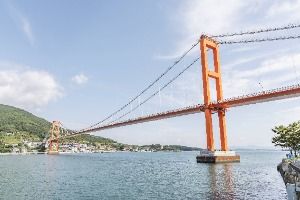
Namhae Bridge is a bridge connecting Noryang-ri, Hadong-gun and Noryang-ri, Namhae-gun. Noryang was the battlefield sea of Admiral Yi Sun-sin's last naval battle that ended the 7-year Imjin War and the sea of martyrdom. Immediately after crossing Namhae Bridge, there are the Chungnyeolsa Shrine housing Admiral Yi Sun-sin's memorial tablet and the Yi Chungmugong historic site overlooking the front sea of Gwanuempo, where the admiral died after being hit by a stray bullet. At the Yi Sun-sin Video Hall, visitors can experience the solemn naval battle of that time through 3D stereoscopic images.
This course is a sample one-day itinerary. Save it as-is or expand it into an AI itinerary.
Namhae Bridge, the gateway to Namhae, was once called the largest suspension bridge in East Asia. The Namhae Bridge is a suspension bridge 660m long and 80m high, opened in 1973. The opening ceremony, one of the most spectacular in local government history, drew around 100,000 people, reflecting great anticipation and joy for this beautiful bridge. There was a time when walking across the red Namhae Bridge was considered a symbol of luck, and it has been loved as a destination for school trips and honeymoons. It is the site of the final battle of the Imjin War, the Battle of Noryang. Before the bridge was built, Namhae residents had to cross the Noryang waters by ferry or rowboat. Crossing the Namhae Bridge leads to Namhaegak, a rest area where you can enjoy views of the bridge, surrounded by cherry blossom tunnels. Nearby attractions include Namhae Chungnyeolsa and Namhae Cheokhwabi.
Passing through the cherry blossom tunnel road and entering Noryang Village, there is Chungnyeolsa, where General Yi Sun-sin of Chungmugong was temporarily enshrined after he died at Gwanumpo. The most distinctive feature of Chungnyeolsa is that it preserves the funeral shrine of General Yi Sun-sin. The remains of Chungmugong, who passed away on November 19, 1598, were enshrined at the site of Chungnyeolsa before being transported and buried at Asan Hyeonchungsa, his maternal hometown, via Gogeumdo in Jeolla on February 11, 1599. Chungnyeolsa began in 1633, 34 years after the general's death, by building a small thatched shack to hold memorial rites. Although small in scale, Namhae Chungnyeolsa has been designated and protected as a historic site since June 11, 1973, and includes the Yi Chungmugong Memorial Stele and Shrine written by Song Jun-gil and constructed by Song Si-yeol, the Chungmugong Stele and Chungmingong Stele, inner and outer gates, as well as Cheonghaeru and the general's funeral shrine, which are all well maintained.
When entering from Namhaedaegyo Bridge toward the center of the island, you will find the Gwaneumpo Yi Chungmugong Jeonmol Site. Also called 'Iraksa,' this place is where the remains of General Yi Sun-sin, who died leading the victory in the Battle of Noryang, first set foot on land. In front of Iraksa, a monument commemorating the 400th anniversary of Chungmugong's patriotic death rises toward the sky, proving history. The site began to take shape as a sacred place of martyrdom 234 years after the general's death, in 1832. It is said that Yi Hang-gwon, the general's eighth-generation descendant and naval commander, erected a memorial stele and a pavilion here honoring the general who protected the nation. Rare in the country, evergreen yuksong pine trees revive the day from 404 years ago. Between four and ten branches spread from the ground forming a path.
노량리에 위치한 횟집으로서 이 일대에서 매운탕이 제일 맛있는 집이라고 업주의 자랑이 대단하다. 넓은 좌석을 갖추고 있어 단체 손님을 받기에도 아무런 불편함이 없으며 회의 질과 맛 또한 부족함이 없는 업소이다. 남해군에서 맛있고 싱싱한 회를 맛보길 원하는 사람은 한 번 들려볼만 하다. 회 한접시 먹고 근처의 충렬사와 이충무공 전몰유허를 둘러 본다면 괜찮은 답사여행이 될 수도 있을 것이다. 남해의 관문인 남해대교가 정면으로 바라보이고 앞 바다의 푸른 물결 위 거북선은 과거 역사의 현장이며, 더불어 충렬사와 함께 역사공부의 장이 될 것이다. 충렬사는 이순신 장군이 노량해전에서 순국하고 아산으로 운구전에 3개월간 이곳에 안치 되었던 곳이다. 또한 봄이면 벚꽃이 만발하여 벚꽃 축제로도 유명한 곳이다.
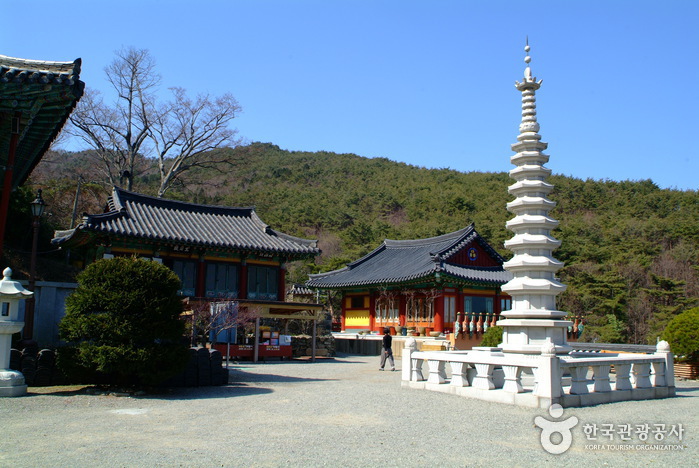
Hwabangsa Temple, located on the slopes of Mangunsan, is a temple built during the Silla Dynasty and is one of the three major temples of Namhae-gun, alongside Yongmunsa and Boriam. Originally called Yeonjuksa when founded, it served as a base for monk soldiers during the Imjin War, but was burned down. It was then relocated to its current site and renamed Hwabangsa. Existing buildings include Daeungjeon, Eungjinjeon, Myeongbujeon, Chilseonggak, Iljumun, and Chaejinru. Among these, Chaejinru, facing Daeungjeon, is a five-bay front by two-bay side gable roof building designated as a cultural heritage material of Gyeongsangnam-do. There is also the mountain hermitage Mangunam. Temple relics include an okjongja, a safe, and woodblocks of Admiral Yi Sun-sin's epitaph.
Good places to stop and rest after the course

Booking and payment continue on a partner site.
Check rooms & priceSign up to feature your channel.
(As a member, you can add your Instagram, YouTube, and blog links in My Page, and we’ll show them with every comment you write.)
““Stayed near Hongdae and did a night café tour. Perfect city views and vibes.””
Guest comments do not display social media links or profile cards.
Share a short tip about this place.
Or leave a quick comment as a guest.
Photo attachments are available after login.
No reviews yet. Be the first to share your experience!