
Naju history trip connecting Goryeo and Joseon in Jeollanam-do Naju City · schedule Other · distance 31.8km · 4 stops · highlights Naju Hyanggyo, Naju M…
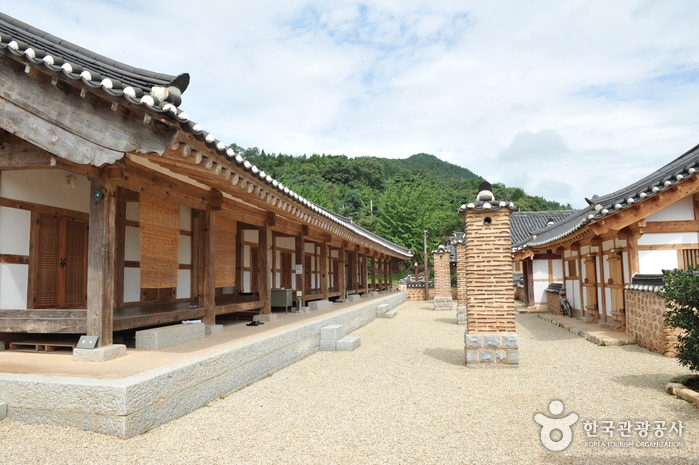
Gyeon Hwon founded Later Baekje centered around the Naju area, and Taejo Wang Geon of Goryeo established a relationship with the future Queen Janghwa at Wansacheon in Naju. Since Naju became Naju-mok during the reign of King Seongjong of Goryeo, it has been known as a thousand-year magistrate town. As seen in how the name 'Jeolla-do' was derived from taking one character each from Jeonju and Naju, Naju is a region that fully preserves a thousand years of history.
This course is a sample one-day itinerary. Save it as-is or expand it into an AI itinerary.
Naju Hyanggyo was established in the 7th year of King Taejong's reign (1407) to enshrine the tablets of Confucian saints, honor them, and provide education and cultural guidance to local residents. It is one of the three largest hyanggyo in Korea. Within this hyanggyo is Gyesungsa, built in the 27th year of King Sukjong's reign (1701), which gives the layout a distinctive character different from other hyanggyo. Usually, the Daeseongjeon is positioned above with Myeongnyundang below, but in hyanggyo with Gyesungsa—where the tablet of Confucius's father is enshrined—the positions of Daeseongjeon and Myeongnyundang are reversed. Besides Naju Hyanggyo, Gyesungsa existed at Jeonju Hyanggyo and Hampyeong Hyanggyo in the Honam region. The Daeseongjeon at this hyanggyo is designated Treasure No. 394, notable for its grand scale and outstanding style and form, representing Joseon Dynasty hyanggyo architecture with significant architectural value. Also, Naju Hyanggyo is so large that it is considered second only to Sungkyunkwan in terms of educational facilities during the Joseon period, preserving its original educational and ritual functions, thus holding important value. Nearby cultural assets include Geumseonggwan, about 400 meters straight from here, which served as lodging for envoys or officials.
Moksanaea, guarded by a hackberry tree, was the residence of the Naju governor during the Joseon Dynasty and remains today along with other official buildings inside Naju Eupseong, including Geumseonggwan (the guesthouse) and Jeongsuru (the government office gate). The building follows the typical style of a naea (inner government residence) and has a ㄷ-shaped hipped roof structure. Although much of the original form was lost during its use as a county magistrate's residence from the Japanese occupation period to the late 1980s, the restored Moksanaea is valued as an important resource for understanding the original style of Joseon Dynasty government architecture.
Unheungsa Temple is a traditional temple. According to the Jinyeomun 4th Reconstruction record written on its main gate in 1775, Doseon Guksa chose this location for its auspicious terrain during the Heungdeok period, coming here from Heungdeok and holding the first lecture at Doseongam. It was renamed Ungjeomsa during the Silla King Hyogong era (897–911), then changed to Ungchisa, and finally to Unheungsa. In 1775, the temple had about 380 rooms, including Daewoongjeon and Chimgyeru, but was reduced in size after being destroyed during the Korean War. The large temple restoration was carried out starting in 1998 by Monk Hyewon. Unheungsa is also famous as the place where late Joseon Dynasty monk Choi Eui was ordained. At the temple entrance, there is a pair of male and female stone Jangseung (totem poles) managed by Unheungsa and the Cultural Heritage Administration. These temple Jangseung serve as guardians to prohibit impurities and keep out evil spirits. The stone totems stand about 500m from the temple in a field facing each other; the left is male, the right female. The male Jangseung is huge, 270cm tall and 192cm in circumference, with large round eyes, a blunt nose, protruding fangs, but a kindly grandfather face, with the name Sangwonju General inscribed on the body. The female Jangseung has a smiling, rustic appearance, with deep lines forming round eyes, fine beard at the mouth corners, a square jaw, and the name Hawondang General inscribed. The back of the female Jangseung records the year 1719 (Joseon Sukjong 45), confirming its exact date of creation. As evidenced by the temple’s location in Dado-myeon, this area has a deep connection to tea culture from the Joseon era, and wild tea trees still grow around the temple.
Bulhoe Temple is a branch temple of Baekyangsa, located on the mid-slope of Deokryongsan Mountain, with Unheungsa site and a mountain in between. It was founded in 366 AD (the first year of Taehwa in the Eastern Jin Dynasty) by the Indian monk Marananta, rebuilt twice by Hwiyeon and Wonjinguksa in 1402 (2nd year of King Taejong of Joseon), and reconstructed in 1800 after most buildings were destroyed in a large fire in 1789 (22nd year of King Jeongjo). The name Bulhoe means the remembrance of Buddha, signifying a place where the Buddha’s teachings continue uninterrupted through the harmony of Buddha, Dharma, and Sangha. While not flashy at first glance, Bulhoe captivates visitors with its tranquil atmosphere. The Daeungjeon Hall (National Treasure), Myeongbujeon, Samseonggak, Nahanjeon, and the temple living quarters are neatly arranged, surrounded by a camellia forest. The area is noted for having the latest autumn foliage, with the most beautiful colors nearby. Among the triad Buddha statues enshrined in Daeungjeon, the Vairocana Buddha is famous for being made of paper. At the temple entrance stands a pair of stone guardian statues called Seokjangseung, dating around 1719 (45th year of King Sukjong), which prohibit evil spirits. The grandfather statue features bulging eyes and thickly furrowed brows with a humorous expression unique to the southern region. The grandmother statue greets visitors with a kind, smiling grandmotherly face. The grandfather measures 2.3 meters, and the grandmother 1.7 meters. Bulhoe’s green tea originated 1600 years ago when Monk Marananta, who first brought Buddhism to Samhan, came to Deokryongsan Mountain to found Bulhoe Temple and introduced tea seeds. The tea trees still grow naturally under Torreya trees, and the tea made from these natural leaves is called Biroda (榧露茶). Biroda tea is produced by hand using a traditional nine-roasting method passed down from senior monks, harvesting wild tea leaves from Deokryongsan as in the old days.
Good places to stop and rest after the course

Booking and payment continue on a partner site.
Check rooms & price
Booking and payment continue on a partner site.
Check rooms & price
Booking and payment continue on a partner site.
Check rooms & priceSign up to feature your channel.
(As a member, you can add your Instagram, YouTube, and blog links in My Page, and we’ll show them with every comment you write.)
““Stayed near Hongdae and did a night café tour. Perfect city views and vibes.””
Guest comments do not display social media links or profile cards.
Share a short tip about this place.
Or leave a quick comment as a guest.
Photo attachments are available after login.
No reviews yet. Be the first to share your experience!


