One night in the wide winds of Mount Deogyusan in Jeonbuk Special Self-Governing Province Muju County · schedule Other · distance 26.3km · 4 stops · hig…
Deogyudae Campground, boasting the largest scale among national park campgrounds, is situated near the stunning four-season scenery of Gucheondong Valley and has excellent accessibility due to the Tongyeong-Daejeon Expressway passing through. The campground is divided into seven zones and nestled within a forest, offering abundant natural beauty and easy space utilization. Nearby experiential facilities such as the wine cave and Deogyusan gondola make camping even more enjoyable.
This course is a sample 2-day itinerary. Save it as-is or expand it into an AI itinerary.
Deogyusan was designated as the 10th national park in Korea in 1975, along with Odaesan. It is part of the Sobaek mountain range branching from the Taebaek mountain range, which stretches southwest, raising peaks such as Sobaeksan and Songnisan, before continuing on to Jirisan, making Deogyusan another notable mountain in the center. Deogyusan rises across Jeollabuk-do Muju and Jangsu, Gyeongsangnam-do Geochang and Hamyang-gun, spanning 2 provinces and 4 counties, with Hyangjeokbong Peak (1,614m) as its highest point, forming a branch of the Baekdudaegan mountain range. Gucheondong Valley, with 13 terraces, about 10 ponds, and 20 waterfalls surrounded by spectacular cliffs and rock pools, has long been cherished as 33 scenic spots named by ancient sages, representing the beauty of Deogyusan. Centered on its main peak Hyangjeokbong (1,614m), the mountain features a dignified ridge about 1,300m in altitude extending approximately 30 km southwest. Besides the main peak, Jibong lies to the east and Chilbong to the north. The name 'Deogyusan' means a generous mountain abundant in virtue. The geology of Deogyusan National Park consists mainly of Precambrian metamorphic rocks, such as gneiss, intruded by Mesozoic igneous and sedimentary rocks. It also features Quaternary alluvium, Cretaceous quartz diorite, biotite granite, sandstone, shale, and quartz andesite layers. The massive, gently flowing, expansive highland from Hyangjeokbong to Namdeogyusan is attributed to the gneiss geology.
Muju Gucheondong Tourist Special Zone is a tourist area around the Muju Gucheondong valley and Deogyusan Mountain. It includes the Deogyusan National Park Management Office and various facilities for tourists grouped together, such as a terminal, parking lots, accommodations, entertainment venues, restaurants, and various shops forming a district. The Muju Gucheondong valley is surrounded by lush forests, and its clear waters are refreshingly cool, making it a popular summer escape crowded with visitors. Deogyusan, known as a famous mountain, is renowned for its autumn foliage and winter snow scenery, attracting many tourists annually. Nearby, the National Taekwondo Center showcases cultural tourism beyond natural sightseeing, and Muju Deogyusan Resort offers a variety of leisure sports.
Muju Meoru Wine Cave was originally used as a tunnel for excavation work during the construction of the Muju Pumped Storage Power Plant (April 1988 to May 1995). To give hope and pride to meoru grape farmers, Muju-gun leased and remodeled it in 2007, leading to its current state. The tunnel, which blocks light and maintains a consistent temperature, has become an ideal wine aging and storage cellar. Wine made from Muju-gun’s mountain meoru is aged, stored, and sold here, offering visitors a special experience. The wine foot bath, which relaxes body and mind, is popular with travelers.
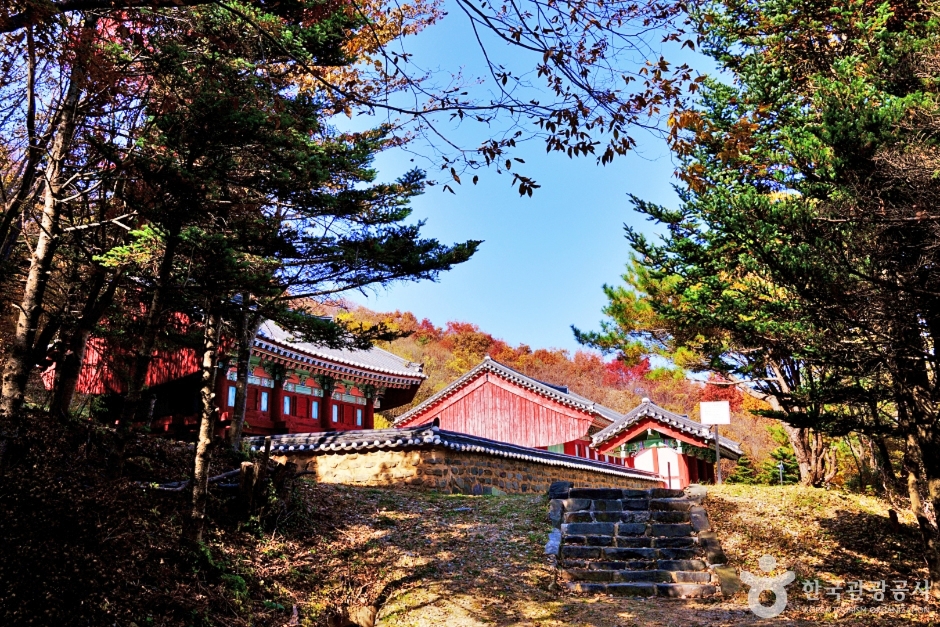
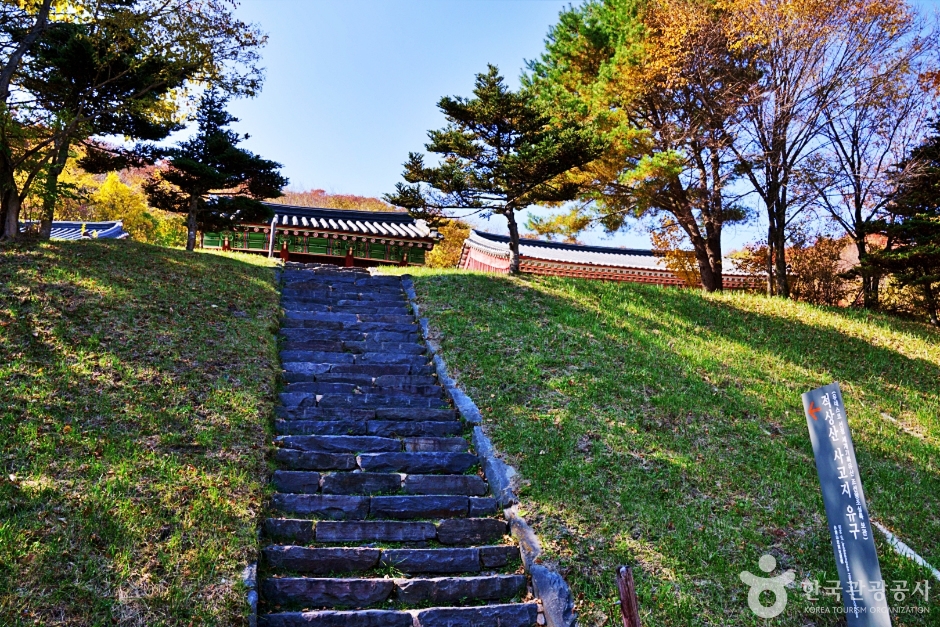
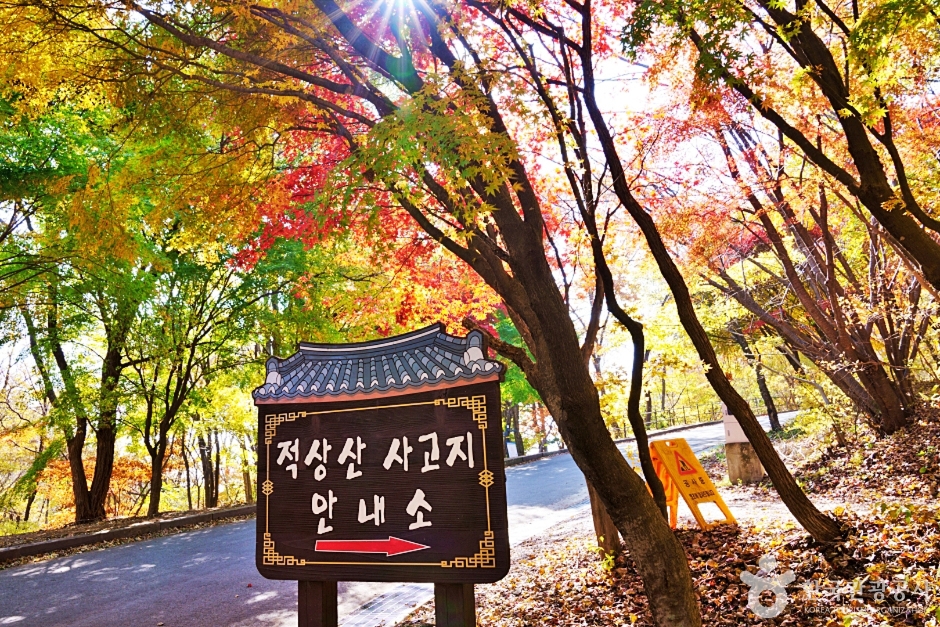
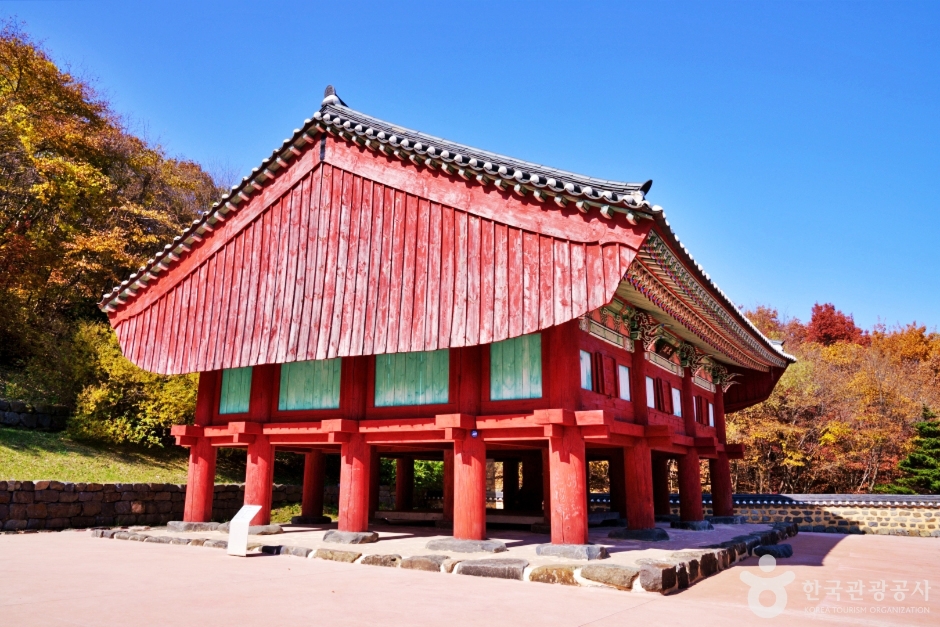
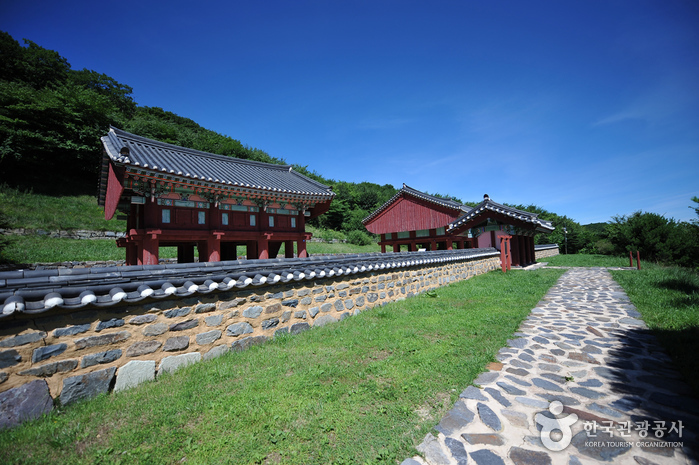
During the Japanese invasions of Korea (Imjin War), the Annals of the Joseon Dynasty, except those stored at Jeonju Sago, were lost. To restore them, three sets of the annals from King Taejo to King Myeongjong were reprinted and combined with the original Jeonju copies and corrected prints to create five sets in total, which were stored at Chunchugwan, Manisan, Taebaeksan, Myohyangsan, and Odaesan respectively. In 1641 (the 19th year of King Injo), Seonwonjeon was built here to store the Seonwonroks, making Jeoksangsansa a fully functioning archival site. Thirty-four volumes of the Joseon Wangjo Sillok copies (27 volumes representing each reign and 7 volumes related to Muju) and five volumes of the royal genealogy Seonwonrok copies were produced and kept here. Twenty-two exhibition panels detail the process of making, compiling, and transferring the annals. Cultural tourism interpreters from Muju County Office provide easy-to-understand explanations about the historical value of Jeoksangsansa and the Joseon Wangjo Sillok, making it a must-visit tourist destination, especially for family tourists with students.
Good places to stop and rest after the course

Booking and payment continue on a partner site.
Check rooms & priceSign up to feature your channel.
(As a member, you can add your Instagram, YouTube, and blog links in My Page, and we’ll show them with every comment you write.)
““Stayed near Hongdae and did a night café tour. Perfect city views and vibes.””
Guest comments do not display social media links or profile cards.
Share a short tip about this place.
Or leave a quick comment as a guest.
Photo attachments are available after login.
No reviews yet. Be the first to share your experience!