Seeking Muju historic sites filled with ancient silence in Jeonbuk Special Self-Governing Province Muju County · schedule Other · distance 20.5km · 4 st…

This course includes the serene old temple Hyangsansa, Hanpungnu Pavilion, and Hyanggyo Confucian school, where you can experience traditional culture, all peacefully resting in the pure land of Muju. Stroll through the charm of hidden gems known only to Muju locals. The tranquility here will even lull to sleep the complicated and chaotic affairs of the world that arise in your mind.
This course is a sample one-day itinerary. Save it as-is or expand it into an AI itinerary.
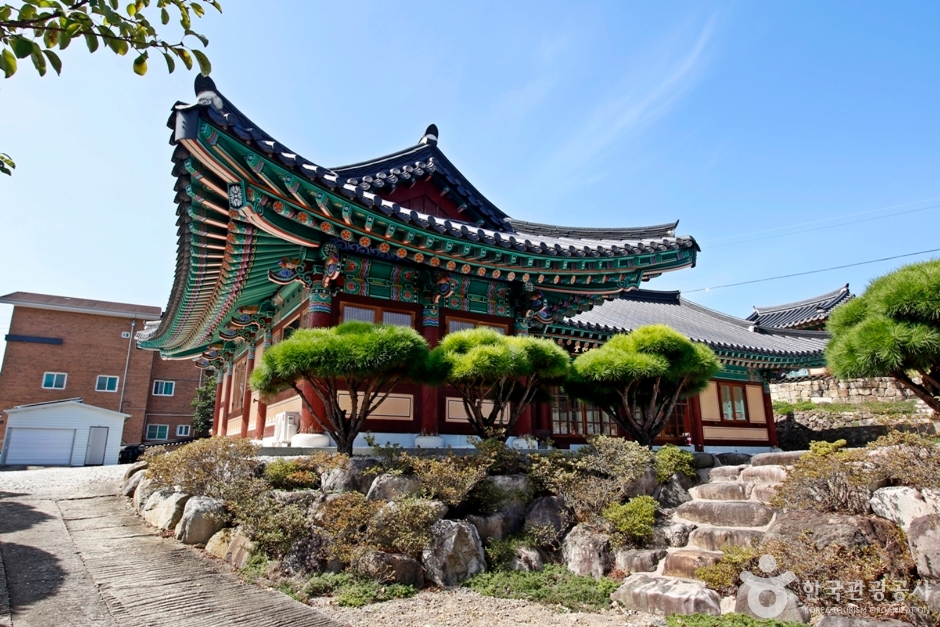
Located in the town center of Muju, Hyangsan Temple is a branch temple of Geumsansa, the head temple of the 17th district of the Jogye Order of Korean Buddhism, where nuns practice asceticism. In 1936, Seonpa Monk rebuilt the Dharma hall and enshrined Buddha, and in 1975, Hyean Monk renovated the Daeungjeon Hall. Currently, the temple complex consists of Daeungjeon Hall, Nahanjeon Hall, Sansingak, Iljumun Gate, and monks' quarters, with a three-story stone pagoda in the courtyard, overall a modest temple. In Daeungjeon Hall, the main Buddha is Shakyamuni Buddha on the altar, accompanied by Ksitigarbha Bodhisattva and Avalokiteshvara Bodhisattva. The hanging paintings of Buddha, Seven Stars, and Guardian Deities in Daeungjeon were all created in 1924. Nahanjeon Hall enshrines the five seated Buddhas and sixteen arhats with Shakyamuni Buddha at the center on the summit altar.
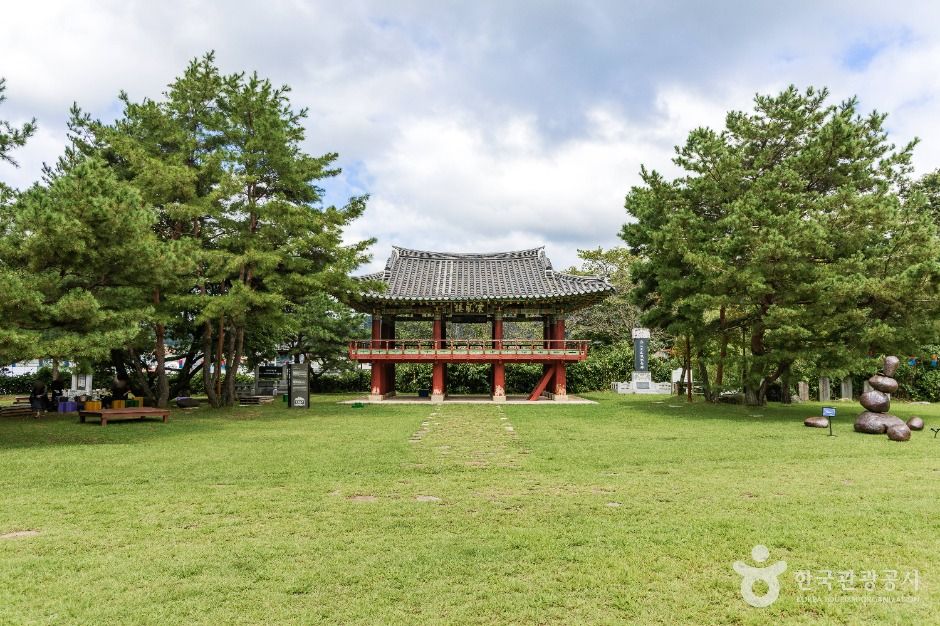
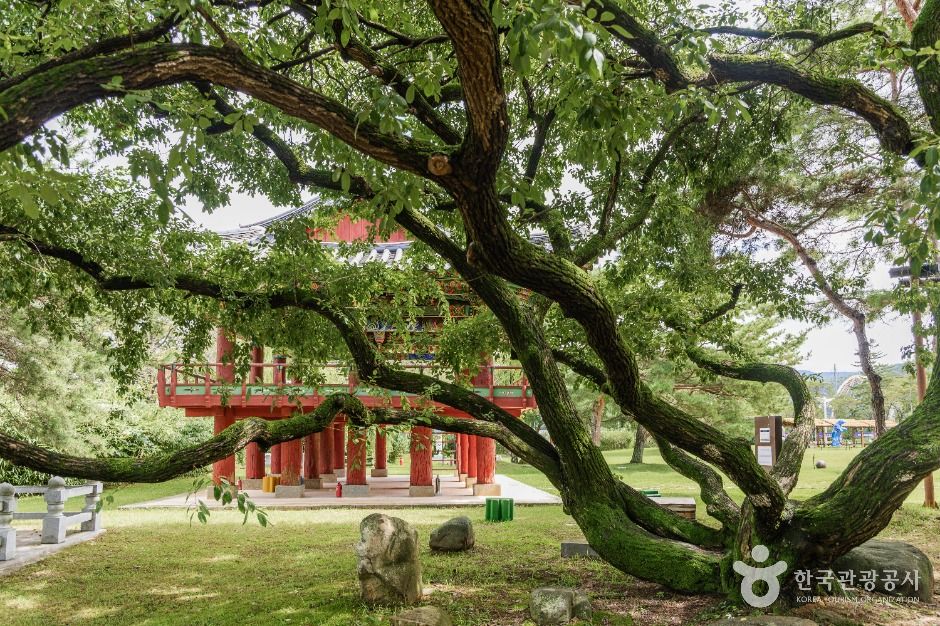
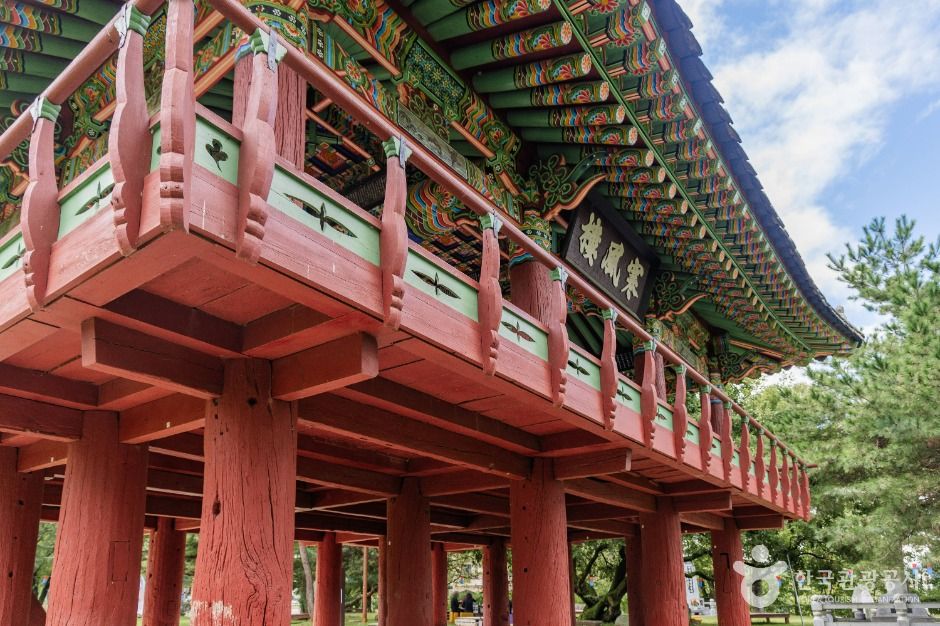
Hanpungnu (寒風樓), called the best pavilion in Honam, is one of the three 'Samhans' along with Hanbyeokdang (寒碧堂) in Jeonju and Gwanghanru (廣寒樓) in Namwon. The exact construction date is unknown, but it was burned by Japanese troops during the Imjin War (1592). In the 32nd year of King Seonjo's reign (1599), Imje, who loved Hanpungnu, appeared in a dream to his younger brother, Hyeonggam Imhwan, requesting its restoration, and Imhwan rebuilt it. In 1783, Hyeonggam Imjungwon renovated it. Together with Jeonju's Hanbyeokdang and Namwon's Gwanghanru, it is one of Honam's 3 Hans and the top pavilion in Honam. This building is a two-story pavilion: the lower floor has 3 bays frontally and 4 bays laterally, and the upper floor has 3 bays frontally and 2 bays laterally, with a hipped-and-gabled roof. Climbing the pavilion is prohibited, and the surroundings feature a neighborhood park and sports facilities.
‘(구)수정식당’으로 무주읍내 군청 옆에 위치해 있다. 이 집의 대표메뉴는 가마솥 백반인데, 각종 밑반찬과 함께 차려진다. 이 외에도 생태탕과 아귀찜, 묵은지 김치와 함께 조리한 등갈비 요리를 먹을 수 있다.
Rajetongmun is a stone tunnel located between Deogyusan and Seokmosan in Muju, and it is the first scenic spot among the 33 views of Gucheondong in Muju. It is believed to have been the border between the Silla and Baekje kingdoms during the Three Kingdoms period. Before the tunnel was formed, Seokmosan was a mountain pass used by people traveling between Mupung-myeon and Seolcheon-myeon. East and west of this tunnel differ in language and customs: the east side (Mupung-myeon), an old Silla region, speaks the Gyeongsang dialect and follows Gyeongsang customs, while the west side (Seolcheon-myeon), an old Baekje region, speaks the Jeolla dialect. The tunnel also holds a painful history as it was drilled during the Japanese colonial era for gold mining development. Since 2019, it has been protected as a geological attraction certified by the Ministry of Environment as part of a national geopark.
Good places to stop and rest after the course

Booking and payment continue on a partner site.
Check rooms & priceSign up to feature your channel.
(As a member, you can add your Instagram, YouTube, and blog links in My Page, and we’ll show them with every comment you write.)
““Stayed near Hongdae and did a night café tour. Perfect city views and vibes.””
Guest comments do not display social media links or profile cards.
Share a short tip about this place.
Or leave a quick comment as a guest.
Photo attachments are available after login.
No reviews yet. Be the first to share your experience!