Cooling Your Feet in the Valley and Savoring History with a Glass of Wine in Jeonbuk Special Self-Governing Province Muju County · schedule Other · dist…

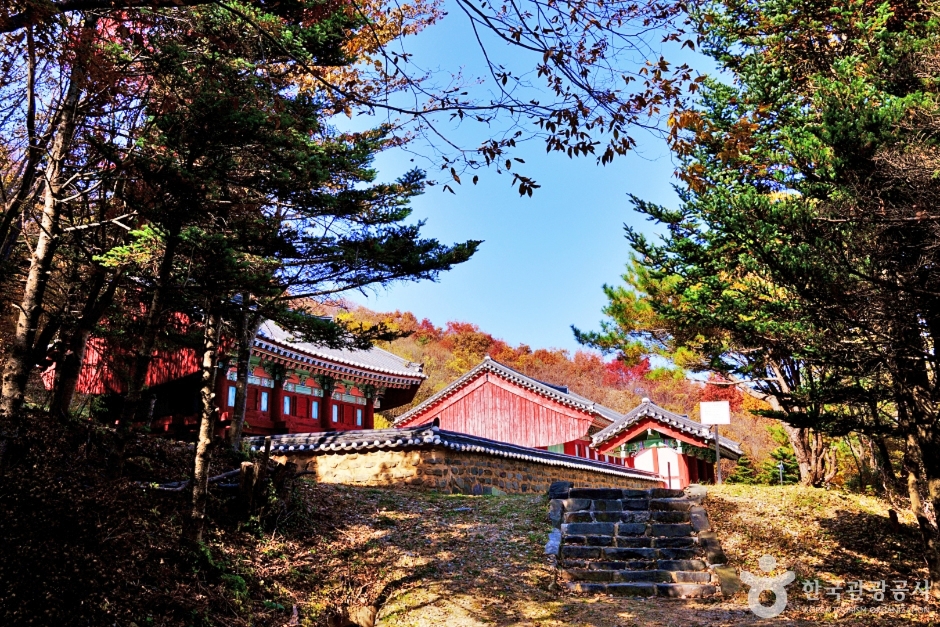
Jeoksangsan is famous in autumn for its red foliage reminiscent of red skirts. It is home to historical sites from the Joseon Dynasty, including Jeoksangsan Sagoji where the Annals of the Joseon Dynasty were stored, Jeoksang Fortress, and Anguksa, as well as the Meoru Wine Cave where meoru wine is aged. The Chil-yeon Valley, which connects to Dongyeop-ryeong, features seven pools and the spectacular Chil-yeon Waterfall, along with the Chil-yeon Uijong memorial from the Japanese colonial period.
This course is a sample one-day itinerary. Save it as-is or expand it into an AI itinerary.
The Chillyeon Memorial Tomb is a mass grave of the remains of the righteous militia under Shin Myeong-seon, who died at the end of the Joseon Dynasty. It is located 0.1 km left of the valley from Eunbandae in Tongan village, Deogyusan, Muju-gun. In 1907, under Japanese pressure, the Jeongmi Seven Clauses Treaty was signed, leading to the disbandment of Korean military forces. Angry at the Japanese invasion, protest infantry members fought scattered nationwide. Shin Myeong-seon, who came from the protest group, recruited militia based in Deogyusan and achieved many successes fighting Japanese troops in Muju, Jangsu, Sunchang, Yongdam, and Geochang. His group started with only about 40 members but gradually grew to about 150 militia. In April 1908, after a fierce battle in Jangsu killing 15 Japanese soldiers and injuring 20, Shin Myeong-seon's unit was ambushed by hidden Japanese troops at Songjeong in the Chillyeon valley while resting, where all 150 members made a heroic final stand.
Chillyeon Valley, located in the valley west of Dongyeopryeong on the Deogyusan ridge, is named after the seven consecutive waterfalls of Chillyeon Falls. Clear cold water flows over the rock bed in the deep mountain valley, cutting through dense pine forests and strange-shaped rocks, creating beautiful scenic spots such as Chillyeon Falls, Yongchu Falls, Myeongjeso, Mundeokso, and Dosuldam. The water flows into Guri Hyangcheon, a tributary of the Geum River. Named for Chillyeon Falls, the site also contains Chillyeon's tomb, the resting place of over 150 righteous soldiers who died fighting the Japanese army in the late Joseon period. The Jeollabuk-do Nature Learning Center is located here, where visitors can cultivate a spirit of broad-mindedness in harmony with nature. In summer, many vacationers enjoy water activities in Chillyeon Valley, making it a popular cool retreat.
Muju Meoru Wine Cave was originally used as a tunnel for excavation work during the construction of the Muju Pumped Storage Power Plant (April 1988 to May 1995). To give hope and pride to meoru grape farmers, Muju-gun leased and remodeled it in 2007, leading to its current state. The tunnel, which blocks light and maintains a consistent temperature, has become an ideal wine aging and storage cellar. Wine made from Muju-gun’s mountain meoru is aged, stored, and sold here, offering visitors a special experience. The wine foot bath, which relaxes body and mind, is popular with travelers.
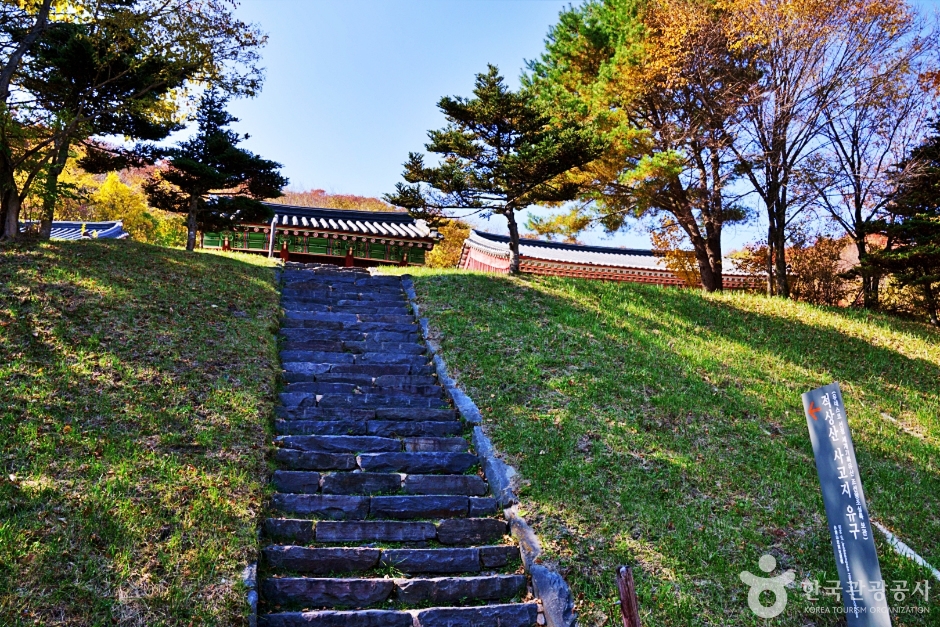
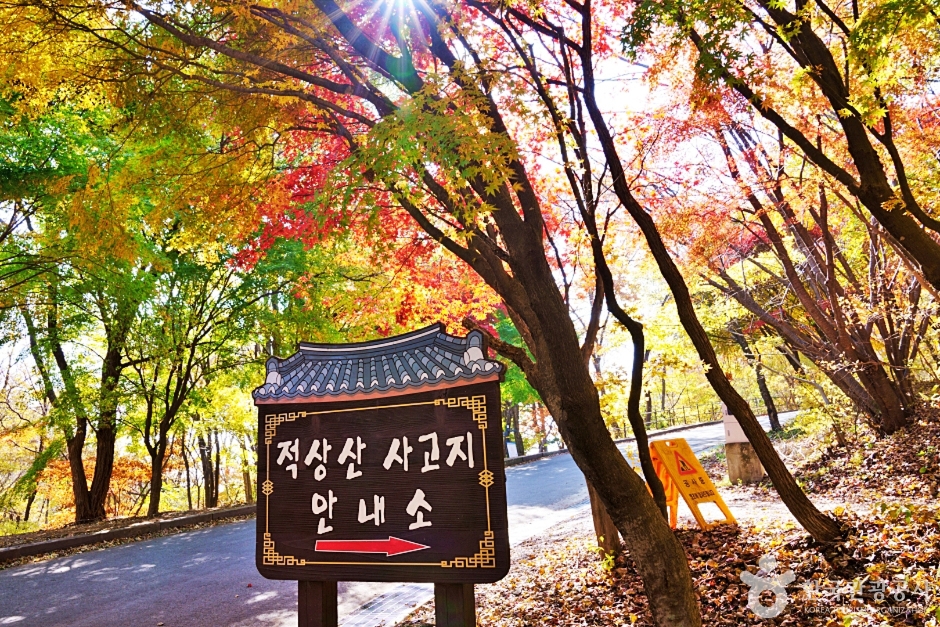
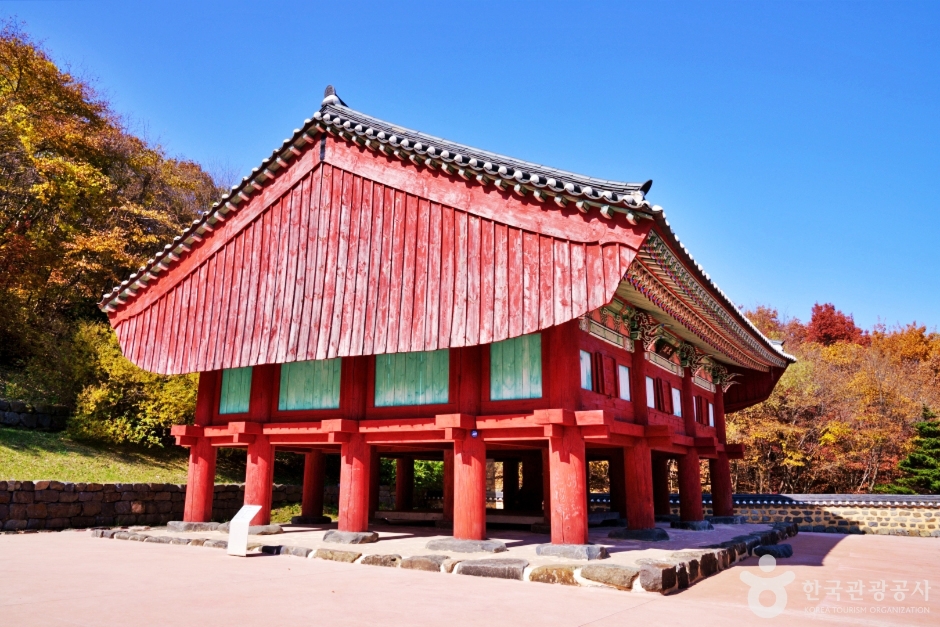
During the Japanese invasions of Korea (Imjin War), the Annals of the Joseon Dynasty, except those stored at Jeonju Sago, were lost. To restore them, three sets of the annals from King Taejo to King Myeongjong were reprinted and combined with the original Jeonju copies and corrected prints to create five sets in total, which were stored at Chunchugwan, Manisan, Taebaeksan, Myohyangsan, and Odaesan respectively. In 1641 (the 19th year of King Injo), Seonwonjeon was built here to store the Seonwonroks, making Jeoksangsansa a fully functioning archival site. Thirty-four volumes of the Joseon Wangjo Sillok copies (27 volumes representing each reign and 7 volumes related to Muju) and five volumes of the royal genealogy Seonwonrok copies were produced and kept here. Twenty-two exhibition panels detail the process of making, compiling, and transferring the annals. Cultural tourism interpreters from Muju County Office provide easy-to-understand explanations about the historical value of Jeoksangsansa and the Joseon Wangjo Sillok, making it a must-visit tourist destination, especially for family tourists with students.
적상산성 내 안국사 경내 남쪽 축대 아래 있는 호국사비(護國寺碑, 전라북도 유형문화재 제85호)는 적상산성과 관계된 기록을 비교적 상세히 담고 있는 조선시대의 비석이다. 현재는 글씨가 마모되어 거의 알아 볼 수 없고, 1898년(고종 35) 간행된 고적조(古迹條)에 비문의 전문이 게재되어 있다.
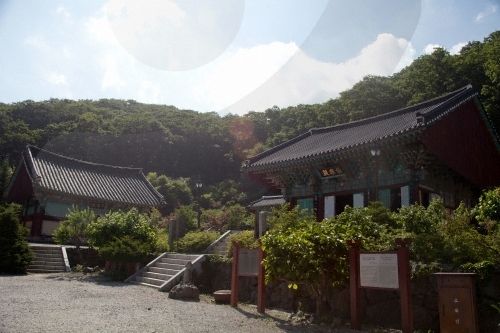
Anguksa is the only ancient temple remaining at Jeoksang Fortress and is said to have been built by Wolinhwa in the 3rd year of King Chungnyeol of Goryeo (1277). In the 6th year of King Gwanghaegun (1614), a Sajak was established within Jeoksang Fortress, and in the 19th year of King Injo (1641), Seonungak was installed, housing the Joseon Dynasty Annals and the royal genealogy book Seonwonrok. At that time, Hoguksa was built to guard this repository, and Anguksa, which had existed before, was used as lodging for warrior monks protecting the Sajak alongside Hoguksa, thus it came to be called Anguksa. Due to the construction of the Jeoksang Mountain pumped-storage hydroelectric power plant, this temple was relocated to Hoguksa-ji, so Anguksa is now located at Hoguksa-ji. Nearby are Muju Resort and the Raje Tongmun Gucheon-dong Valley, which can be visited together.
Good places to stop and rest after the course

Booking and payment continue on a partner site.
Check rooms & price
Booking and payment continue on a partner site.
Check rooms & price
Booking and payment continue on a partner site.
Check rooms & priceSign up to feature your channel.
(As a member, you can add your Instagram, YouTube, and blog links in My Page, and we’ll show them with every comment you write.)
““Stayed near Hongdae and did a night café tour. Perfect city views and vibes.””
Guest comments do not display social media links or profile cards.
Share a short tip about this place.
Or leave a quick comment as a guest.
Photo attachments are available after login.
No reviews yet. Be the first to share your experience!