Fall in Love with Old Seoul's Beauty in Seoul Jongno-gu · schedule Other · distance 5km · 3 stops · highlights Changdeokgung & Huwon [UNESCO], Hanok Vil…

A route that takes you through beautiful palaces and traditional hanok villages, where tradition and modernity harmonize along Samcheongdong-gil. At every turn, you will encounter the charms Seoul holds. Pass by Changdeokgung Palace, which houses a beautiful garden, visit Bukchon Hanok Village, and walk along Samcheongdong-gil, lined with quaint museums, atmospheric cafes, and restaurants.
This course is a sample one-day itinerary. Save it as-is or expand it into an AI itinerary.
UNESCO site famed for royal secret gardens—quiet forest paths and serene ponds.
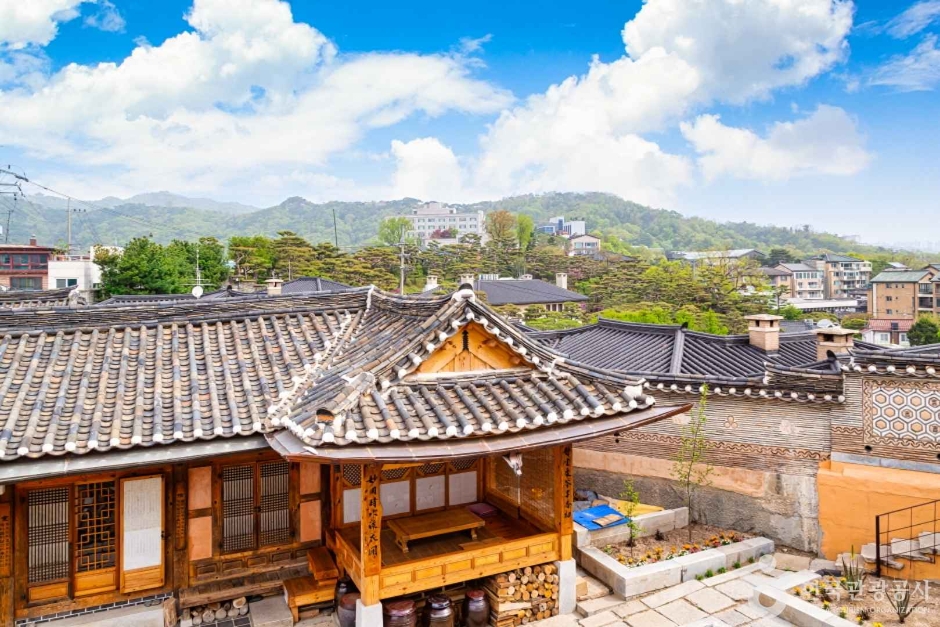
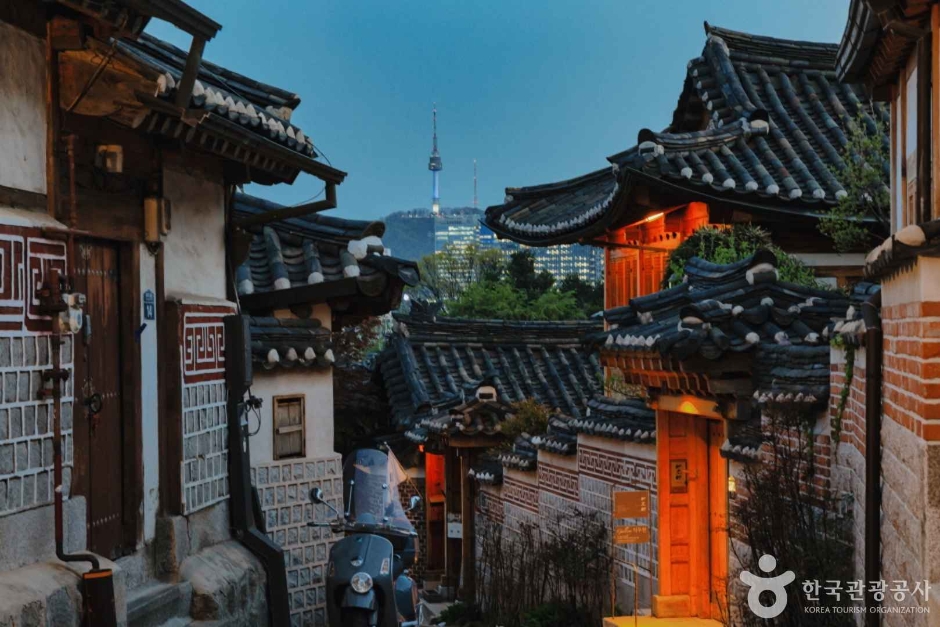
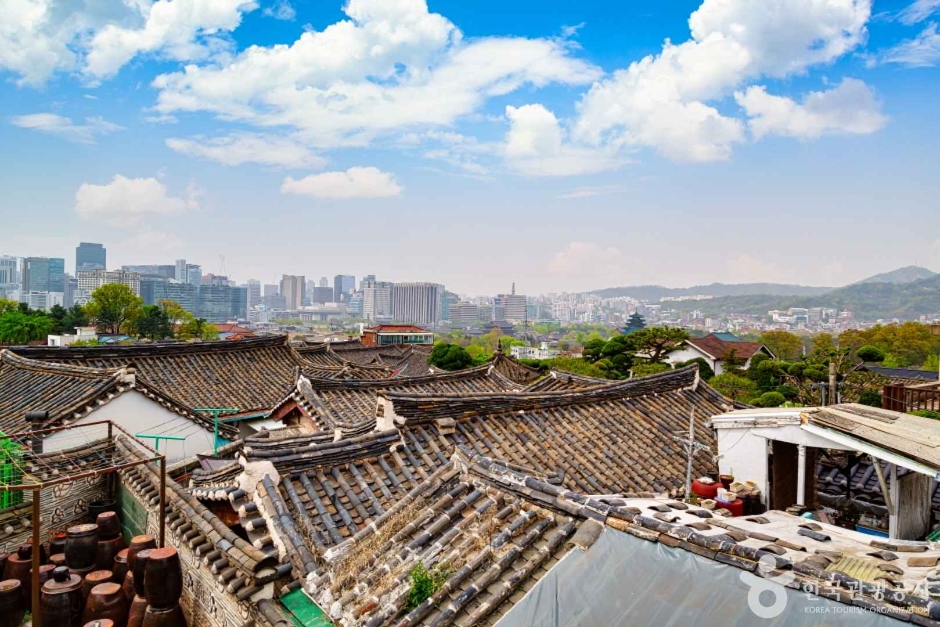
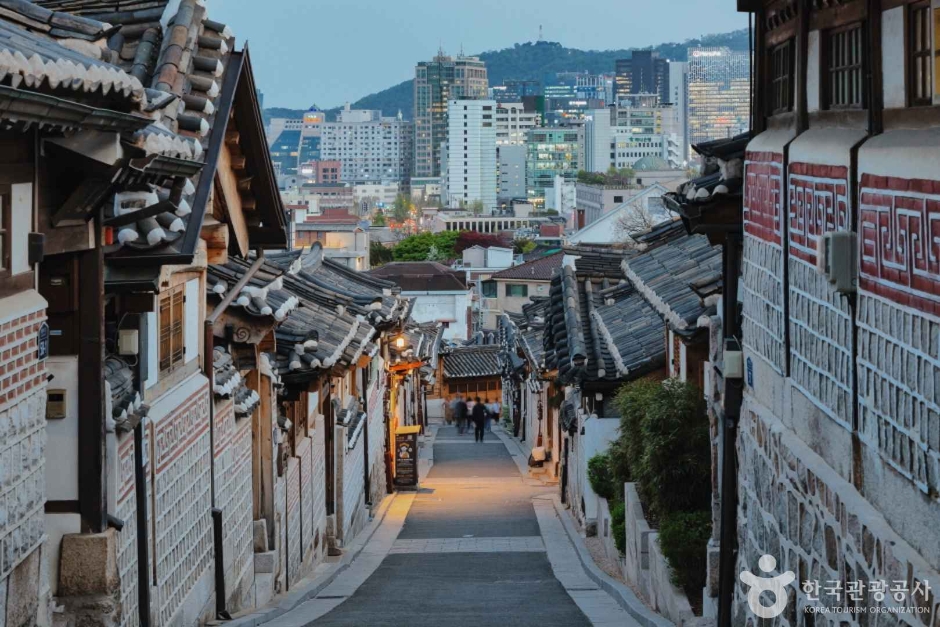
Bukchon Hanok Village is one of Seoul’s most representative traditional residential areas, located between Gyeongbokgung Palace, Changdeokgung Palace, and Jongmyo Shrine. The neighborhood is home to a dense cluster of traditional Korean hanok houses, along with many historic sites, cultural properties, and folk heritage resources. Because of this, Bukchon is often described as an open-air street museum in the heart of the city. The name “Bukchon,” meaning “North Village,” comes from its location north of Cheonggyecheon Stream and Jongno. The area includes neighborhoods such as Gahoe-dong, Songhyeon-dong, Anguk-dong, and Samcheong-dong. In places like Sagan-dong, Gye-dong, Sogyeok-dong, and Jae-dong, traces of history still remain in the neighborhood names themselves, preserving memories that go back hundreds of years. During the Joseon Dynasty, Bukchon was established as a residential district for the upper class. Until the 1920s, the area remained largely unchanged. However, in the 1930s, as Seoul’s administrative boundaries expanded and the city’s structure became more modern, Bukchon also began to change. Housing development companies purchased large plots of land and wooded areas in Bukchon and built groups of small and medium-sized hanok houses. The hanok residential clusters that remain today around Gahoe-dong 11 and 31, Samcheong-dong 35, and Gye-dong 135 were formed during this period. The hanok houses of Bukchon are especially notable because they adapted to a modern urban environment while preserving the essential character of traditional Korean architecture. Features such as glass doors added to the main hall and tin awnings attached to the eaves show how new materials were incorporated into hanok design. In this sense, Bukchon’s hanok evolved into a new type of urban residence while maintaining their traditional form. Unlike the 1960s, when much of Bukchon consisted of hanok houses, many hanok disappeared after the 1990s due to the rapid construction of multi-family housing. Even so, several areas still preserve well-maintained clusters of hanok. The sight of tiled roofs lined up closely together, with neighboring homes sharing walls and eaves, offers a warm glimpse into a way of life that many people have almost forgotten. Walking through Bukchon, visitors can enjoy not only the graceful rooflines of traditional hanok houses but also the quiet charm of narrow alleys. To help Bukchon Hanok Village remain a sustainable travel destination, visitors are asked to practice quiet tourism. ※ Quiet tourism means visiting respectfully and quietly so that the daily lives and living environment of local residents are not disturbed by outside visitors. ※ Visitor etiquette for Bukchon Hanok Village - Group visitors should be accompanied by a guide. - Illegal parking of tour buses is prohibited. - Do not trespass, take unauthorized photos, litter, urinate in public, or make excessive noise. - Please follow the designated visiting hours for the village.
A charming street with cafés, galleries, and restaurants.
Good places to stop and rest after the course

Booking and payment continue on a partner site.
Check rooms & price
Booking and payment continue on a partner site.
Check rooms & priceSign up to feature your channel.
(As a member, you can add your Instagram, YouTube, and blog links in My Page, and we’ll show them with every comment you write.)
““Stayed near Hongdae and did a night café tour. Perfect city views and vibes.””
Guest comments do not display social media links or profile cards.
Share a short tip about this place.
Or leave a quick comment as a guest.
Photo attachments are available after login.
No reviews yet. Be the first to share your experience!
![Changdeokgung & Huwon [UNESCO] 1](https://tong.visitkorea.or.kr/cms/resource/01/3092301_image2_1.jpg)
![Changdeokgung & Huwon [UNESCO] 2](https://tong.visitkorea.or.kr/cms/resource/38/3092338_image2_1.jpg)
![Changdeokgung & Huwon [UNESCO] 3](https://tong.visitkorea.or.kr/cms/resource/67/3092367_image2_1.jpg)
![Changdeokgung & Huwon [UNESCO] 4](https://tong.visitkorea.or.kr/cms/resource/32/3092432_image2_1.jpg)