Jeonju UNESCO treasure hunt course in Jeonbuk Special Self-Governing Province Jeonju City · schedule Other · distance 3.66km · 5 stops · highlights 전주전통…
There are few cities with as much cultural heritage as Jeonju. The traditional Korean lifestyle, including clothing, food, and housing, is deeply embedded in everyday life. The combination of hanbok, hansik, and hanok has become a spectrum of traditional culture recognized worldwide. Let's embark on a journey to discover Jeonju's UNESCO cultural heritage, which has captured the attention of people around the world.
This course is a sample one-day itinerary. Save it as-is or expand it into an AI itinerary.
한벽루 곁에 둥지를 튼 전주전통문화관은 21세기를 맞아 문화관광 도시로의 비상을 꿈꾸는 전주시가 야심차게 준비한 전주 한옥마을의 중심이다. 볼거리, 먹을거리, 놀거리를 총체적으로 아우르면서 소리를 사랑하고 타자를 긍정하던 전주의 마음이 살아숨쉬는 곳이다.
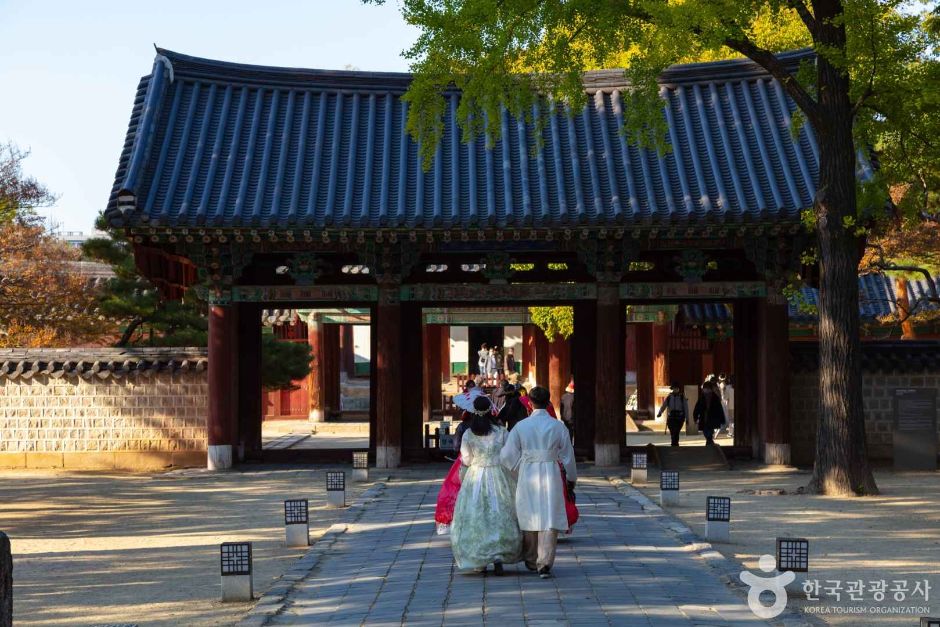
Hyanggyo were national educational institutions established during the Goryeo and Joseon periods to enshrine the spirit tablets of outstanding Confucian scholars, conduct ancestral rites, and provide education and moral guidance to local people. Jeonju Hyanggyo has several buildings, including Daeseongjeon, which houses the spirit tablets of distinguished figures, Dongmu and Seomu, Gyesungsa, and Myeongryundang, where students were taught. Daeseongjeon was rebuilt in the 4th year of King Hyojong's reign (1653), with a rebuilding record left by Lee Gibal. Later, in the first year of Yunghui (1907), county magistrate Lee Jung-ik repaired it again; the building's size is 3 kan front and 2 kan side. The courtyard in front of Daeseongjeon has ginkgo trees over 400 years old, and many ginkgo trees around, making autumn the most beautiful season. It is also famous as a filming location for various dramas and movies, such as "Gurumi Green Moonlight" and "Sungkyunkwan Scandal." Visitors can take memorable photos in the tranquil atmosphere with the stone walls surrounding the Hyanggyo and its surroundings as a backdrop.
Omokdae, built on a cliff-like hill along the four-lane road north of Hanbyeokdang and Jeonju Hyanggyo, was established in the 6th year of King U of Goryeo (1380) when Yi Seonggye, returning victorious after defeating Japanese forces at Hwangsan in Unbong, stopped here to celebrate the victory at the place where his ancestor Mokjo lived. Later, Emperor Gojong personally wrote the Taegogohwang Jejupil Yujibi stele here. Across the pedestrian bridge from Omokdae is Imokdae, located at the foot of Seungamsan Mountain where the Catholic sacred site Chimyeongjasan is located. Imokdae is 70m above Omokdae, while at 80m below it there is a stele and pavilion. The stele bears the inscription Mokjodaewang Gugeoyuji, personally written by Emperor Gojong. Mokjo, the 5th ancestor of King Taejo who founded the Joseon dynasty, is known to have lived here playing military strategy games as a child, as described in Yongbieocheonga. Due to conflicts with the then magistrate of Jeonju, Mokjo moved to Hamgyeongdo from here, which eventually led Yi Seonggye to found the Joseon dynasty, considered a sign of heaven’s will.
Gyeonggijeon Shrine was built in the 10th year of King Taejong's reign (1410) to enshrine the portrait (eojin) of Taejo, the founder of the Joseon dynasty, and to hold memorial rites. Initially, the portraits enshrined in places like Jeonju, Gyeongju, and Pyongyang were called Eoyongjeon, but in the 12th year of King Taejong's reign (1412) it was renamed Taejo Jinjeon, and in the 24th year of King Sejong's reign (1442), each location was named individually: Jeonju's Gyeonggijeon, Gyeongju's Jipgyeongjeon, and Pyongyang's Yeongsungjeon. Gyeonggijeon was destroyed during the Japanese invasions of 1597 (the 30th year of King Seonjo's reign) but rebuilt in 1614 (the 6th year of King Gwanghaegun's reign). The shrine comprises a sacred stone marker requiring visitors to dismount from horses, a red-painted Hongsalmun gate, the outer and inner Shimmuns (spiritual gates), and the main hall housing the portrait. As a royal shrine, its gates are called Shimmuns. When passing through the gates inside the Hongsalmun, one must enter from the east (right) and exit from the west (left), called 'dong-ip seo-chul,' because the center is the 'Shindo,' an area for Taejo's spirit to enter and leave. Gyeonggijeon’s significance is heightened by the installation of the Jeonju Historical Archives (Sago) in 1439 (Sejong 21). Within the compound are Gyeonggijeon (a tangible cultural asset), which houses Taejo's portrait, and Jogyeongmyo (also a tangible cultural asset), enshrining the memorial tablets of Silla’s Sikonggong Lee Han and his wife, the 22nd generation ancestor of the Jeonju Lee clan. Particularly notable is the Eojin Museum on site, preserving the royal portraits (including Taejo's national treasure) of the Joseon dynasty. One reason Gyeonggijeon has long been beloved by tourists and locals is its old-world ambience and lush trees in the city center; it hosts a variety of tree species. (Source: Jeonju City Culture and Tourism website) ◎ Travel information to experience the charm of Korean Wave: Located in the city center, this Joseon-era traditional space features the main hall, stone walls, and bamboo groves that evoke a historical drama atmosphere. It’s within Jeonju Hanok Village, which offers rich food and entertainment options, making it convenient to visit alongside Jeondong Catholic Church. Many hanbok rental shops are nearby, so wearing hanbok while visiting is recommended.
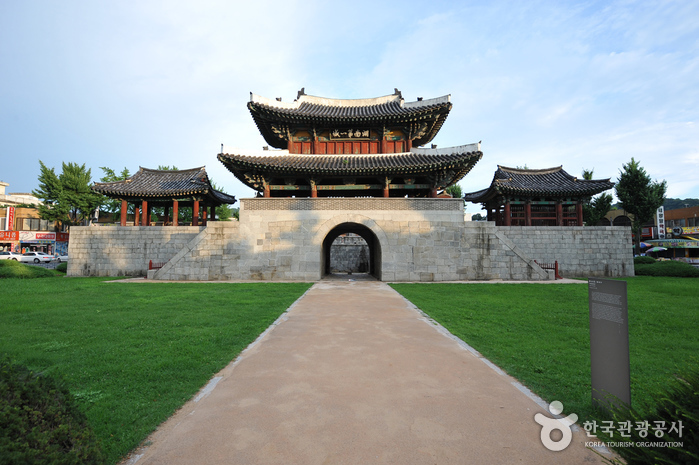
Pungnammun Gate is the south gate of the old Jeonju fortress. It was destroyed during the Japanese invasions of Korea (1592–1598) and was rebuilt along with the fortress walls in the 10th year of King Yeongjo's reign (1734), then called Myeonggyeonru. The name Pungnammun was given when Governor Hong Naki rebuilt it in the 44th year of King Yeongjo's reign (1768). During the city planning of Emperor Sunjong's era, the fortress walls and gates were demolished, causing significant damage to Pungnammun as well. The current structure was restored to its original form through a three-year restoration starting in 1978. The building has three bays on the front and side on the first floor, and three bays on the front and one on the side on the second floor. The roof is a hipped and gabled roof with an octagonal shape when viewed from the side. The decorative structural elements supporting the eaves are placed only above the pillars. The narrowing of the second floor compared to the first floor when viewed in plan is due to the interior first-floor pillars being extended to the second floor and used as corner pillars.
Good places to stop and rest after the course

Booking and payment continue on a partner site.
Check rooms & price
Booking and payment continue on a partner site.
Check rooms & price
Booking and payment continue on a partner site.
Check rooms & priceSign up to feature your channel.
(As a member, you can add your Instagram, YouTube, and blog links in My Page, and we’ll show them with every comment you write.)
““Stayed near Hongdae and did a night café tour. Perfect city views and vibes.””
Guest comments do not display social media links or profile cards.
Share a short tip about this place.
Or leave a quick comment as a guest.
Photo attachments are available after login.
No reviews yet. Be the first to share your experience!