
Solo trip 1 to traditional villages rich with the scent of history in Jeonbuk Special Self-Governing Province Jeonju City · schedule Other · distance 2.…

Jeonju is the ancestral home of Yi Seong-gye, the founder of Joseon. Today, it prides itself as an ancient city where 'Han Style,' representing Korean culture, is concentrated. Take a solo trip to the Hanok Village, considered the most Korean city.
This course is a sample one-day itinerary. Save it as-is or expand it into an AI itinerary.
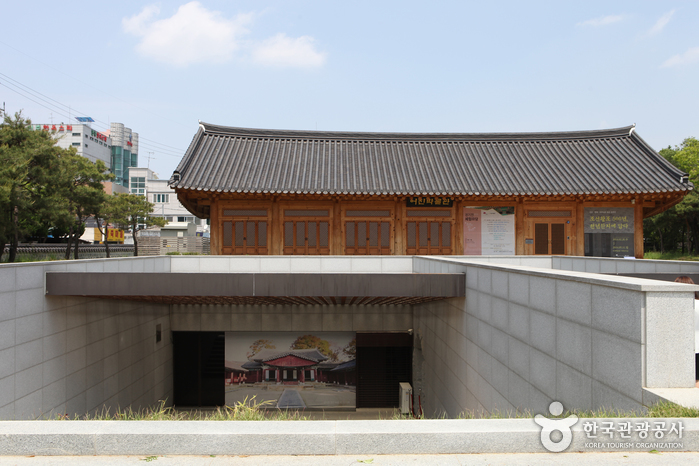
2010년 11월 6일에 개관한 어진박물관은 전주의 새로운 관광자원으로서 경기전과 태조어진을 중심으로 다양하고 격조 높은 전시를 통해 찬란한 조선왕실 문화유산의 보존ㆍ관리 및 선양의 중심지이다. 어진박물관은 지상 1층, 지하 1층, 건축 연면적 1,193.71㎡의 규모이며, 지상 1층은 태조어진과 새로 모사한 6분의 어진(세종, 영조, 정조, 철종, 고종, 순종)이 전시되는 공간이다. 또한 전시공간인 역사실과 가마실, 기획전시실이 있으며, 휴게공간과 박물관 업무 및 관리를 위한 사무실, 유물의 보관을 위한 시설인 수장고로 조성되어 있다.
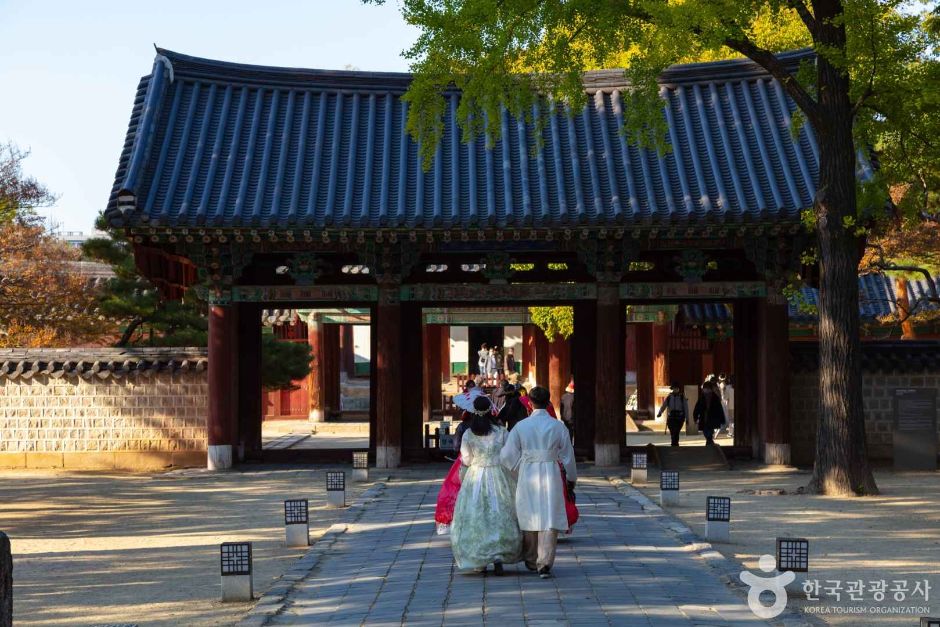
Gyeonggijeon Shrine was built in the 10th year of King Taejong's reign (1410) to enshrine the portrait (eojin) of Taejo, the founder of the Joseon dynasty, and to hold memorial rites. Initially, the portraits enshrined in places like Jeonju, Gyeongju, and Pyongyang were called Eoyongjeon, but in the 12th year of King Taejong's reign (1412) it was renamed Taejo Jinjeon, and in the 24th year of King Sejong's reign (1442), each location was named individually: Jeonju's Gyeonggijeon, Gyeongju's Jipgyeongjeon, and Pyongyang's Yeongsungjeon. Gyeonggijeon was destroyed during the Japanese invasions of 1597 (the 30th year of King Seonjo's reign) but rebuilt in 1614 (the 6th year of King Gwanghaegun's reign). The shrine comprises a sacred stone marker requiring visitors to dismount from horses, a red-painted Hongsalmun gate, the outer and inner Shimmuns (spiritual gates), and the main hall housing the portrait. As a royal shrine, its gates are called Shimmuns. When passing through the gates inside the Hongsalmun, one must enter from the east (right) and exit from the west (left), called 'dong-ip seo-chul,' because the center is the 'Shindo,' an area for Taejo's spirit to enter and leave. Gyeonggijeon’s significance is heightened by the installation of the Jeonju Historical Archives (Sago) in 1439 (Sejong 21). Within the compound are Gyeonggijeon (a tangible cultural asset), which houses Taejo's portrait, and Jogyeongmyo (also a tangible cultural asset), enshrining the memorial tablets of Silla’s Sikonggong Lee Han and his wife, the 22nd generation ancestor of the Jeonju Lee clan. Particularly notable is the Eojin Museum on site, preserving the royal portraits (including Taejo's national treasure) of the Joseon dynasty. One reason Gyeonggijeon has long been beloved by tourists and locals is its old-world ambience and lush trees in the city center; it hosts a variety of tree species. (Source: Jeonju City Culture and Tourism website) ◎ Travel information to experience the charm of Korean Wave: Located in the city center, this Joseon-era traditional space features the main hall, stone walls, and bamboo groves that evoke a historical drama atmosphere. It’s within Jeonju Hanok Village, which offers rich food and entertainment options, making it convenient to visit alongside Jeondong Catholic Church. Many hanbok rental shops are nearby, so wearing hanbok while visiting is recommended.
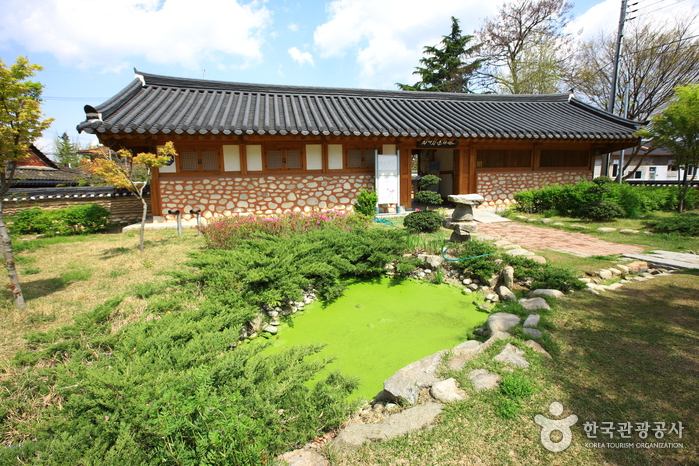
최명희 문학관은 작가 최명희의 삶과 문학을 체계적으로 정리 보존하고, 전통문화의 인류사 적 의미 연구와 국제적 문화교류를 통해 시민과 함께 연구하고 학습하며 감동을 주고받는 도시형 시민밀착형 문학관, 전주의 역사와 문화를 연구하고 문화컨텐츠를 개발하는 문학관, 작가 최명희를 비롯한 전북 지역 작가들의 문학 혼을 폭넓게 담아내는 한국 대표 문학 관으로 자리잡고자 한다.
Jeonju Hanok Village is the largest traditional hanok village in Korea, with over 700 hanoks clustered around the Pungnam-dong area. It is the only urban hanok complex nationwide. Established starting in 1910, it is an important space in the development of modern Korean residential culture. Significant cultural assets such as Gyeonggijeon Shrine, Omokdae, and Hyanggyo, along with more than 20 cultural facilities, are scattered throughout. Walking along Hyanggyogil, Choi Myeonghigil, and Gyeonggijeongil allows visitors to experience the beautiful alleyways and the charm of hanoks. At night, the streetslight by angel lanterns on Taejo-ro and lighting accentuating the hanok walls offer a romantic nightscape. Unique travel spots like Jeonju Nanjang, Jaman Mural Village, the night market, and Youth Mall can also be found. The beauty of hanok lies in its rooflines, with eaves slightly turned upward, which is distinctive and elegant. The structure is mainly divided into annaechae and sarangchae. Another feature of hanok is the ondol room. Since Koreans mostly sit on the floor, ondol heating is installed beneath. The structure has a furnace outside the room, and when fire is lit under the floor flues (gudeul), the room warms. The key feature of ondol is that it stays cool in summer and warm in winter. There is a Hanok Life Experience Center in the village where visitors can try living in hanok rooms like seonbi bang and gyusu bang with ondol heating. Traditional Korean food served in nabcheong yuggi [納淸鍮器] enhances the experience. Jeonju Hanok Village offers both living experience and a chance to taste the famous Jeonju bibimbap.
Dongrakwon is located in an alley next to a large ginkgo tree over 600 years old within Jeonju Hanok Village. It was formerly a hanok used as residences for Bank of Korea employees and was renovated by Gijeon College to serve as a hanok experience center open to the public under the name Dongrakwon. Dongrakwon is a hanok hotel offering lodging, garden rental, an open-air foot bath cafe, sunbeds, and picnic table rentals. Dongrakwon branches 1 and 2 are within a 4-minute walk. Lodging options include four rooms in the Haengrangchae, three in the Sarangchae, two in the Anchae, two in the Byeoldangchae, and Hanok rooms 1 through 8. Facilities include a unique outdoor forest foot bath cafe for private relaxation. At the entrance of Dongrakwon, a rectangular pond with swimming carp first catches the eye. Passing between the Haengrangchae with small rooms and the Sarangchae adorned with jars, visitors reach the Anchae and a yard of about 200 pyeong. Roof tiles painted with wildflowers hang on the Sarangchae walls, enhancing the elegant atmosphere. The 200-pyeong grass yard features a deck topped with parasols, tables, and chairs, making it perfect for enjoying a cup of coffee after dining in Jeonju Hanok Village. The Dongrakwon lawn often hosts small weddings and parties. Between the Sarangchae Jar Garden and the lawn, there is a commemorative tree planted to mark a visit by Mrs. Kim Yoon-ok, wife of former President Lee Myung-bak. On the opposite side of the lawn is another commemorative tree planted for a visit by the late former President Kim Dae-jung, which is a source of pride for Dongrakwon.
전주전통술박물관은 술을 빚어 손님을 맞고 제사를 지냈던 가양주 전통을 현대에 맞게 되살리고자 한다. 그리하여 전통술의 명인들을 초청하여 술빚기 강좌를 개설하였으며, 집에서도 손쉽게 술을 빚을 수 있는 방법 등을 연구하고 보급하고 있다. 또한, 조상들의 음주 문화를 현대에 맞게 계승하여 '향음주례'를 교육하고 있다. 향음주례란 술을 마시는 예법으로 건전하고 아름다운 술 문화를 창출하고자 한다.
Good places to stop and rest after the course

Booking and payment continue on a partner site.
Check rooms & price
Booking and payment continue on a partner site.
Check rooms & price
Booking and payment continue on a partner site.
Check rooms & price
Booking and payment continue on a partner site.
Check rooms & priceSign up to feature your channel.
(As a member, you can add your Instagram, YouTube, and blog links in My Page, and we’ll show them with every comment you write.)
““Stayed near Hongdae and did a night café tour. Perfect city views and vibes.””
Guest comments do not display social media links or profile cards.
Share a short tip about this place.
Or leave a quick comment as a guest.
Photo attachments are available after login.
No reviews yet. Be the first to share your experience!


![Jeonbuk Jeonju Hanok Village [Slow City] 1](https://tong.visitkorea.or.kr/cms/resource/44/3479244_image2_1.jpg)
![Jeonbuk Jeonju Hanok Village [Slow City] 2](https://tong.visitkorea.or.kr/cms/resource/46/3479246_image2_1.jpg)
![Jeonbuk Jeonju Hanok Village [Slow City] 3](https://tong.visitkorea.or.kr/cms/resource/47/3479247_image2_1.jpg)
![Jeonbuk Jeonju Hanok Village [Slow City] 4](https://tong.visitkorea.or.kr/cms/resource/48/3479248_image2_1.jpg)


