Walking the Thousand Year Jeonju Masil Trail in Jeonbuk Special Self-Governing Province Jeonju City · schedule Other · distance 약 12km · 6 stops · highl…

This is a path to experience the thousand-year-old city of Jeonju. It starts from Jeonju Hanok Village and goes around Jeonghyesa Temple located under Wansan Chilbong, Wansan Park, and Namgosanseong Fortress. Especially, the path around Wansan Chilbong and Namgosanseong is called the 'Thousand-Year Jeonju Masil-gil,' a walking trail. From the Namgosanseong fortress built by Gyeon Hwon of Later Baekje, you can see the entire Jeonju city area at a glance.
This course is a sample one-day itinerary. Save it as-is or expand it into an AI itinerary.
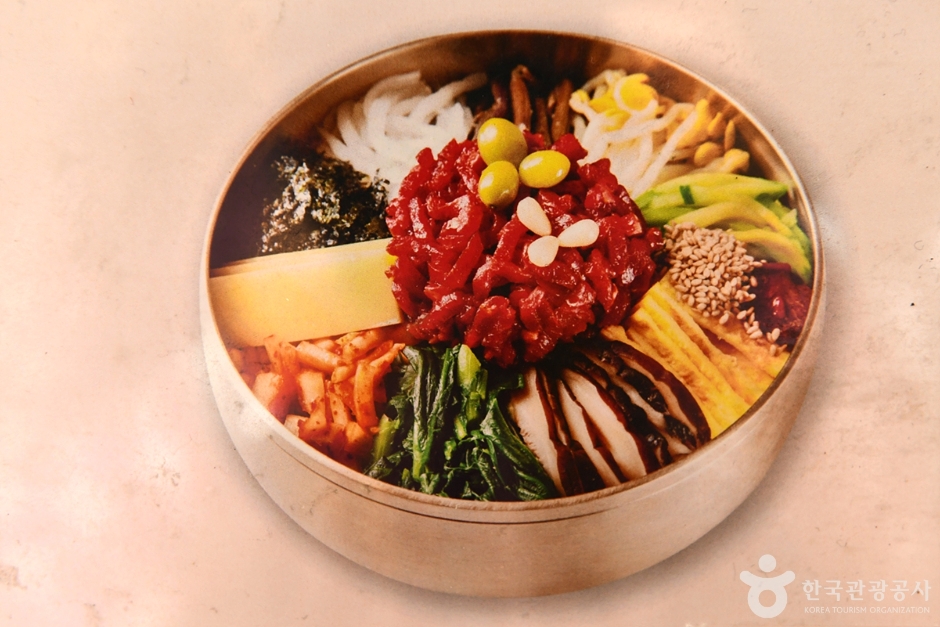
Jeonju Hanok Village is the largest traditional hanok village in Korea, with over 700 hanoks clustered around the Pungnam-dong area. It is the only urban hanok complex nationwide. Established starting in 1910, it is an important space in the development of modern Korean residential culture. Significant cultural assets such as Gyeonggijeon Shrine, Omokdae, and Hyanggyo, along with more than 20 cultural facilities, are scattered throughout. Walking along Hyanggyogil, Choi Myeonghigil, and Gyeonggijeongil allows visitors to experience the beautiful alleyways and the charm of hanoks. At night, the streetslight by angel lanterns on Taejo-ro and lighting accentuating the hanok walls offer a romantic nightscape. Unique travel spots like Jeonju Nanjang, Jaman Mural Village, the night market, and Youth Mall can also be found. The beauty of hanok lies in its rooflines, with eaves slightly turned upward, which is distinctive and elegant. The structure is mainly divided into annaechae and sarangchae. Another feature of hanok is the ondol room. Since Koreans mostly sit on the floor, ondol heating is installed beneath. The structure has a furnace outside the room, and when fire is lit under the floor flues (gudeul), the room warms. The key feature of ondol is that it stays cool in summer and warm in winter. There is a Hanok Life Experience Center in the village where visitors can try living in hanok rooms like seonbi bang and gyusu bang with ondol heating. Traditional Korean food served in nabcheong yuggi [納淸鍮器] enhances the experience. Jeonju Hanok Village offers both living experience and a chance to taste the famous Jeonju bibimbap.
Opened in 1952, this is a Jeonju Bibimbap specialty restaurant that has carried on the tradition for three generations. A hanok has been converted into a restaurant, also featuring a beautiful courtyard. It boasts an excellent location close to major attractions in Jeonju such as Jeonju Hanok Village and Gyeonggijeon.
Jeonghyesa in Jeonju is a temple where nuns of the Bomunjong lineage pray and study. Jeonghyesa was originally established in 1899 when Mr. Choi Hyang-gwan built a small Chilseonggak under Wansan to pray for the birth of a son, enshrined Buddhist statues, and purchased an adjacent thatched house to create the temple, naming it Jeonghyesa and conducting prayer rituals. In 1921, Monk Jeong Myeong-ju established a Buddhist propagation foundation and built Bogwangjeon with 15 rooms and Yonghwajeon with 1 room. Additionally, Myeongbujeon, Nahanjeon, Wansan Seonwon, Sadaecheonwangmun, and monastic quarters were constructed to focus on practice and propagation. A Buddhist training center was also established to train disciples. Since then, Monk Baek Hyemyeong and the current head monk, Jeong Hyeil, have repeatedly led reconstruction and renovation projects, shaping Jeonghyesa’s present appearance.
Wansan Chilbong is so representative of Jeonju that when you think of Jeonju, you think of Wansan Chilbong. It has been the lifeline of Wansan, continuing with the thousand-year-old city of Jeonju, flowing into the Honam Plain, and becoming the origin of the three cities of Iksan, Gunsan, and Jeonju. It embraces the historic Chilseongsa Temple and mineral spring. From the octagonal pavilion observatory at the summit of Wansan Chilbong, the whole land lies below hesitating. Wansan Chilbong, where a fierce battle took place during the Donghak Peasant Movement, is now maintained as a forested citizen park.
Namgosa is a temple located on Godeok Mountain and is a branch temple of Geumsansa, the head temple of the 17th district of the Jogye Order of Korean Buddhism. The temple guards the south of Jeonju along Namgosanseong Fortress, and from the temple looking down, you can see the cityscape of Jeonju at a glance, offering a beautiful view. Existing buildings include the Daeungjeon, Gwaneumjeon, Samseonggak, and Sacheonwangmun. Inside Namgosa, Samseonggak is located, which is a Buddhist structure enshrining Sanshin, Chilseong, and Dokseong, representing a form combining native Korean shamanism and Buddhism. Also, the Daeungjeon is a hip-and-gable roof building with three bays in front and three bays on the side, housing a main Buddha of Shakyamuni Buddha along with the three main Buddhas. The building site in front of Daeungjeon is the old temple site of Namgosa, designated as a cultural monument of Jeollabuk-do in August 1985. Namgosa in autumn, filled with colorful autumn leaves, is said to offer an even more beautiful landscape, attracting many visitors.
Jeonju Namgosan Fortress is a mountain fortress surrounding Godeoksan, the main peak of Namgosan in the south of Jeonju, along with peaks called Cheonggyeongdae, Mangyeongdae, and Eokgyeongdae. It was originally called Godeoksanseong after Godeoksan, the main peak, and is located to guard the key transport area leading southeast to Namwon and Gochang, while overlooking Jeonju to the north. It is said that Gyeon Hwon, founder of Later Baekje, built Godeoksanseong here. The fortress was rebuilt in 1813 and renamed Namgosan Fortress. It is recorded in the Annals of King Sejong (Sejong Sillok Jiriji) and Dongguk Yeoji Seungnam, known for its very long history.
Good places to stop and rest after the course

Booking and payment continue on a partner site.
Check rooms & price
Booking and payment continue on a partner site.
Check rooms & price
Booking and payment continue on a partner site.
Check rooms & price
Booking and payment continue on a partner site.
Check rooms & price
Booking and payment continue on a partner site.
Check rooms & priceSign up to feature your channel.
(As a member, you can add your Instagram, YouTube, and blog links in My Page, and we’ll show them with every comment you write.)
““Stayed near Hongdae and did a night café tour. Perfect city views and vibes.””
Guest comments do not display social media links or profile cards.
Share a short tip about this place.
Or leave a quick comment as a guest.
Photo attachments are available after login.
No reviews yet. Be the first to share your experience!
![Jeonbuk Jeonju Hanok Village [Slow City] 1](https://tong.visitkorea.or.kr/cms/resource/44/3479244_image2_1.jpg)
![Jeonbuk Jeonju Hanok Village [Slow City] 2](https://tong.visitkorea.or.kr/cms/resource/46/3479246_image2_1.jpg)
![Jeonbuk Jeonju Hanok Village [Slow City] 3](https://tong.visitkorea.or.kr/cms/resource/47/3479247_image2_1.jpg)
![Jeonbuk Jeonju Hanok Village [Slow City] 4](https://tong.visitkorea.or.kr/cms/resource/48/3479248_image2_1.jpg)