Catholic Martyrs and Righteous Nativism in Jecheon in Chungcheongbuk-do Jecheon City · schedule Other · distance 19.3km · 4 stops · highlights Taksajeon…

The conflicts of 19th-century Joseon's ideology and politics rest in the mountain valleys of Jecheon. At Baeron, located 10 ri to the left from Bakdaljae ridge facing Jecheon, there were devout Catholics in hiding, while Jangdam, 10 ri to the right, was where loyalist militia opposing Westernization rose up. Though occurring at different times, these extreme opposing ideologies neighbored each other, offering a valuable chance to confront the history of late Joseon.
This course is a sample one-day itinerary. Save it as-is or expand it into an AI itinerary.
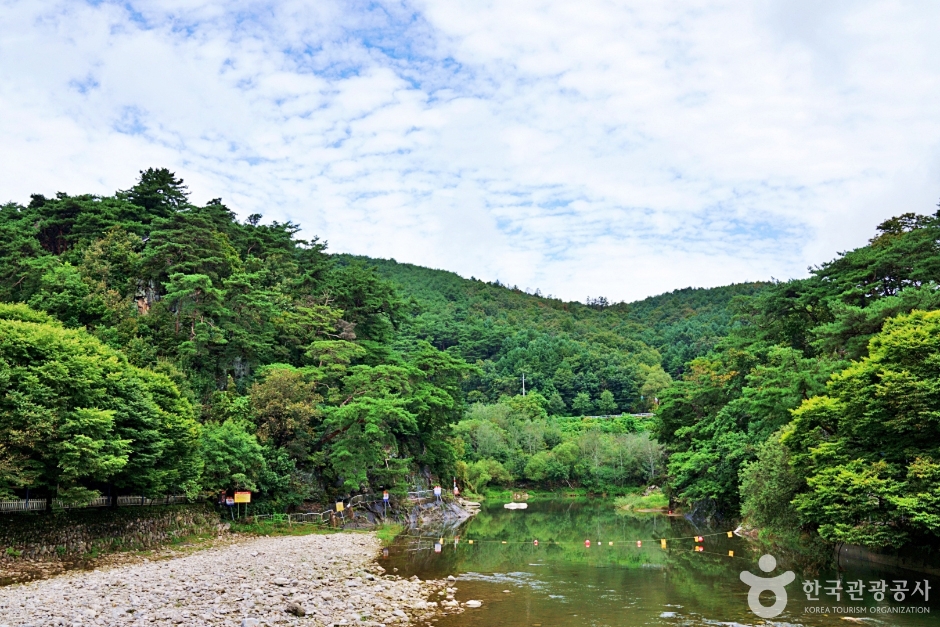
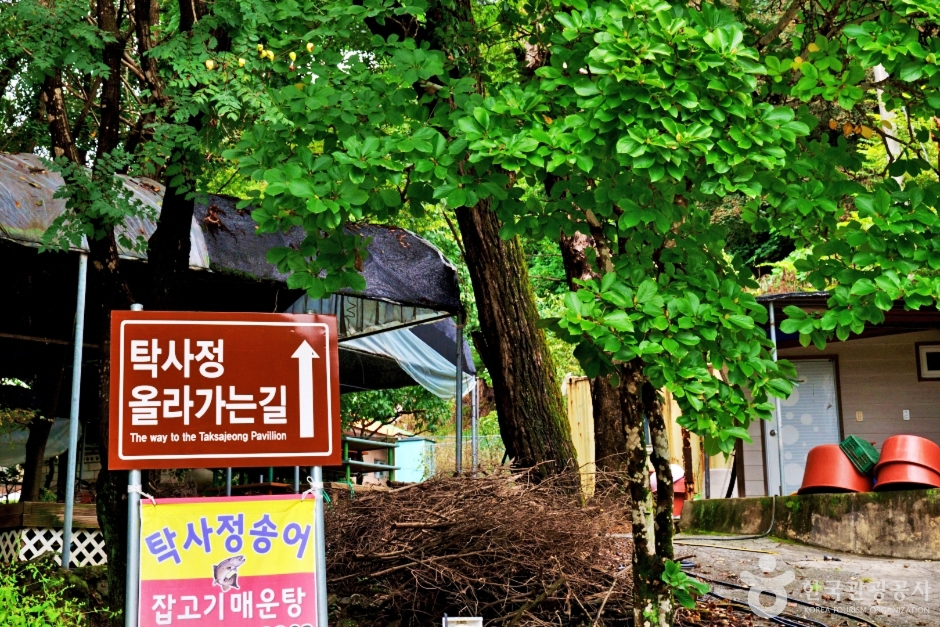
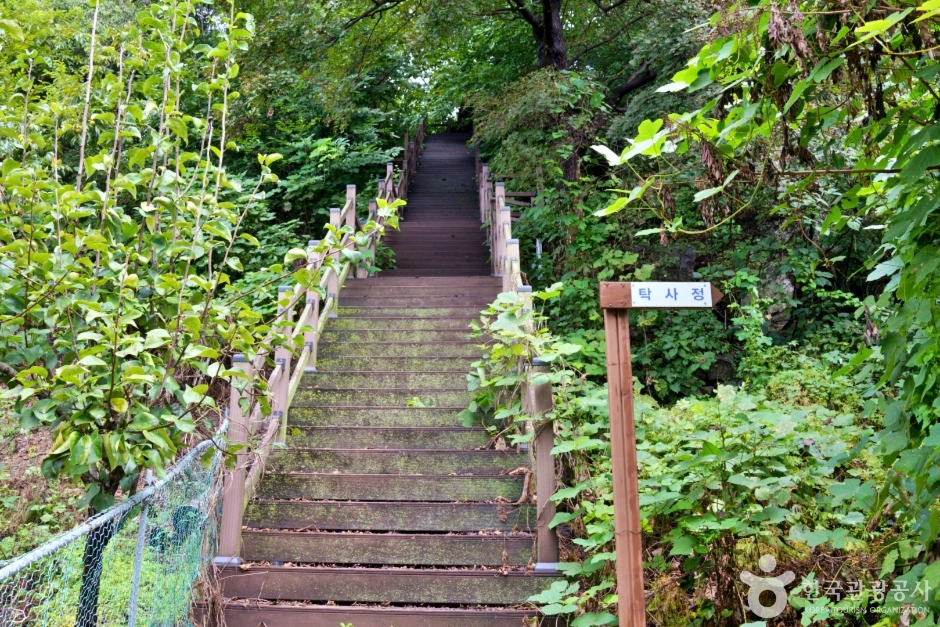
Taksajeong is a beautiful valley where white sandy beaches, clear water, and old pine trees come together, making it a representative summer retreat in Jecheon. The Taksajeong of Jecheon’s 9 Scenic Views refers not to the pavilion itself but to the magnificent scenery surrounding it. During the late Joseon period, Jeong Unho praised eight scenic spots of Jecheon, among which the 8th view, 'Daeam', is this place. In 1568 (the 19th year of King Seonjo’s reign), Im Eungryong, the Jeju governor, brought eight sea pines when he returned to his hometown and planted them here, naming the place Palsong. Later, a pavilion was built here called Palsongjeong. After Palsongjeong fell into ruin, a descendant named Yoon Geun restored it, and Won Gyu-sang renamed it Taksajeong. Situated in a southwestern valley formed by the divergence of the Charyeong and Taebaek mountain ranges, the Taksajeong recreational area features cool valley breezes, deep blue water, and a low waterfall that blend harmoniously with the surrounding old pine trees. In summer, many vacationers gather to camp and enjoy water activities on the wide sandy beach near the Yongso pond beneath the pavilion.
Baeron Sacred Site is a Catholic holy site from the late Joseon period located in Gu-hak-ri, Bongyang-eup, Jecheon-si, Chungcheongbuk-do. As the persecution of Catholics began in the late Joseon era, believers started gathering in Baeron to find refuge, naturally forming a Catholic community. In 1801 (the first year of Sunjo), during the Sin-yu Persecution, Hwang Sa-young hid in Baeron’s cave and wrote the White Paper, later being martyred by execution. From 1855 (the 6th year of Cheoljong) to 1866 (the 3rd year of Gojong), Baeron Seminary, Korea’s first modern educational institution, was located here. It is also the site of the tomb of Choi Yang-eop, Korea’s first overseas student and the second priest following Father Kim Dae-geon, who passed away in 1861. Additionally, it is the birthplace of Nam Jong-sam, a martyr during the 1866 Byeong-in Persecution. Baeron Sacred Site belonged to the Gyeongseong Diocese until 1911, then to Wonju Diocese from 1968, and was developed in the 1970s to its current state. Since liberation, Baeron has become an important site in Korean Catholic history. Within the Baeron Sacred Site in Jecheon are religious facilities including Martyrs’ House, St. Joseph’s Church, Hwang Sa-young Memorial Tower, priest residences and chapels, Choi Yang-eop Memorial Church, many annex buildings, Bongse Sisters’ Convent, and the Salesio House, a social welfare facility. It remains an important site in the establishment of Korean Catholicism, continuing to attract pilgrims nationwide.
Jecheon Jayang Yeongdang was established based on the educational site of Changjuseongsa (滄州精舍), founded in 1889 (the 26th year of King Gojong) by the late Joseon Confucian scholar Yu Jung-gyo (1832–1893) for nurturing disciples. In 1906, under the leadership of Lee So-eung, it was built to enshrine memorial tablets and portraits of revered predecessors respected by the Hwaseo school. Before a full renovation in 1977, the roof was reported to be made of stone tiles. From 1995 to 2001, restoration of Jecheon Jayang Yeongdang took place, along with the construction of the patriotic shrine Sunguisah, the militia exhibition hall, and militia tower, progressing the sanctification project to its present state.
공전 간이역에는 김광기선생이 운영하는 우드트레인이 있다. 측백나무, 편백나무 등 힐링나무을 이용하여 모형의 우드 체험을 할 수 있다. 간이역의 운치와 기차소리를 들으며 제작하는 목공체험은 참으로 색다른 맛이다.
Sign up to feature your channel.
(As a member, you can add your Instagram, YouTube, and blog links in My Page, and we’ll show them with every comment you write.)
““Stayed near Hongdae and did a night café tour. Perfect city views and vibes.””
Guest comments do not display social media links or profile cards.
Share a short tip about this place.
Or leave a quick comment as a guest.
Drag & drop or click to add images (up to 6)
No reviews yet. Be the first to share your experience!