So secluded so peaceful and so good in Jeonbuk Special Self-Governing Province Jangsu-gun · schedule Other · distance 12.9km · 3 stops · highlights Bang…

Jangansan Mountain, located at an elevation of 500 meters, features clear and deep valleys, making it a popular summer vacation spot. You can enjoy a walk all the way to Deoksan Yongso, a pond said to be home to a dragon, and as you stroll along the leafy mountain paths immersed in autumn scenery, you will feel your mind becoming clearer.
This course is a sample 2-day itinerary. Save it as-is or expand it into an AI itinerary.
Banghwa-dong Natural Recreational Forest & Family Vacation Village, located in the Banghwa-dong Valley of Jangansan (1,237m), one of the 8 major mountains nationwide, features Banghwa Waterfall and forest bathing facilities along the course connecting Deoksan Yongso to Banghwa-dong Valley. It offers a beautiful natural scenery with towering cliffs and diverse trees along the clean valley, making it an ideal four-season retreat for families on weekends or short stays. Due to Jangsu-gun's mountainous terrain, it is situated at over 500m above sea level, resulting in lower temperatures. Surrounded by mountains over 1,000m, the forest includes lodging facilities such as four log cabins and a forestry culture recreation center, equipped with video and broadcasting facilities for seminars and a restaurant. The family vacation village offers accommodations (multicultural experience building, family recreation building), an auto camping site, a camping car campsite, a wooden culture experience site, cooking areas, and various convenience facilities. Notably, it boasts the best auto camping facilities nationwide along the picturesque Banghwa-dong Valley.
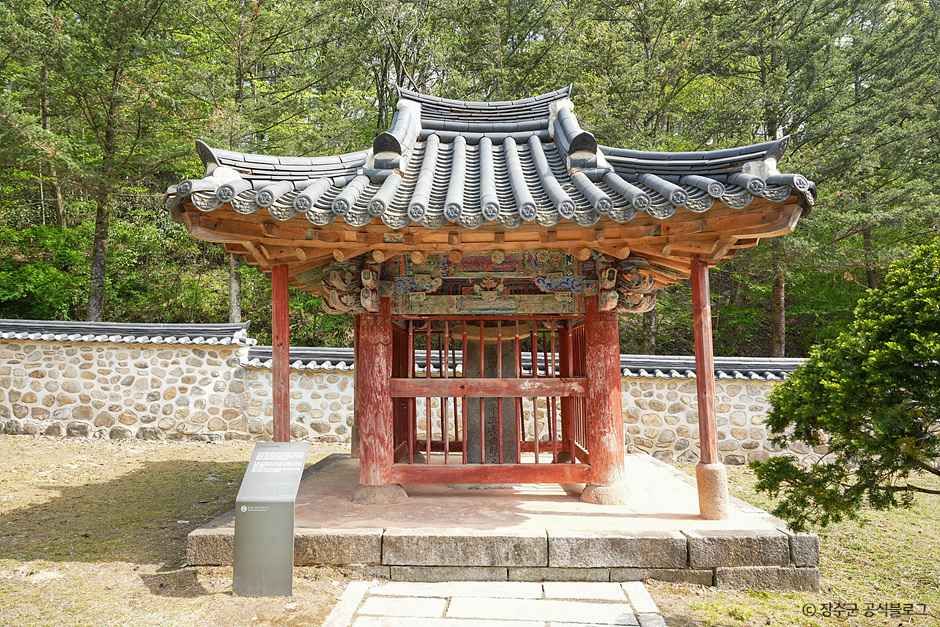
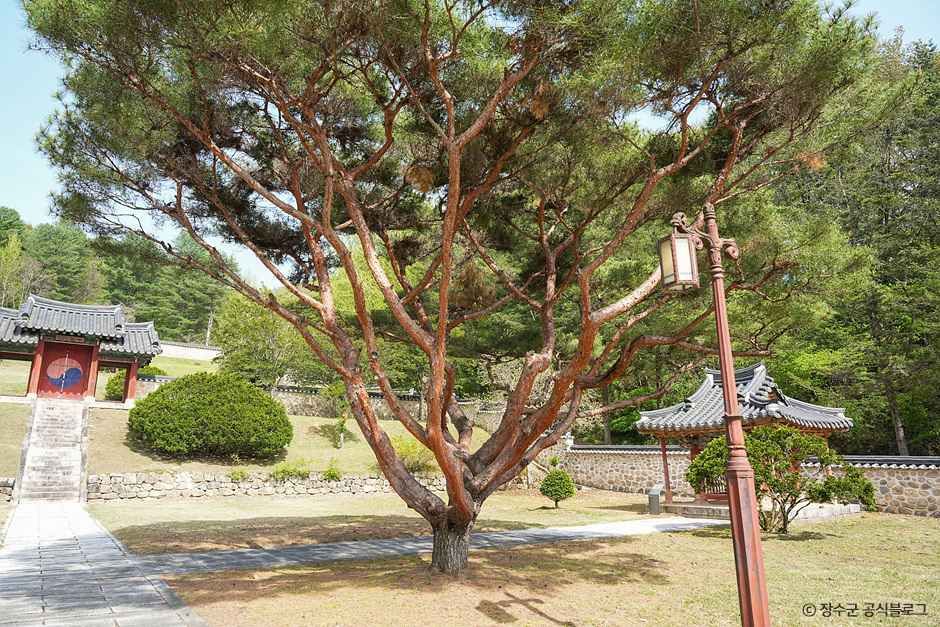
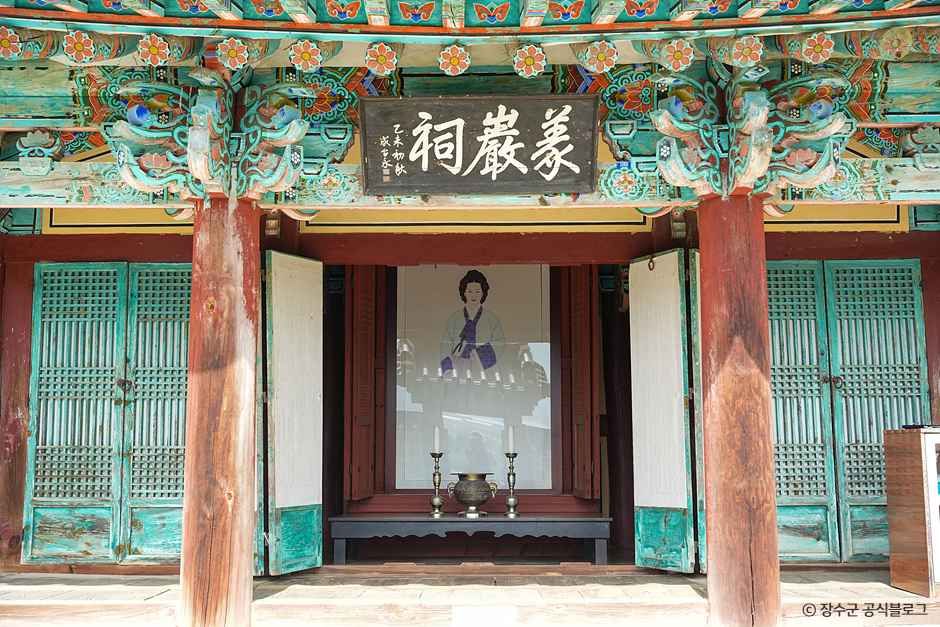
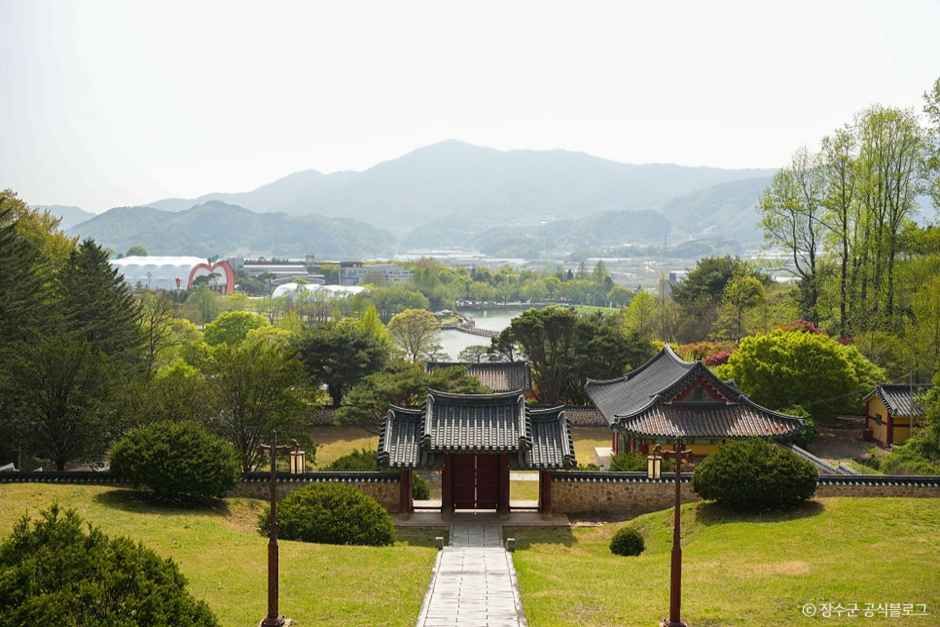
Uiamsa is a shrine enshrining the portrait of Joo Nongae, born in Jangsu, who jumped into the Namgang River with a Japanese general at Jinjoo Chokseokru. Nongae, known as one of the three great talents of Jangsu, was loved by Jinjoo military commander Choi Gyeonghoe during the mid-Joseon period. When Jinjoo Fortress, which resisted to the last during the Imjin War, was captured, the Japanese generals held a banquet at Chokseokru. Nongae, attending as a gisaeng, could not contain her grief over the fall of the fortress and the death of soldiers and civilians. She lured the Japanese general Geyamura Humisuke onto a rock, embraced him, and then jumped into the Namgang River to commit suicide. The rock she jumped from was later called Uiam, which is why the shrine is named Uiamsa. To commemorate her, in the 12th year of King Heonjong's reign (1846), the Jangsu magistrate erected the Chokseoksi Gionga Nongae Saengjanghyangsumyeongbi monument, and later in 1955, Jangsu residents built Nongae Shrine on Namsan, Jangsu-gun. In 1973, a sanctuary project was approved which relocated the shrine and built walls, triple gates, and decorated the Dancheong. The shrine grounds include the Saengjanghyangsumyeongbi Pavilion, memorial hall, outer triple gate, inner triple gate, Chungui Gate, and Portrait Pavilion. Every lunar September 3rd, Jangsu-gun holds a memorial ritual to honor Nongae's noble patriotism, designating the day as Jangsu Citizens' Day.
Jangsu Hyanggyo is a local educational institution established by the state in the 7th year of King Taejong of Joseon (1407) to enshrine virtuous people and educate local residents. It was relocated to its current site in the 12th year of King Sukjong (1686). The Daeseongjeon is a space for enshrining Confucius and various sages, measuring 3 kan wide by 3 kan deep. The roof forms a side-facing gable roof resembling the Chinese character for person (人). The building is modest in size, with a double door in the center of the front facade. Each side room has a similar door, with a well-shaped (井) window beside it. The decorative structure supporting the eaves is elaborately adorned, a characteristic element of mid-Joseon architecture. Jangsu Hyanggyo was well preserved even during the Japanese invasions of the late 16th century, providing a clear example of early Joseon Hyanggyo style. The books stored here are valuable for local historical research, and particularly, the Daeseongjeon is one of the representative buildings of Joseon-era hyanggyo architecture.
Sign up to feature your channel.
(As a member, you can add your Instagram, YouTube, and blog links in My Page, and we’ll show them with every comment you write.)
““Stayed near Hongdae and did a night café tour. Perfect city views and vibes.””
Guest comments do not display social media links or profile cards.
Share a short tip about this place.
Or leave a quick comment as a guest.
Photo attachments are available after login.
No reviews yet. Be the first to share your experience!