UNESCO designated Mireuksaji and Wanggungni relics course in Jeonbuk Special Self-Governing Province Iksan City · schedule 1 night 2 days · distance 51.…

Mireuksaji and Wanggung-ri Historic Site belong to the Baekje Historic Areas designated as a UNESCO World Heritage Site. They are the most famous historical sites in Iksan with very high historical value. Traveling through these two places allows visitors to experience Baekje culture. Hwasan Catholic Church was completed in 1907 to commemorate Father Kim Dae-geon landing at Hwangsan ferry during King Hyeonjong of Joseon. It is considered a holy site by the Korean Catholic Church. Iksan Prison Set was built on a closed school and has been used as a filming location for many movies and dramas such as Iris, Miracle in Cell No. 7, and Inside Men.
This course is a sample 2-day itinerary. Save it as-is or expand it into an AI itinerary.
The founding of Mireuksa, the largest Buddhist temple complex of Baekje, is recorded in the Samguk Yusa. Ma Dong, who became King Mu (the 30th king of Baekje, 600–641) after marrying Princess Seonhwa of Silla, was on his way with her to visit the priest Jibyeom of Sajasa at Yonghwasan (present-day Mireuksan). Suddenly, the Three Bodhisattvas of Maitreya appeared from the pond, which led to the founding of Mireuksa. It is said that the shrine (Geumdang), pagoda, and Nangmu (Hwarang) were constructed for the Three Bodhisattvas. Another view suggests that in addition to the faith of King Mu and Princess Seonhwa, the founding of Mireuksa had political purposes, speculated to have been established in Geumma, a center of Mahan power, to expand Baekje’s national strength. The establishment of Mireuksa, Baekje’s largest temple complex, likely demonstrated the highest level of architectural and craft culture at the time. As recorded in Samguk Yusa, King Jinpyeong of Silla sent Baekgong to help, indicating that skills from the Three Kingdoms were combined. Mireuksa was clearly the focal point of Maitreya faith in Baekje Buddhism, contrasting with Hwangnyongsa of Silla, which centered on Huayan Thought and had one pagoda and three shrines. Mireuksa’s layout featured three pagodas and three shrines, embodying Maitreya Thought, while Hwangnyongsa embodied Huayan Thought centered on the king. Mireuksa’s Maitreya faith aimed to lead even common people to the Lotus World. * Additional relics at Mireuksaji: Mireuksaji Stone Pagoda and Dangganjiju * Mireuksaji contains two notable relics: the Stone Pagoda and the Dangganjiju (flagpole supports). The Mireuksaji Stone Pagoda, a National Treasure, is currently 14.24 meters tall, making it Korea’s tallest and largest stone pagoda. Although almost entirely collapsed, six tiers remain on the northeast corner, but it is estimated originally to have had nine tiers. Research by Wonkwang University’s Mahan Baekje Culture Research Institute in 1974–1975 revealed the eastern pagoda was stone, not wooden, confirming the so-called east-west twin pagoda layout. Excavations later verified nine tiers of the eastern pagoda, which was restored to nine tiers (27.67 m) in 1993. This pagoda is regarded as Korea’s finest because its style meticulously reproduces the wooden pagoda design in stone. Dangganjiju are the pillars built on either side of the flagpole to support it. The Mireuksaji Dangganjiju, designated a Treasure, stands 395 cm tall and is estimated to date before the mid-Unified Silla period. Two pillars stand about 90 meters apart facing each other east-west, south of the stone pagoda.
국립익산박물관은 삼국시대 최대의 불교 사원이던 미륵사지(사적 150호)의 서남 쪽에 자리하고 있습니다. 미륵사지는 1980~1996년에 걸쳐 발굴조사가 이루어 졌습니다. 발굴조사에서 수습된 삼국시대부터 조선시대에 이르는 19,000여점 의 문화재를 보존·전시하기 위해 1997년 전라북도 도립 전시관으로 개관하였 습니다. 2009년 1월에는 미륵사지 석탑(국보 11호)의 해체보수 과정에서 1,100여 점의 사리장엄구가 출토되었습니다. 2015년 7월에는 미륵사지가 유네스코 세계문 화유산에 등재되었습니다. 미륵사지와 익산지역의 역사적 가치가 새롭게 조명 됨에 따라 2015년 12월 국립미륵사지유물전시관으로 전환되었고 2019년 2월 국립익산박물관으로 명칭이 변경되었습니다.역사문화실과 건축문화실에서는 미륵사 창건과 변천 과정을 보여주는 다양한 소장품을 전시하고 있습니다. 역사문화실에서는 사리장엄구를 비롯한 불교 공예품과 시대별 사찰의 생활상을 살펴볼 수 있습니다. 건축문화실에서는 백제 사비기부터 조선시대까지 기와 등 건축 부재를 전시하고 있습니다.
The Wanggung-ri Ruins located in Wanggung-myeon, Iksan-si, Jeonbukteukbyeoljachi-do were established during the reign of Baekje's 30th king, King Mu (600–641), and later transformed into a temple. It is understood as Wanggung, a political, economic, and cultural center during the late Baekje period's Iksan administration, regarded as a secondary capital alongside Sabi (Buyeo). The Baekje royal palace was built on a low hill at the end of a ridge originating from Yonghwa Mountain. Comprehensive excavations since 1989 revealed that the site was constructed as a late Baekje palace, used for a certain period, after which important palace buildings were dismantled and a complex site including a temple with a pagoda, Golden Hall, and lecture hall was established.
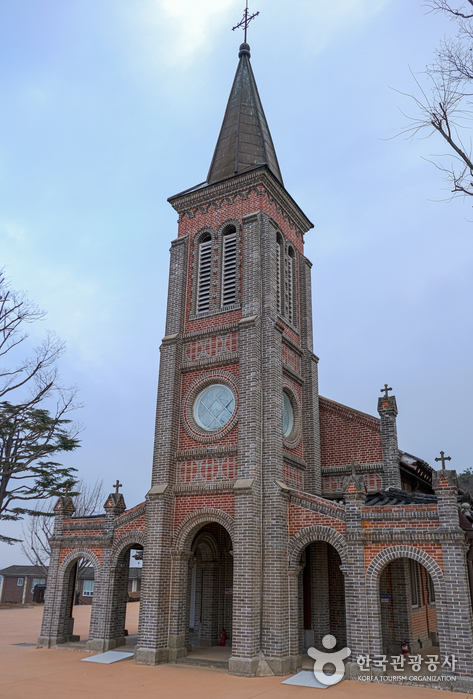
Nabawi Cathedral was established to commemorate the landing of Father Kim Dae-geon, who was ordained a priest in China in the 11th year of King Heonjong of Joseon (1845), and Bishop Ferréol Di Bali, who landed at Hwangsan ferry. The first parish priest, Father Vermonel (Jang Yakseul, Joseph), led the construction of the building beginning in 1906, completed in 1907. The cathedral's design was assisted by Father Poinel of Myeongdong Cathedral, and the construction was carried out by Chinese workers. Nabawi Cathedral is designated a sacred site by the Korean Catholic Church, as it is where the first Korean priest Saint Kim Dae-geon began his missionary work. The building harmonizes Western cathedral architectural styles with Korean architecture, reflecting the introduction and development of Catholicism in Korea. Between 1916 and 1917, the earthen walls were replaced with brick, and a Gothic brick bell tower was added. The cathedral's traditional Korean wooden structure with tiled roof and corridor reflects Korean aesthetics. The octagonal windows designed for lighting create unmatched beauty, harmonizing with pine trees at night. Originally called Hwasan Catholic Church, it has been renamed Nabawi Cathedral. Nabawi Cathedral, as a Korean Catholic sacred site, offers several sights to see. The first is the martyrdom monument of Father Kim Dae-geon, erected on the 100th anniversary of his martyrdom. The second is Manggeumjeong, meaning 'hoping for beauty,' a pavilion built in 1915 by Father Vermorel to support Bishop Demange’s retreat, the first bishop of Daegu Diocese. This pavilion is located on the large rock Nabawi at the edge of Hwasan, blending beautifully with the surrounding scenery. Below the rock where Manggeumjeong stands, one can see the wall-carved Buddha Triad known as Maae Samjonbul.
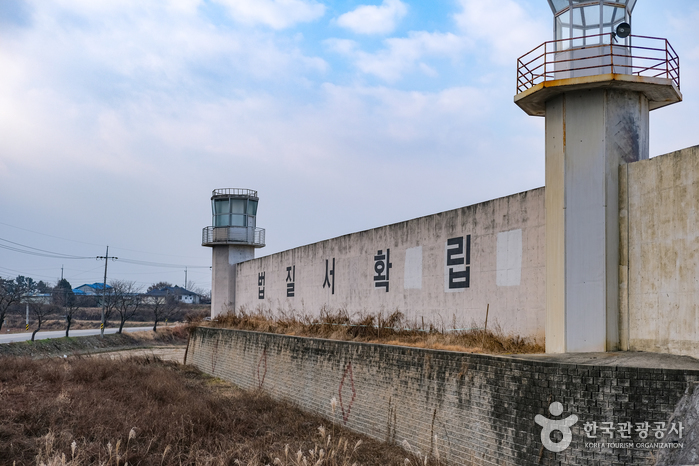
성당면 와초리 성당초등학교 남성분교 폐교부지 위에 세워진 국내 유일의 교도소 세트장이다. 이곳에서는 영화 '홀리데이','아이리스','전설의 마녀','7번방의 선물','내부자들',등 200여 편의 영화와 드라마가 촬영 되었다. 세트장에 들어서면 '영화가 탄생하는 마술상자' 라는 말을 증명하듯 그동안 촬영된 영화 포스터들을 전시 하고 있다. 또한 운동장에 깔린 천연잔디는 관광객들의 휴식공간으로 각광받고 있다
Good places to stop and rest after the course

Booking and payment continue on a partner site.
Check rooms & price
Booking and payment continue on a partner site.
Check rooms & price
Booking and payment continue on a partner site.
Check rooms & priceSign up to feature your channel.
(As a member, you can add your Instagram, YouTube, and blog links in My Page, and we’ll show them with every comment you write.)
““Stayed near Hongdae and did a night café tour. Perfect city views and vibes.””
Guest comments do not display social media links or profile cards.
Share a short tip about this place.
Or leave a quick comment as a guest.
Photo attachments are available after login.
No reviews yet. Be the first to share your experience!
![Iksan Mireuksaji [UNESCO World Heritage] 1](https://tong.visitkorea.or.kr/cms/resource/58/3533758_image2_1.jpg)
![Iksan Mireuksaji [UNESCO World Heritage] 2](https://tong.visitkorea.or.kr/cms/resource/59/3533759_image2_1.jpg)
![Iksan Mireuksaji [UNESCO World Heritage] 3](https://tong.visitkorea.or.kr/cms/resource/60/3533760_image2_1.jpg)
![Iksan Mireuksaji [UNESCO World Heritage] 4](https://tong.visitkorea.or.kr/cms/resource/61/3533761_image2_1.jpg)
![Iksan Wanggung-ri Ruins [UNESCO World Heritage] 1](https://tong.visitkorea.or.kr/cms/resource/24/3564124_image2_1.jpg)
![Iksan Wanggung-ri Ruins [UNESCO World Heritage] 2](https://tong.visitkorea.or.kr/cms/resource/25/3564125_image2_1.jpg)
![Iksan Wanggung-ri Ruins [UNESCO World Heritage] 3](https://tong.visitkorea.or.kr/cms/resource/26/3564126_image2_1.jpg)
![Iksan Wanggung-ri Ruins [UNESCO World Heritage] 4](https://tong.visitkorea.or.kr/cms/resource/28/3564128_image2_1.jpg)