Searching for hidden wildflower spots Welchon in Jeonbuk Special Self-Governing Province Iksan City · schedule Other · distance 11.7km · 5 stops · highl…

You can walk through cherry blossom tunnels where petals gently fall, heal in the phytoncide-rich cypress forests, and explore Seongdangpogu Ecological Wetland Park, which features lotus flowers in summer, cosmos flowers in autumn, and a reed field serving as a resting place for migratory birds in winter. Additionally, you can visit the natural habitat of the rare plant Gorancho. This tour allows you to discover hidden spots unknown to the public.
This course is a sample 2-day itinerary. Save it as-is or expand it into an AI itinerary.
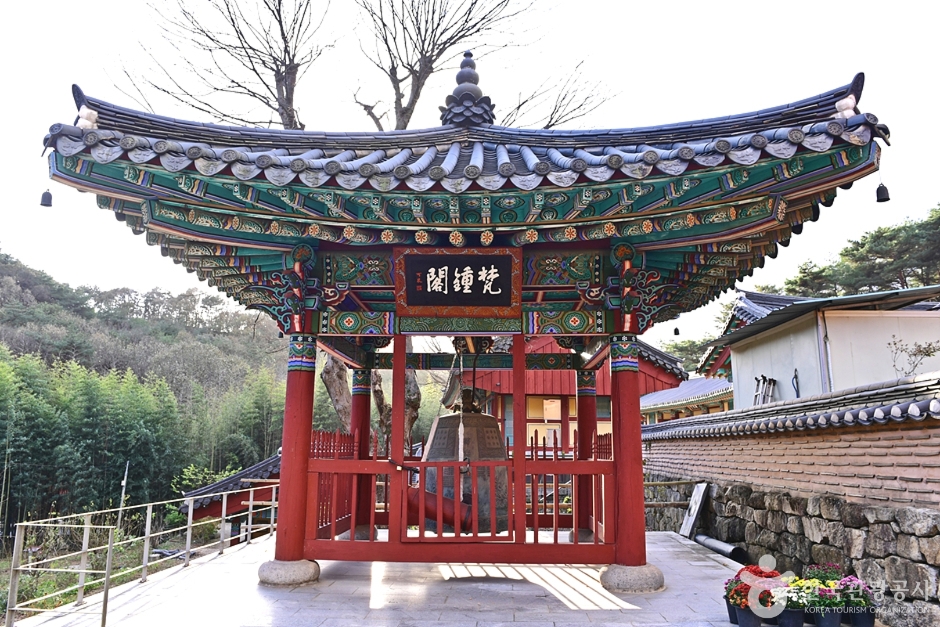
Sunglimsa Temple is a branch temple of Geumsansa, the head temple of the 17th district of the Jogye Order of Korean Buddhism. It was founded by Jinpyo during the reign of King Gyeongdeok of Silla. Another theory states that it was established in 1345 (the 1st year of King Chungmok of Goryeo). The temple's name is derived from 'Sung' of Sungshan and 'Lim' of Shaolin, commemorating Bodhidharma's nine years of wall-gazing meditation at Shaolin Temple on Mount Sung. In 1697 (the 23rd year of King Sukjong), Yeongwonjeon Hall was constructed, and in 1819 (the 19th year of King Sunjo) and 1882 (the 19th year of King Gojong), Sunglimsa Bogwangjeon Hall and surrounding buildings were renovated. In 1885 (the 22nd year of King Gojong), Uhwaru Pavilion was rebuilt. The main prayer hall was restored in 1912, while in 1923, the head monk Hwang Seong-ryeol newly built Nahanjeon Hall and Yeongwonjeon Hall. In 1957, with the sponsorship of Go Gwang-man, Siwangjeon Hall and Nahanjeon Hall were restored, reaching their present form. Sunglimsa also houses many treasures and cultural assets designated as Tangible Cultural Properties of Jeonbuk.
Dudong Hinoki Cypress Forest is located behind the Hinoki Village in Dudong-ri, Iksan. In the past, trees were cut for firewood, which left the mountain barren, but local residents planted and maintained trees, resulting in a densely populated hinoki cypress forest. Later, the Iksan Dullegil trail connecting Ungpo to Seongdang port was created, and as the benefits of hinoki cypress trees gained word-of-mouth popularity, the number of visitors steadily increased. This forest is not just a place to walk; the dense cypress trees emit a strong wooden scent, allowing visitors to take forest baths, rest, and momentarily put down life's burdens while chatting. Walking here helps release everyday tension and stress and refresh the body and mind with clean air. Unlike hinoki forests located within urban areas, Dudong Hinoki Cypress Forest offers a peaceful and leisurely rural village atmosphere throughout the journey.
Dudong Church Old Main Sanctuary is the original main sanctuary of Dudong Church, built in 1929. Dudong Church began in 1923 when a chapel was established in the sarangchae of village rich man Park Jaesin. Later, in 1929, the congregation built an ㄱ-shaped hanok-style church at the current site. It is the oldest church building in Iksan and was used as the main sanctuary until the current sanctuary was built in 1964. Now, photographs showing the history of Dudong Church are exhibited here. ㄱ-shaped churches were built nationwide, but only the old main sanctuaries of Dudong Church and Geumsan Church in Gimje, Jeonbuk remain. This building reflects traditional Confucian culture in church architecture and is important for studying the spread of Protestantism and early church architecture in Korea.
Iksan Seongdangpogu Village is located with the Geumgang River to the west and is the site of Seongdangchang, which managed state grain during the Goryeo to late Joseon periods. Known as Seongdangpo (聖堂浦) or Seongpo (聖浦), it preserves the history of a traditional port village through murals, yellow sailboats, and experiences of the Geumgang ecology that allow visitors to relax. The cool riverside breeze at Geumgang sunset, Seongdangchang used for grain transport, the ecological park full of natural beauty, the protector tree ginkgo of Seongdangpogu, the resilient gorancho plant growing between rocks even in cold weather, and a walking trail featuring beautiful Geumgang scenery and gorancho backgrounds are all part of a comprehensive ecological experience course. At Seongdangpogu Village, you can enjoy port history tours, Geumgang riverside exploration, yellow sailboat rides, port photography, and painting, reflecting the struggles and emotions of fishermen’s lives in the harbor. There are also Geumgang ecological exploration programs featuring gorancho habitat observation, eagle-owl and migratory bird watching. Notably, Iksan's Seongdangpogu Village is home to the rare protected plant species gorancho, offering a unique experience.
용안생태습지공원은 금강 용안지구 생태하천은 4대강 사업의 일환으로 용안면 난포리 일원의 금강변에 조성된 670,000㎡ 규모의 대규모 생태습지 공원이다. 금강의 생태습지는 여름에는 연꽃, 가을에는 코스모스와 억새, 겨울에는 철새들의 쉼터가 되고 있으며, 용안생태공원 옆으로는 55만평 규모로 전국 최대 규모의 시범 억새단지가 있어 가을이면 금강억새축제가 열리고 있다.
Good places to stop and rest after the course

Booking and payment continue on a partner site.
Check rooms & priceSign up to feature your channel.
(As a member, you can add your Instagram, YouTube, and blog links in My Page, and we’ll show them with every comment you write.)
““Stayed near Hongdae and did a night café tour. Perfect city views and vibes.””
Guest comments do not display social media links or profile cards.
Share a short tip about this place.
Or leave a quick comment as a guest.
Photo attachments are available after login.
No reviews yet. Be the first to share your experience!