
Place deeply soaked in the rich aroma of Baekje culture in Jeonbuk Special Self-Governing Province Iksan City · schedule Other · distance 59.3km · 4 sto…

When people think of ‘Baekje,’ they recall Buyeo and Gongju. However, Iksan is also a representative city where you can see traces of the Baekje culture that flourished brilliantly. This journey is to meet the flowers blooming in Iksan, where the somewhat rustic but still preserved old charm of a humble countryside scene feels even more heartwarming.
This course is a sample one-day itinerary. Save it as-is or expand it into an AI itinerary.
익산문화원은 지역사회 개발 및 향토문화의 진흥을 위해 1991년 1월 17일에 설립되었다. 이후 지역문화행사 개최, 문화에 대한 자료수집, 보존 및 보급, 지역전통문화의 국내교류 지역문화의 사회교육 활동, 기타 지역 발전에 기여할 수 있는 사업에 앞장 서고 있다. 특히 익산문화원의 특징은 청소년 여름문화학교, 시, 군 농악대회, 전북 민속놀이 출전, 익산문화 유산지와 문화지 발간 등의 활동을 하고 있으며 이외에 다양하고, 흥이나는 활동에 직접 참여하여 배울 수 있다는 것이다. 특히 익산문화원의 특징은 청소년 여름문화학교, 시, 군 농악대회, 전북 민속놀이 출전, 익산문화 유산지와 문화지 발간 등의 활동을 하고 있으며 이외에 다양하고, 흥이나는 활동에 직접 참여하여 배울 수 있다는 것이다.
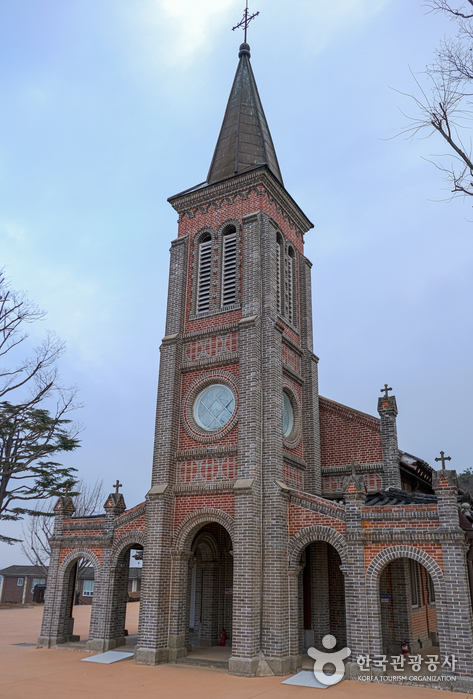
Nabawi Cathedral was established to commemorate the landing of Father Kim Dae-geon, who was ordained a priest in China in the 11th year of King Heonjong of Joseon (1845), and Bishop Ferréol Di Bali, who landed at Hwangsan ferry. The first parish priest, Father Vermonel (Jang Yakseul, Joseph), led the construction of the building beginning in 1906, completed in 1907. The cathedral's design was assisted by Father Poinel of Myeongdong Cathedral, and the construction was carried out by Chinese workers. Nabawi Cathedral is designated a sacred site by the Korean Catholic Church, as it is where the first Korean priest Saint Kim Dae-geon began his missionary work. The building harmonizes Western cathedral architectural styles with Korean architecture, reflecting the introduction and development of Catholicism in Korea. Between 1916 and 1917, the earthen walls were replaced with brick, and a Gothic brick bell tower was added. The cathedral's traditional Korean wooden structure with tiled roof and corridor reflects Korean aesthetics. The octagonal windows designed for lighting create unmatched beauty, harmonizing with pine trees at night. Originally called Hwasan Catholic Church, it has been renamed Nabawi Cathedral. Nabawi Cathedral, as a Korean Catholic sacred site, offers several sights to see. The first is the martyrdom monument of Father Kim Dae-geon, erected on the 100th anniversary of his martyrdom. The second is Manggeumjeong, meaning 'hoping for beauty,' a pavilion built in 1915 by Father Vermorel to support Bishop Demange’s retreat, the first bishop of Daegu Diocese. This pavilion is located on the large rock Nabawi at the edge of Hwasan, blending beautifully with the surrounding scenery. Below the rock where Manggeumjeong stands, one can see the wall-carved Buddha Triad known as Maae Samjonbul.
The Iksan Godori Stone Seated Buddha statues are two stone figures standing facing each other across a distance and were designated as Treasure on January 21, 1963. They are represented on trapezoidal stone pillars with faces, hands, and pedestals depicted. These statues are a male and female pair standing about 200 meters apart, facing each other. The body is a trapezoidal stone pillar without curvature; arms are not shown, with hands barely appearing on the abdomen. On their heads, they wear a square, tall crown (冠) topped again by a square hat. The square faces have thin eyes, a short nose, and a small mouth barely expressed, symbolizing a local guardian deity. Their clothing resembling a traditional overcoat is depicted with a few lines without special patterns. The pedestal and the statues are carved from the same stone, with the front slightly chiseled to form a pedestal-like shape. The trapezoidal pillar-like bodies and unrealistic sculptural techniques resemble stone guardian figures of tombs. In the Goryeo period, many large statues with extremely restrained body expression were made, and this Buddha statue is considered one of them. A legend of loving lovers is passed down about the Iksan Godori Stone Seated Buddha statues. According to this legend, the two statues meet in the twelfth month of the lunar calendar to share their feelings for a year and return to their places at the sound of the dawn rooster. The very short necks, with shoulders and faces almost touching, make this form even more beautiful in the context of the lovers' legend.
The Wanggung-ri Ruins located in Wanggung-myeon, Iksan-si, Jeonbukteukbyeoljachi-do were established during the reign of Baekje's 30th king, King Mu (600–641), and later transformed into a temple. It is understood as Wanggung, a political, economic, and cultural center during the late Baekje period's Iksan administration, regarded as a secondary capital alongside Sabi (Buyeo). The Baekje royal palace was built on a low hill at the end of a ridge originating from Yonghwa Mountain. Comprehensive excavations since 1989 revealed that the site was constructed as a late Baekje palace, used for a certain period, after which important palace buildings were dismantled and a complex site including a temple with a pagoda, Golden Hall, and lecture hall was established.
Good places to stop and rest after the course

Booking and payment continue on a partner site.
Check rooms & price
Booking and payment continue on a partner site.
Check rooms & price
Booking and payment continue on a partner site.
Check rooms & price
Booking and payment continue on a partner site.
Check rooms & price
Booking and payment continue on a partner site.
Check rooms & priceSign up to feature your channel.
(As a member, you can add your Instagram, YouTube, and blog links in My Page, and we’ll show them with every comment you write.)
““Stayed near Hongdae and did a night café tour. Perfect city views and vibes.””
Guest comments do not display social media links or profile cards.
Share a short tip about this place.
Or leave a quick comment as a guest.
Photo attachments are available after login.
No reviews yet. Be the first to share your experience!


![Iksan Wanggung-ri Ruins [UNESCO World Heritage] 1](https://tong.visitkorea.or.kr/cms/resource/24/3564124_image2_1.jpg)
![Iksan Wanggung-ri Ruins [UNESCO World Heritage] 2](https://tong.visitkorea.or.kr/cms/resource/25/3564125_image2_1.jpg)
![Iksan Wanggung-ri Ruins [UNESCO World Heritage] 3](https://tong.visitkorea.or.kr/cms/resource/26/3564126_image2_1.jpg)
![Iksan Wanggung-ri Ruins [UNESCO World Heritage] 4](https://tong.visitkorea.or.kr/cms/resource/28/3564128_image2_1.jpg)