Special day reflecting on division and peace in Gangwon Special Self-Governing Province Hwacheon County · schedule Other · distance 17km · 4 stops · hig…

Hwacheon, being a region adjacent to the DMZ, retains much of the beauty of pristine nature and offers many places that raise awareness of the reality of Korea's division and the theme of peace. Visit the World Peace Bell Park, which has a bell made from bullet shells used in wars in conflict areas worldwide, the Peace Dam that shows the sad history caused by division, and Bimok Park commemorating the Korean war's pain through the song 'Bimok.' Spend a meaningful time exploring these locations.
This course is a sample one-day itinerary. Save it as-is or expand it into an AI itinerary.
Hwacheon Bisugumi Village is a remote village located in Dongchon-ri, Hwacheon-eup, Hwacheon-gun, Gangwon-do Special Autonomous Province. Long ago, the construction of Hwacheon Dam and Paro Lake blocked the road, turning it into an island within the land. The name Bisugumi means nine kinds of beauty created by mysterious water. The nine beauties (Gumi) include the sound of water, clouds, a valley where fire-fallow fields were cultivated, grilled icefish, wild vegetable set meals, a suspension bridge, motorboats, the Bimok Tower, and the World Peace Bell. In the unpolluted Bisugumi Valley, visitors can see beautiful natural scenery dense with primeval forests and rocks. Wild orchids and flowers bloom, and fish that live only in clear valleys such as mountain trout, striped shiners, icefish, and trout inhabit the area. There are two ways to reach Bisugumi Village: by boat or trekking the ecological trail. By boat, it takes less than 10 minutes. In contrast, the Bisugumi ecological trail is a deep and quiet forest path passing the Haesan Tunnel before reaching the Peace Dam in Hwacheon, taking about two hours to reach the village. In Bisugumi Village, visitors can rest comfortably with nature. There are homestays run by villagers, offering neat meals made from wild vegetables they pick themselves, soybean paste, and cheonggukjang. The village borders Paro Lake, where fishing is enjoyed, and motorboat rides allow sightseeing of Peace Dam, Bimok Park, and the World Peace Bell Park. Entry to Bisugumi Village is restricted during the natural rest year system, so permission is required for trekking or valley visits.
World Peace Bell Park is located on a site of about 1,000 pyeong above the Peace Dam. The Peace Bell was made measuring 5m in height and 3m in width by collecting 10,000 shells (37.5 tons) from over 60 countries that have experienced or are experiencing conflict. Bells sent from various countries around the world are exhibited in the surrounding outdoor exhibition hall. Influential figures from around the world who empathize with this plan have sent bells symbolizing peace. For example, Domenico Pappisi, mayor of Calisi, Italy, sent a bell used at the Santa Kiria Monastery to signal prayer time for world peace, and Dr. Sulak Sivaraksa (74), a Thai peace activist and Nobel Peace Prize nominee, sent a bell used at a Buddhist temple in Bangkok. Near the path to the Peace Dam are many tourist attractions such as the Kwangbawi Valley, a pristine forest valley, Bungeo Island, Paroho Security Hall, and the Haesan Observatory where tiger footprints and droppings were found, making it an excellent travel destination.
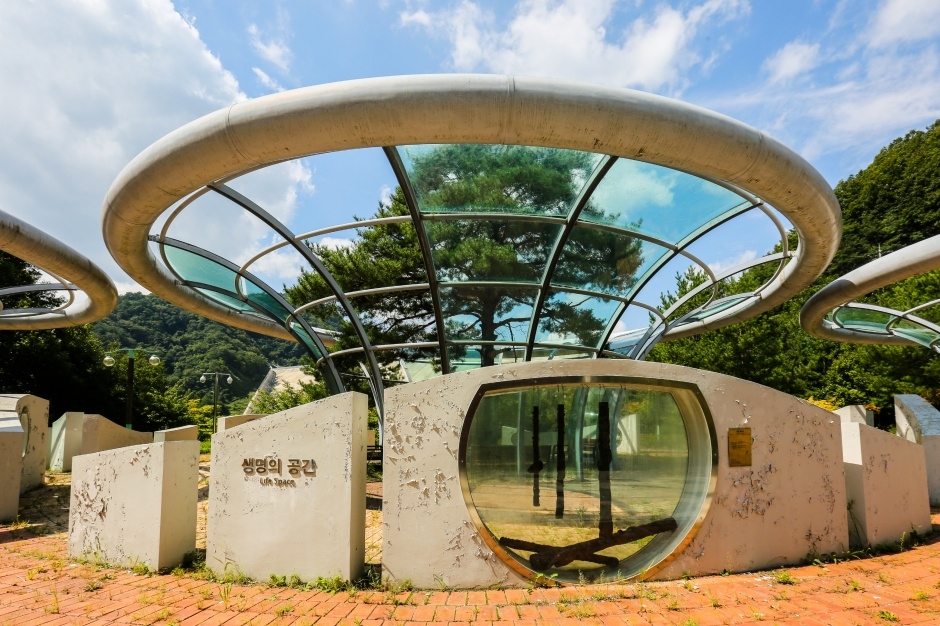
Pyeonghwa Dam was built to defend against the water discharge from the North Korean Imnam Dam. This dam is 601m long and 125m high, operating as a flood control-only dam. Around Pyeonghwa Dam, various tourist facilities have been created, including Bimok Park, Trick Art, International Peace Art Park, Skywalk, and Water Culture Hall. Notably, the World Peace Bell, made from bullet shells collected from conflict zones in over 60 countries and standing 5m high, is installed here, and visitors can also experience ringing it, leaving a deep impression.
Hwacheon Bimok Park is a park in Hwacheon-gun, Gangwon-do, dedicated to commemorating the pain and sacrifice of the Korean War. This is also the birthplace of the national song "Bimok." The song Bimok originated in the mid-1960s when a young officer discovered an anonymous soldier's stone tomb in the overgrown Baegamsan valley north of the Peace Dam and wrote lyrics honoring his young soul. Later, Jang Il-nam composed the music, creating the song Bimok. Bimok Park features the Bimok Tower, a sculpture of the anonymous soldier's stone tomb, a mountain magnolia sculpture, and a song monument. The song monument, with the lyrics of the song Bimok, is located at the entrance to the park parking lot. The Bimok Tower was erected by the devotion of Hwacheon residents to honor those who sacrificed their lives for the country during the Korean War. The park is located on a hill west of Peace Dam, offering views of Peace Dam and Paroho lakeside. Every year from June 3 to 6, Hwacheon hosts the Bimok Cultural Festival here at Bimok Park and at Bung-eo Island on the riverside in Hwacheon town. The four-day festival includes a memorial service featuring military songs and poetry reading, a Bimok carving competition, a rice ball eating contest, military camp experience, and a military band parade. Near Hwacheon Bimok Park are security education sites like the 4th Tunnel and Eulji Observatory, Paroho War Memorial Tourist Site, Ttansan Recreation Area, Bung-eo Island Recreation Area, Samil Valley, and Haesan Observatory.
Sign up to feature your channel.
(As a member, you can add your Instagram, YouTube, and blog links in My Page, and we’ll show them with every comment you write.)
““Stayed near Hongdae and did a night café tour. Perfect city views and vibes.””
Guest comments do not display social media links or profile cards.
Share a short tip about this place.
Or leave a quick comment as a guest.
Photo attachments are available after login.
No reviews yet. Be the first to share your experience!