Leaving Your Worries Deep in the Slopes of Jirisan in Gyeongsangnam-do Hamyang-gun · schedule Other · distance 50.1km · 5 stops · highlights Sangrim Par…

This is an opportunity to enter Jirisan, a mountain full of depth and stories. Hamyang, located in the western part of Gyeongnam, is a town embraced by Jirisan. From Sangrim Park, which has many cultural assets of the yangban class, to the old temples sheltered by Jirisan, don't miss visiting Yongyudam, where a thunderous waterfall roars.
This course is a sample one-day itinerary. Save it as-is or expand it into an AI itinerary.
Hamyang Sangrim is a forest located on the west side of Hamyang-eup by the Wicheon River. It is said to have been created by Choi Chi-won during the reign of Queen Jinseong of the Unified Silla (887–897) to prevent flood damage in Hamyang-eup. It was formerly called Daegwanrim, but after the central part of the forest collapsed due to flooding, it was divided into Sangrim (Upper Forest) and Harim (Lower Forest). Currently, Harim is damaged and only traces remain, while Sangrim maintains its original form. The forest mainly consists of oak species such as Mongolian oak and Japanese evergreen oak, and alder species, with wild grapes and kudzu intertwined, evoking natural valley vegetation. About 120 tree species are planted along a 99,200㎡ area with a 1.6 km embankment, making it an excellent natural learning site for children. Sangrim's beauty can be enjoyed in all seasons: fresh green in spring, lush shade in summer, autumn foliage, and snowy scenery in winter. Especially in summer, lying on a mat under the forest canopy offers a refreshing atmosphere reminiscent of a mountain hermit in the city. The trails inside Sangrim serve as places for conversation and love for couples and families. Sangrim is historically valuable as the oldest forest artificially created in Korea, and culturally significant as a record of ancestors' wisdom in protecting farmland and villages from flood damage. It is designated and protected as a natural monument. (Source: Hamyang-gun Cultural Tourism / National Heritage Administration website)
안국사는 태종 3년(1403)에 행호조사가 국태민안을 기원하기 위하여 창건하였다. 1947년 소실되었다가 1965년에 중건되었으며 안국사부도가 특이하다. 안국사를 지나 비탈길을 계속 올라가면 산 정상의 구부증선 아래에 금대암이 있는데 안국사와 같은 시대 같은 사람이 창건한 안국사의 암자였지만 지금은 안국사보다 휠씬 크고 웅장한 사찰이다. 1950년 소실되고 1960년 중건했다. 탁영 김일손의 두류산 기행문에 일두 정여창과 함께 지리산에 가면서 들렀던 곳이며 뇌계 유호인의 시문에 “금대야 잘 있느냐 송하문이 옛같구나 송풍에 맑은 꿈 깨어 문득 잠꼬대를 하는구나” 라고 하는 사실로 볼 때 예부터 많은 사람들이 들렀던 사찰로 사료된다. 사찰 내에는 은광대화상부도(도유형문화재 제337호), 안국사 부도(도유형문화재 제35호)가 있다.
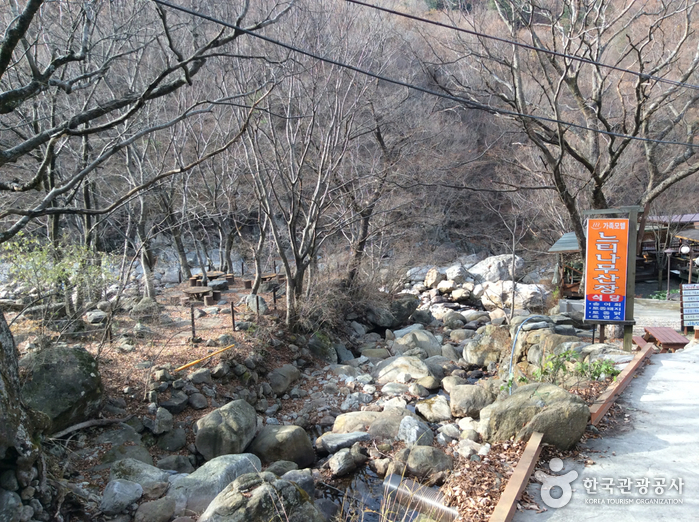
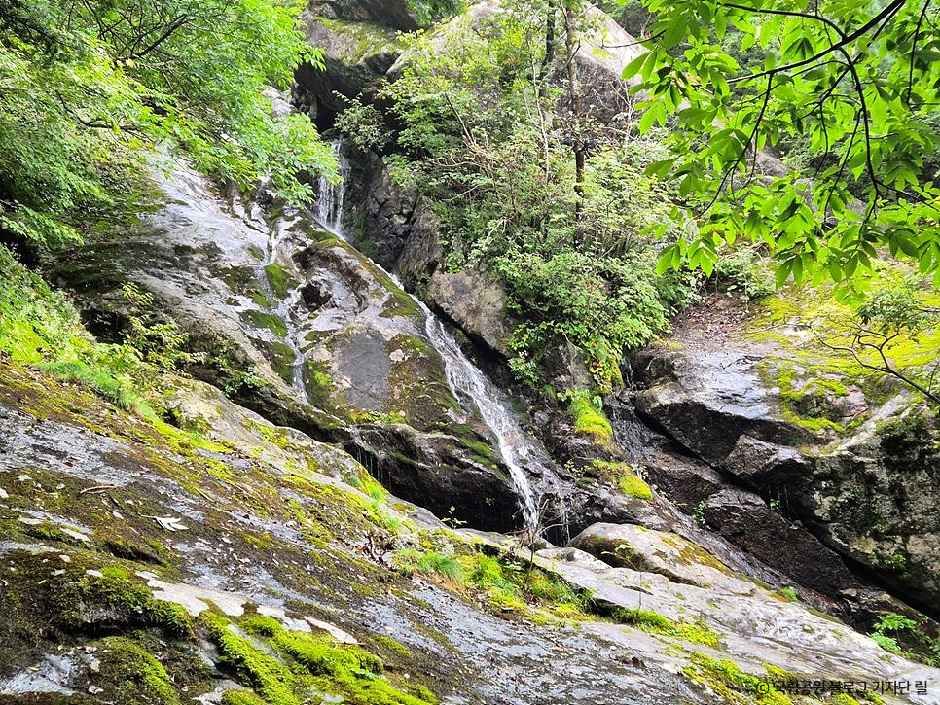
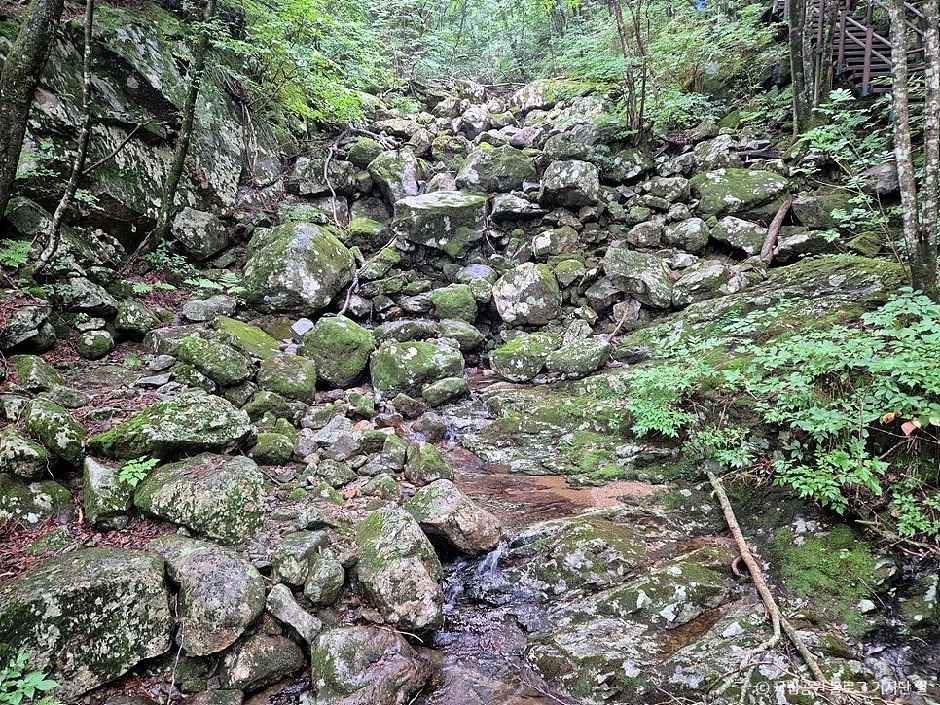
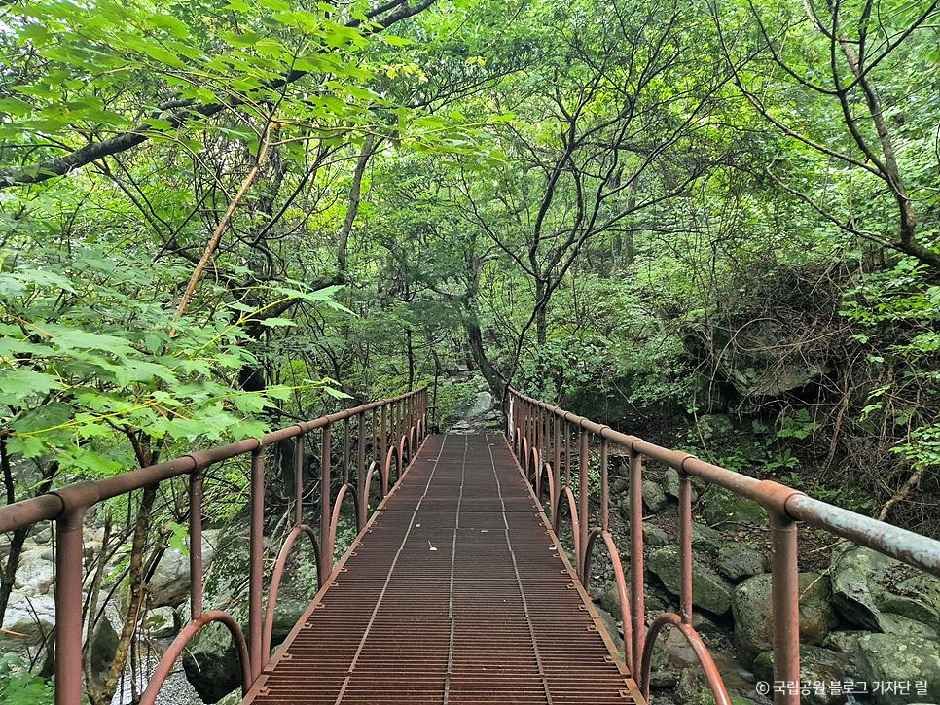
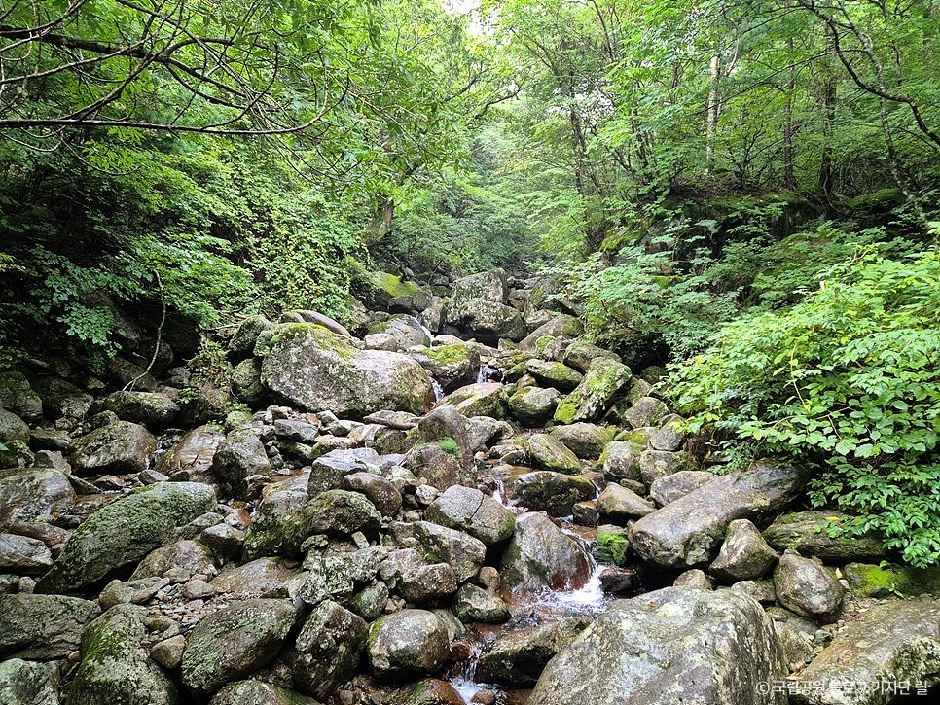
Hansin Valley, deep and wide in the northern part of Jirisan, is a valley with rugged yet beautiful natural scenery stretching from Baekmudong in Machon-myeon, Hamyang-gun to Seoseok Plateau. Hansin Valley has many stories as numerous as its waterfalls. One is that the name means "deep and wide valley," and another is that it is called Hansin Valley because one feels cold even in midsummer. It was also called Hansim Valley because the water is cold, rough, and winding, but the pronunciation changed to Hansin. There is a tale that a person named Hansin, leading a folk music band to Seoseok, was swept away and killed by a rapid current, which gave the valley its name. Locals say that on rainy days, the sound of gongs can still be heard from the valley. The starting point for climbing Hansin Valley is Baekmudong, from where you can easily ascend to First Outing Waterfall along a wide path passing the campsite. The 2km section from Baekmudong to First Outing Waterfall has a flat trail between the valley and cliffs, forming a tunnel of dense forest harmonizing with the sound of flowing water from the valley, making it a fantastic hiking course.
Byeoksongsa Temple is a subsidiary temple of Haeinsa Temple, the 12th district of the Jogye Order of Korean Buddhism. The exact date of its founding is unknown, but based on a three-story stone pagoda behind the temple believed to have been built at the time of its establishment, the period is estimated to be late Silla or early Goryeo. It is said that in 1520, the Great Monk Byeoksong Jieom rebuilt the temple and named it Byeoksongsa. Before Seosan Dae Sa Cheongheo Hujeong, monks such as Byeokgye Jeongsim, Byeoksong Jieom, Buyong Yeonggwan, Hwanseong Jian, and Seoryong Sangmin—eight great Zen masters who illuminated the Joseon Zen tradition—all practiced asceticism at Byeoksongsa, signifying a special connection between Korean Seon Buddhism and the temple. The temple was destroyed by fire in 1704, the 30th year of King Sukjong's reign, and later rebuilt by the Great Monk Hwanseong Jian. It was restored again in 1850 by Seoryongdang Sangmin but was destroyed during the Korean War in 1950. In 1960, Monk Won-eung Gu-han reconstructed the fallen temple buildings, which have remained until today.
Yongyudam, located upstream of the Eomcheon River, belongs to a village called Songjeong-ri, which is the boundary between Macheon-myeon and Hyucheon-myeon. Clear water flowing from the beautiful valleys of Jirisan converges here. The clean water at Yongyudam forms a rectangular, flat lake, accompanied by the thunderous sound of Cheonji Waterfall pouring down on sunny, bright days. The steep peaks piled with granite rocks resemble a dragon flying to the sky. Yongyudam is a paradise where immortals play, and in summer, it becomes crowded with visitors seeking a cool refuge. On the east side of the river, the Jikgang provisional bridge and a fisherman's small boat create a beautiful picture. Watching the fish flutter in front of the high riffles and enjoying boating make this place captivating. Numerous naturally formed, hollowed and bulging rocks and granite boulders create a spectacular scenery. On the hill above, there is a pavilion called Guryongjeong. Near Yongyudam are rocks called Nagwibawi (Donkey Rock) and Janggipan (Go Board). According to legend, a magician named Majuk used an iron stamp on paper and sent it by donkey, which would return laden with food and daily necessities, presumably from Eomcheonsa Temple. When the donkey arrived at Yongyudam and cried loudly, Majuk made a bridge of iron rods so the donkey could cross. One day, while Majuk was playing go after sending the donkey, nine dragons playing and fighting at Yongyudam caused such loud noises that all other sounds disappeared, but Majuk was absorbed only in the game. Though the donkey came and cried, Majuk did not hear and continued playing. The donkey stood by the riverbank crying until it died from exhaustion; after death, it turned into Donkey Rock. In anger, Majuk broke the go board, and the broken go board stones are still scattered around. In the clear water of Yongyudam lived a fish with a pattern on its back resembling a monk’s cassock, called 'Gasaeo,' which is native only to these Jirisan valleys. Local lore says there was a pond called Jeoyeon near Dalgungsa Temple northwest of Jirisan, where these Gasaeo hatch, then in autumn they swim down to Yongyudam to play, returning to Dalgung in spring; therefore, this fish cannot be seen below Yongyudam. Recently, the dense forest along the river has decreased, limiting the area's former scenic beauty, but Yongyudam remains a popular spot for student picnics and visitors’ rest. It is also a campground for youths, serving as a recreational playground where many people gather to enjoy social and leisure activities.
Sign up to feature your channel.
(As a member, you can add your Instagram, YouTube, and blog links in My Page, and we’ll show them with every comment you write.)
““Stayed near Hongdae and did a night café tour. Perfect city views and vibes.””
Guest comments do not display social media links or profile cards.
Share a short tip about this place.
Or leave a quick comment as a guest.
Photo attachments are available after login.
No reviews yet. Be the first to share your experience!