Namparang Trail Haenam and Gangjin section in Jeollanam-do Haenam-gun · schedule 3+ nights · distance 62.2km · 8 stops · highlights Ttangkkeut Tourist S…

The 'Nampalanggil' is the longest domestic trail in Korea, spanning 1,470 km from Oryukdo in Busan Metropolitan City to Ttangkkeut in Haenam-gun, Jeollanam-do. The Haenam and Gangjin section is a course from Ttangkkeut Haenam to Gangjin, the top travel destination in the southern provinces. You can be captivated by the beautiful nature at Ttangkkeut Haenam Tower, the mysterious and beautiful Mihwangsa Temple, and Dosolam Hermitage hidden among strange rock formations. After immersing yourself in nature, you can follow the footsteps of Dasan, passing through Nokudang, the Haenam Yoon family’s maternal home, and climb to Dasan Chodang from Baekryeonsa Temple. On days you want to find forest paths, you can also walk the reed path in Gangjinman Ecological Park and the bamboo forest path in Baegundong Garden, one of Honam's three major gardens.
This course is a sample 4-day itinerary. Save it as-is or expand it into an AI itinerary.
‘Ttangkkeut,’ where the sea and sky meet and begin, is the place where the Baekdudaegan mountain range extends southward and makes its final powerful gesture before stopping, marking both the start and end of Baekdudaegan. It is also the place where the energy (gi) of the Korean Peninsula is most concentrated, traditionally considered sacred as it opens the gate to the heavens, where many sages and artists perform holy rites. There is a legend in Ttangkkeut Village that making wishes toward the sky and sea grants those wishes and fosters hope. With this symbolism, Ttangkkeut attracts many tourists nationwide. It serves as the starting point of national pilgrimage routes and is an important hub and transit route for maritime culture.
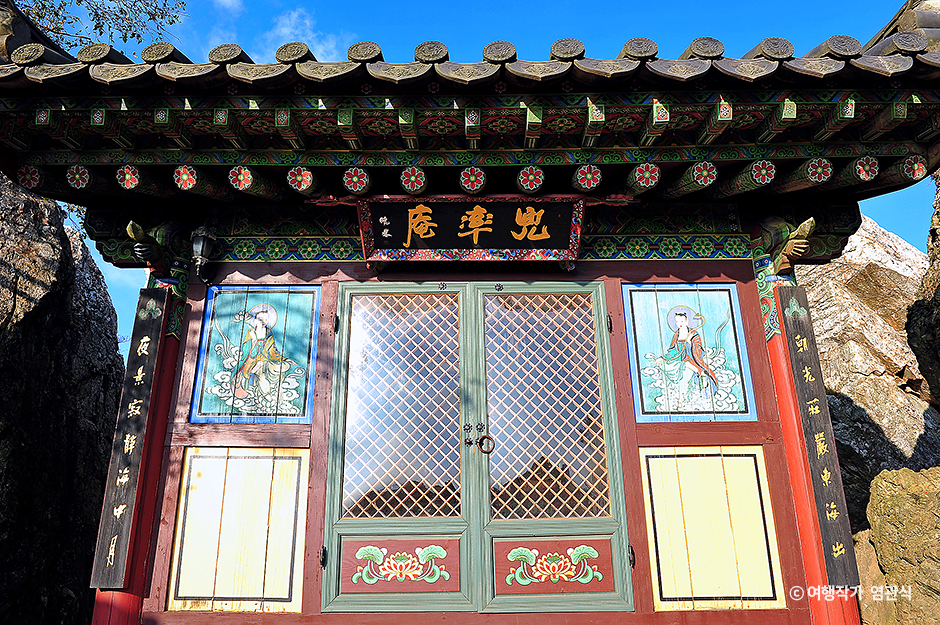
달마산 미황사의 열두 암자 중 한 곳으로 가장 정상부인 도솔봉에 있다. 신증동국여지승람에 따르면 화엄조사인 의상대사가 창건한 천년의 기도 도량이라고 알려져 있으며, 암릉으로 둘러싸인 도솔암은 4월에는 진달래, 5월에는 철쭉, 6월에는 원추리, 가을에는 단풍, 겨울에는 설경이 멋있어 많은 관광객이나 사진작가들이 찾는 명소이다. 달마산 도솔암 일원은 해남 8경 중 하나인 달마도솔로, 해남 최고의 경관을 자랑하는 해남 제1경이다. 정유재란 때 왜구들에 의해 소실되었으나 2002년 월정사 법조 스님에 의해 32일 만에 재건되었다.
Mihwangsa Temple, located on the west side of Dalmasan Mountain (489m), called the Geumgangsan of the South Sea, is the southernmost temple on the Korean mainland and was established in 749 during the 8th year of King Gyeongdeok of Silla. At its peak, it was a cradle of Buddhism with many monks and 12 subsidiary hermitages nearby. During the middle and late Joseon Dynasty, Mihwangsa continued to flourish, but about 100 years ago, after Abbot Honheo led a fundraising military drum team to Wando and Cheongsando and was shipwrecked, the temple gradually declined. After 100 years of decline, in 1989, monks Jiwoon, Hyeongong, and Geumgang, who currently reside at Mihwangsa, restored the empty temple, reviving Meongbujeon, Samseonggak, Manhada, Dalmajeon, Budoam, and Seosimdang. Through over ten years of continuous restoration efforts, Mihwangsa has transformed into one of Korea's most beautiful temples. The current buildings include the Daeungbojeon (Treasure), Eungjindang (Treasure), Meongbujeon, Samseonggak, Manhada (Seonwon), Dalmajeon (monk's quarters), Seosimdang (training center), temple lodging (rear garden), Hyangjeokjeon (guest rooms), Ansimryo (rear garden), Jaharu (pavilion), and Hasimdang set in an orderly manner. Mihwangsa offers visitors stunning scenery with the magnificent sunsets over the West Sea and the picturesque backdrop of Dalmasan. The temple's location harmonizes well with the surrounding mountain ridges, and the seating posture of Daeungbojeon conveys comfort. Notably, the foundation stones of Daeungbojeon are carved with unusual sea creatures like turtles and crabs and are believed to bring rain when a drought comes and rituals are held. The Treasure hanging Buddhist painting (Gwaebul) and 18th-century murals on the walls and ceiling inside Daeungbojeon and Eungjindang, along with the sculptures of bodhisattvas, arhats, children, and guardian deities inside Eungjindang and Meongbujeon, provide great enjoyment. A long stone water basin in front of Daeungbojeon always holds clear water, and a forest path to the right leads through pine and camellia trees to the pagoda field in about 10 minutes. Each pagoda is engraved with turtles, crabs, birds, lotus flowers, and goblin faces, offering unpretentious expressions in the quiet mountains. It takes about an hour to reach the mountain summit from the temple, where rugged rocks decorate the landscape like giant scholar's stones. The view of the Dadohae Sea and the sunset over the West Sea is very beautiful, and a camellia tree grove beautifully unfolds just below the temple. ◎ Travel Information to Experience the Charm of Korean Wave - In the drama , Park Ha-kyung visits 'Haenam Dalmasan Mihwangsa,' a temple located mid-mountain on Dalmasan, completely isolated from the city. Travelers undertaking temple stay programs to clear their minds can often be seen here. The sound of wind through the scenery, the subtle scent of incense, and the chanting of monks induce a feeling of all worries and concerns melting away.
This is the house where Gosan Yun Seondo lived, built in the mid-15th century by Hyojeong (1476~1543), Yun Seondo's great-great-grandfather, who settled in Yeondong. Behind the house is Deogeumsan Mountain, and in front are Byeorubong and Pilbong on its right, located in a geomantically auspicious site. The 14th-generation descendant of Yun Seondo currently resides here. Centered on the Nokudang old house are the Gosan Shrine, Eocheoeun Shrine, and Eocheoeun Cemetery, showcasing the appearance of a mid-Joseon Dynasty noble’s upper-class residence. Upon entering the gate is the main yard (Saranggma-dang), with a Sarangchae residence at the front and a small pond called Baekryeonji at the southwest corner of the wall. The Sarangchae was relocated here in 1668 (the 9th year of King Hyeonjong) from a house in Suwon, Gyeonggi-do, given to Yun Seondo by King Hyojong. Behind the Sarangchae, entering the east gate is the main residence (Anchae), shaped like the letter [ㄷ]. One shrine is inside the fence behind the Anchae on the east side, with Gosan Shrine and Eocheoeun Shrine outside the fence. This site also hosts a museum preserving many cultural heritage artifacts, including the national treasure self-portrait of Yun Du-seo, the treasure Sanzungsingokja, works like Eobusasisahaji, and over 3,000 relics.
Dasan Chodang, located on the slopes of Mandeoksan with a panoramic view of Gangjin Bay, is where the great scholar Jeong Yak-yong, a leading figure of late Joseon Silhak, lived during his exile. The pen name Dasan (茶山) comes from a mountain behind Gyuldong in Gangjin, which he used while staying here. As a representative Silhak scholar of late Joseon, Jeong Yak-yong was exiled to Gangjin in 1801 and lived here for about 18 years, writing over 600 books including 'Mokminsimseo' and 'Gyeongse Yupyio,' compiling Silhak that aimed to lead the ideological school of Neo-Confucianism toward practical scientific thought. Born as the fourth son of Jeong Jae-won, former Jinju magistrate, he passed the civil service exam at 28 and held various posts before being exiled first to Janggi, Gyeongsang Province, then to Gangjin in 1801 due to the Sin-Yu treason case. He first stayed for 8 years outside Dongmun Gate, at Goseongsa’s Boeunsanbang, and his disciple Lee Hak-rae’s house, then moved to Dasan Chodang in spring 1808 and lived there for over 10 years until his release in September 1818, teaching disciples and writing most of his great works here. Dasan Chodang, which had collapsed in old age, was restored in 1957 by the Dasan Heritage Preservation Society; later the Dongam, where Dasan lived, and Seoram, where disciples stayed, were restored. Among other features at Dasan Chodang are Jeong Stone, a stone inscribed with '丁石' by Dasan on Byungpung Rock, Yakcheon spring where he brewed tea by locating water veins himself, Dajo rock used for tea ceremony, the Yeonji stone mountain in the pond, and Cheonilgak pavilion, built in a place where he consoled his mind longing for his hometown while thinking of his second brother Yakjeon exiled to Heuksando.
Baekryeonsa Temple is said to have been founded during the reign of Munsung of Silla by the monk Muyeom (801–888) under the name Mandeoksa, following the mountain’s name. It later declined but was rebuilt on the old site in the 7th year of King Huijong of Goryeo by the monk Wonnyeom Yosae, gaining fame through the Baekryeon Order and becoming known as Baekryeon Temple. In the Joseon era, it was well-known as a place where Dasan Jeong Yak-yong, exiled to Gangjin, communicated and exchanged ideas beyond religion and age with the monk Am Hyejang. Mandeoksan, where Baekryeon Temple and Dasan Chodang are located, has many wild tea plants and has long been called Dasan (Tea Mountain). Jeong Yak-yong adopted the pen name 'Dasan' to represent his time in exile here. Another pride of Baekryeon Temple, important in the late Joseon tea culture revival, is the natural monument No. 151, a 1,500-tree camellia forest. The flowers begin blooming from late November and reach full bloom around late March, with fallen flowers coloring the ground red again in April. Baekryeon Temple offers various templestay programs such as relaxation, group experience, and tea ceremony experiences, with Dasan Chodang and Dasan Museum nearby.
Gangjin Bay is fed by several rivers flowing deep inland into Gangjin-gun, including the Tamjin, Janggycheon, Gangjincheon, and Doamcheon. As a result, its salinity is lower than the surrounding sea areas, with a nutrient salinity of 2.4 and an average water temperature of 17.8°C, making it suitable for seaweed and shellfish habitats. Gangjin Bay was designated a clean water zone in 1978 and is a production site for clams, cockles, oysters, mud eels, shrimp, octopus, mullet, and sea bass. The Gangjin Bay Ecological Park, built with wooden decks over wetlands, is home to a 200,000-pyeong reed community and about 1,131 species of marine life, including the natural monument No. 201, the whooper swan, making it the largest ecological treasure of the southern coast. Traveling along National Route 23 from Gangjin-eup to Maryang Port, which overlooks Gogeumdo, you can enjoy views of coastal reeds lining the shore. Located southeast, Maryang Port has deep waters and is protected by Gogeumdo acting as a breakwater, developing as a key maritime transportation hub. Starting from Gangjin-eup, you can follow Dasan-ro and Haegang Tourist Road along the coast to visit Sachoe Beach Park and Sanaeho.
Baegundong Byeolseo Garden was designed and established by the mid-Joseon scholar Idamro (1627~1701), who inscribed 'Baegundong' (literally 'White Cloud Valley') on a rock beside the valley. It is a villa garden where nature and artificial elements are harmoniously combined with a well-organized layout, preserving the original form of traditional Korean gardens. The name Baegundong means 'a village where water flowing down from Wolchulsan becomes mist and rises as clouds,' historically the site of Yaksam and Baegunam hermitages. Situated with views of the jagged rocks of Wolchulsan ridges, it exhibits the typical style of traditional Honam gardens. This location also lies along the Samnam Trail starting from Haenam. The current structures reflect the 1812 visit of scholar Dasan, who, enchanted by the scenery, had his disciple Seonsa Choi paint 'Baegundongdo' and composed poems about Baegundong's twelve scenic spots, which served as the basis for restoring the historic villa garden appearance. Idamro created an elegant curved watercourse with nine bends from Okpanbong’s flowing water and built a pavilion. The harmonious mix of flowers and trees in the valley invites lingering gaze, shifting to the peaks for a profound appreciation of the scenery. The Baegundong valley is designated as a Gangjin local cultural heritage and, along with Soswaewon in Damyang and Seoyeonjeong in Bogildo, Wando, is counted among Honam’s three major gardens, an important cultural asset reflecting the mid-Joseon scholars’ hermit culture. [Source: Gangjin County Cultural Tourism website]
Good places to stop and rest after the course

Booking and payment continue on a partner site.
Check rooms & price
Booking and payment continue on a partner site.
Check rooms & price
Booking and payment continue on a partner site.
Check rooms & priceSign up to feature your channel.
(As a member, you can add your Instagram, YouTube, and blog links in My Page, and we’ll show them with every comment you write.)
““Stayed near Hongdae and did a night café tour. Perfect city views and vibes.””
Guest comments do not display social media links or profile cards.
Share a short tip about this place.
Or leave a quick comment as a guest.
Photo attachments are available after login.
No reviews yet. Be the first to share your experience!