Camping trip at the land end of the Korean peninsula in Jeollanam-do Haenam-gun · schedule Other · distance 59.2km · 6 stops · highlights Haenam Yunsi N…

Ttangkkeut Village is the southernmost point of our country and is a place that must be visited just for its significance. On the road from Haenam-eup to Ttangkkeut Village, you can encounter landmarks in order such as Nokudan, the historic site of the scholar Yun Seon-do from the Gosan era, Dalmasan Mihwangsa Temple, and Daejuk Village, where you can experience mudflats. The beautiful pine forest of Songhori Beach houses the Ttangkkeut Auto Camping Site, making it perfect for enjoying camping.
This course is a sample 2-day itinerary. Save it as-is or expand it into an AI itinerary.
This is the house where Gosan Yun Seondo lived, built in the mid-15th century by Hyojeong (1476~1543), Yun Seondo's great-great-grandfather, who settled in Yeondong. Behind the house is Deogeumsan Mountain, and in front are Byeorubong and Pilbong on its right, located in a geomantically auspicious site. The 14th-generation descendant of Yun Seondo currently resides here. Centered on the Nokudang old house are the Gosan Shrine, Eocheoeun Shrine, and Eocheoeun Cemetery, showcasing the appearance of a mid-Joseon Dynasty noble’s upper-class residence. Upon entering the gate is the main yard (Saranggma-dang), with a Sarangchae residence at the front and a small pond called Baekryeonji at the southwest corner of the wall. The Sarangchae was relocated here in 1668 (the 9th year of King Hyeonjong) from a house in Suwon, Gyeonggi-do, given to Yun Seondo by King Hyojong. Behind the Sarangchae, entering the east gate is the main residence (Anchae), shaped like the letter [ㄷ]. One shrine is inside the fence behind the Anchae on the east side, with Gosan Shrine and Eocheoeun Shrine outside the fence. This site also hosts a museum preserving many cultural heritage artifacts, including the national treasure self-portrait of Yun Du-seo, the treasure Sanzungsingokja, works like Eobusasisahaji, and over 3,000 relics.
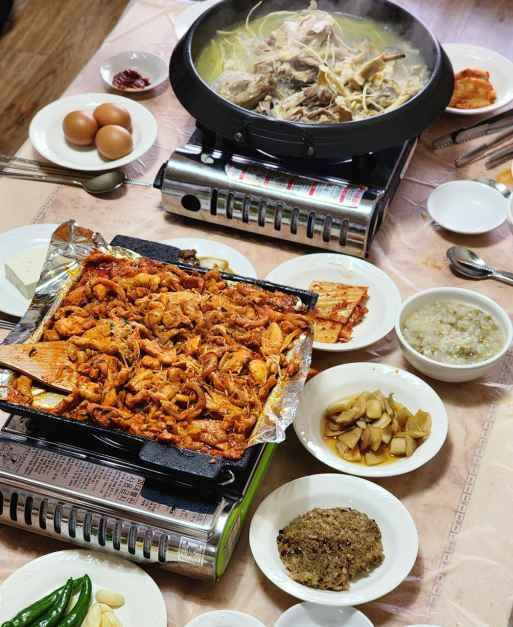
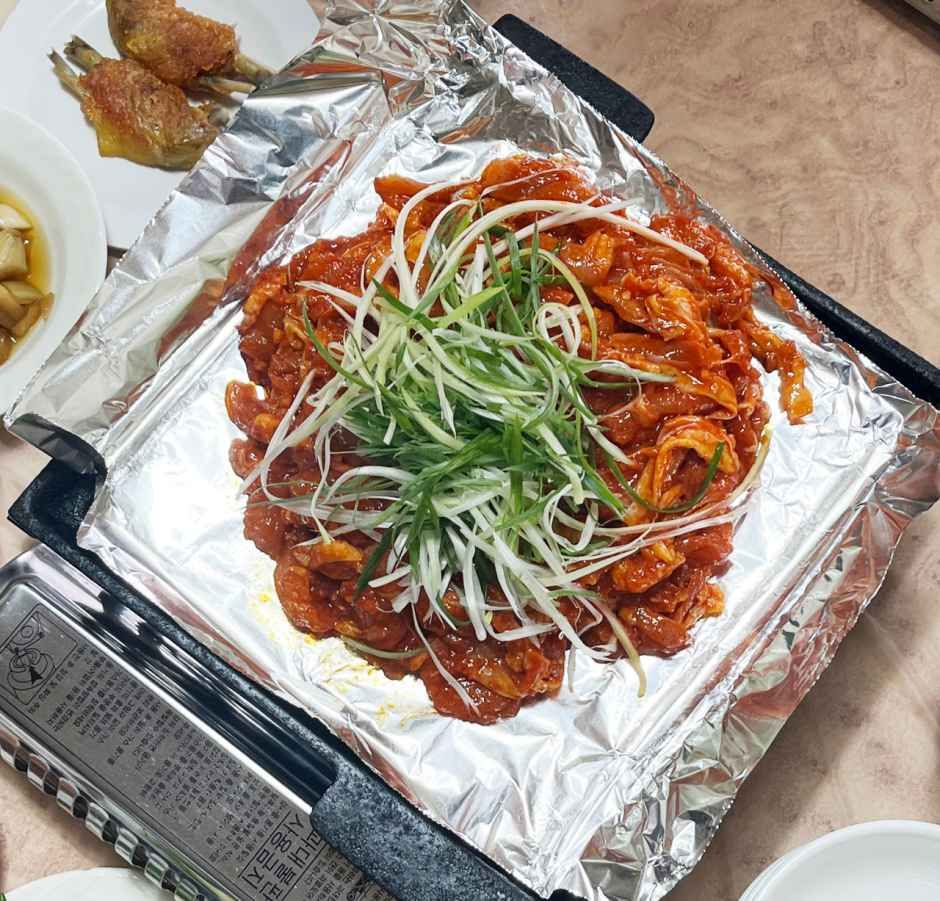
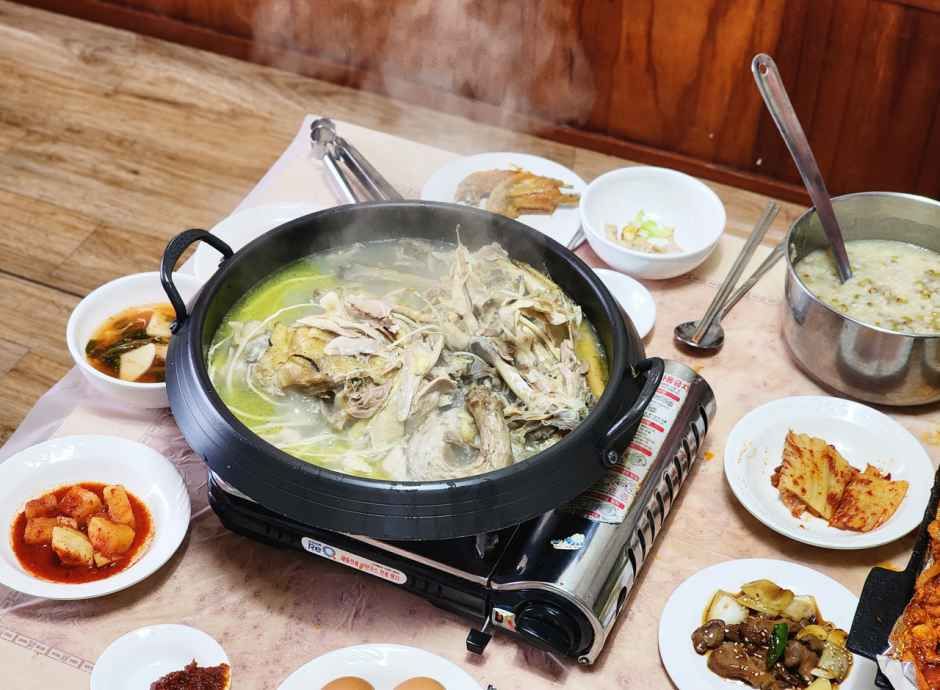
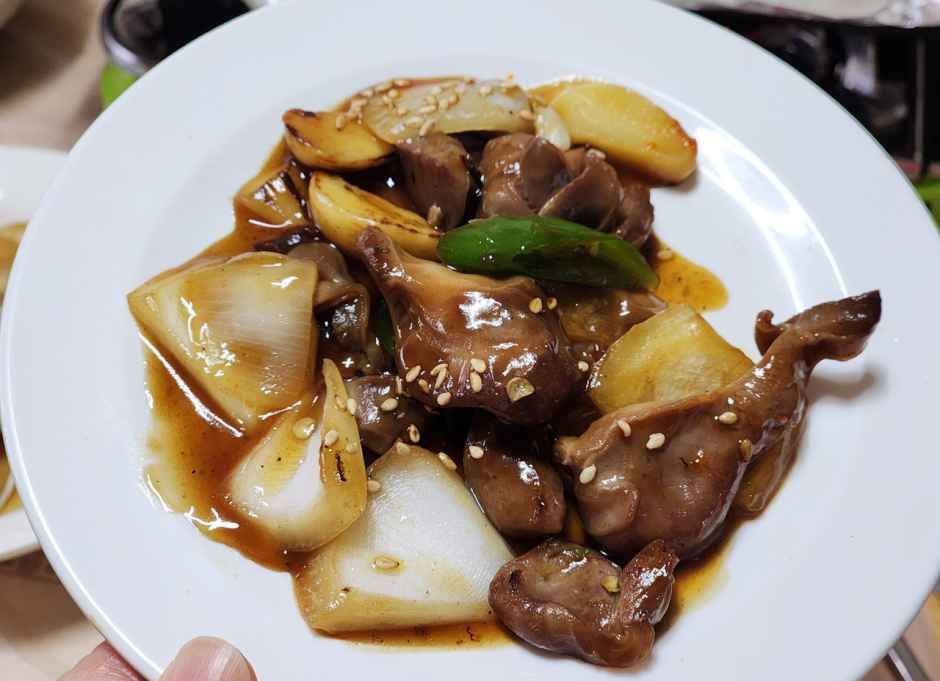
A traditional native chicken cuisine specialty restaurant with over 25 years of history, located on the way to Haenam Daeheungsa. The menu features native chicken and duck jumulleok (stir-fried marinated duck). Currently run by the third generation, when ordering the native chicken course, a hearty full table is offered starting with chicken yukhoe (raw chicken), followed by grilled chicken, chicken jumulleok, chicken baeksuk (boiled chicken), and chicken porridge.
Dalmasan is located at the end of the Honam Jeongmaek mountain range, spanning Haenam-gun's Songji-myeon, Bukpyeong-myeon, and Hyeonsan-myeon. The mountain ridge of Dalmasan, starting from the southern slope of Duryunsan, stretches long like a dragon's spine, ending at Mulgorijae, connecting Yeongjeon-ri in Bukpyeong-myeon and Mabong-ri in Songji-myeon. The oddly-shaped rocks of Dalmasan are called the Geumgangsan of the southern provinces. From the ridge, one can view the vast Haenam plains and the archipelago of Wando and Jindo. In spring, azaleas bloom abundantly among the rocky crags, making it a famous mountain for mountaineers nationwide. There are four main hiking courses. First, a round-trip course for beginners and Mihwangsa visitors takes 3 hours. Next, a course starting from Mihwangsa and ending at the Mabong-ri mineral spring, and another starting from Songchon village and ending at Mihwangsa. Lastly, a 7-hour Dalmasan traversing course starts at the entrance of Songchon village, passes through the forest road, Sujeong Cave, Seokmun Cave, and ends at the Mabong-ri mineral spring parking lot. Additionally, Mihwangsa Temple, located mid-mountain, is famous. The temple has a deep connection with Dalmasan and harmonizes beautifully with the surrounding scenery. Around 749, when a stone boat carrying scriptures and Buddha statues reached Sajapo Port, Monk Uijo, with 100 disciples, carried them by ox. When the ox brayed loudly and lay down, Tonggyosa Temple was built there, and where the ox stopped again, Mihwangsa was established.
‘Ttangkkeut,’ where the sea and sky meet and begin, is the place where the Baekdudaegan mountain range extends southward and makes its final powerful gesture before stopping, marking both the start and end of Baekdudaegan. It is also the place where the energy (gi) of the Korean Peninsula is most concentrated, traditionally considered sacred as it opens the gate to the heavens, where many sages and artists perform holy rites. There is a legend in Ttangkkeut Village that making wishes toward the sky and sea grants those wishes and fosters hope. With this symbolism, Ttangkkeut attracts many tourists nationwide. It serves as the starting point of national pilgrimage routes and is an important hub and transit route for maritime culture.
Ttangkkeut Monorail is an electric vehicle that connects Ttangkkeut Village and the Ttangkkeut Observatory. Riding the monorail up to the observatory allows you to vividly enjoy the spectacular scenery of the southwestern coastline and the beauty of the deep blue sea. It is especially helpful for people with disabilities and the elderly. The monorail is 395 meters long, and it takes about 7 minutes to reach the observatory. It opened on December 19, 2005.
In front of the village to the west in the sea, there is an island with many bamboo trees, and the village is located in front of the large island called Daejukdo, hence it is called 'Daejuk Village.' The beautiful scenery of the Dadohae (archipelago) unfolds in front of the village, and nearby there is a clam-picking experience fishing ground, making it a clean and beautiful fishing village where visitors can enjoy nature. Along with the picturesque landscape, the tidal flat ecosystem is well preserved, providing a rich fishing ground with various seafood such as clams, octopus, oysters, and crabs. A clam-picking experience is operated every summer and is popular as a family activity spot. Additionally, on the opposite side, Daeseom (Jukdo) and Siru Island (Jeungdo) reveal a mysterious 1.2km sea path during low tide. The opening times of this sea path change daily according to the tides, so it is necessary to check beforehand.
Good places to stop and rest after the course

Booking and payment continue on a partner site.
Check rooms & priceSign up to feature your channel.
(As a member, you can add your Instagram, YouTube, and blog links in My Page, and we’ll show them with every comment you write.)
““Stayed near Hongdae and did a night café tour. Perfect city views and vibes.””
Guest comments do not display social media links or profile cards.
Share a short tip about this place.
Or leave a quick comment as a guest.
Photo attachments are available after login.
No reviews yet. Be the first to share your experience!