Meeting Hadong Highlights from Hwagae Market and Choi Champan House to Samseonggung in Gyeongsangnam-do Hadong-gun · schedule Other · distance 58.7km ·…

Hadong is a great place to travel, known for the famous Choe Champan's House and Hwagae Market, offering a rare and beautiful travel course to experience the refined culture of the yangban aristocracy. Be sure to visit Choe Champan's House, Hwagae Market, Cheonghakdong, and the unique ancient relic of Samseonggung without missing any.
This course is a sample one-day itinerary. Save it as-is or expand it into an AI itinerary.
Hwage Jangteo, famous as the setting of Kim Dong-ri's novel 'Yeokma,' is located at the border between Yeongnam and Honam regions. It was a hub for distributing seafood and salt from the southern coast, fertile grains from the Honam plains, mountain vegetables and woodenware from the Jirisan mountain area, through the developed waterways of Hadong port. From the mid-Joseon Dynasty to before liberation, it prospered as one of the nation's notable markets. However, with the development of transportation and distribution systems, it declined, disappearing its old appearance. Hwage Jangteo was a traditional market held at the confluence of the Hwage Stream, originating from Jirisan, and the Seomjin River, where a five-day market thrived. Recently, it operates as a permanent market without a separate five-day market. To meet the expectations of visitors drawn by Cho Young-nam's song 'Hwage Jangteo' and restore its traditional atmosphere, a project investing 1.6 billion won on about 2,540 pyeong was undertaken to build traditional market buildings and a green tea specialty mall with convenience facilities. It opened on April 5, 2001, with the 9th Hwage Jangteo Cherry Blossom Festival, operating as a permanent market.
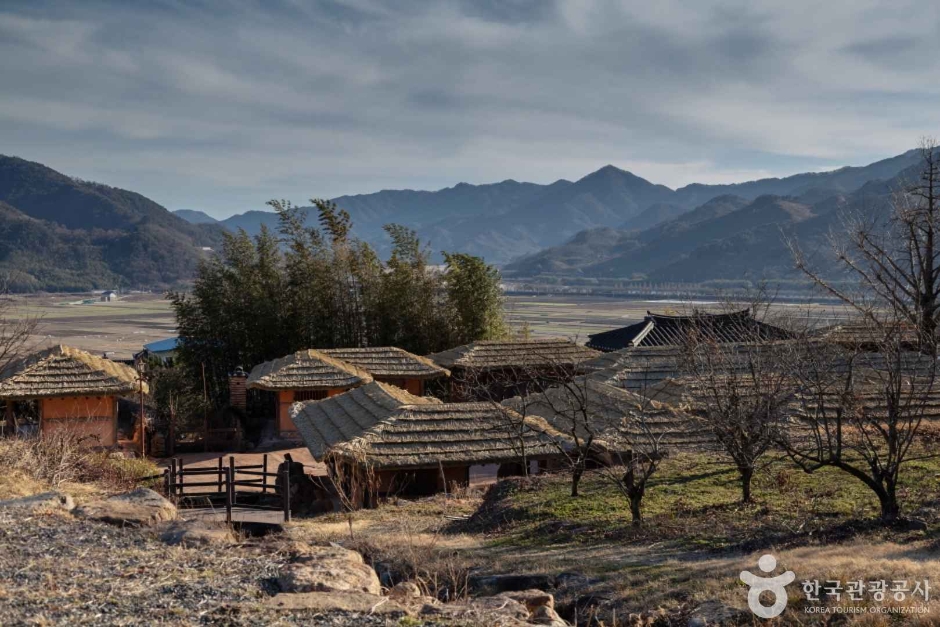
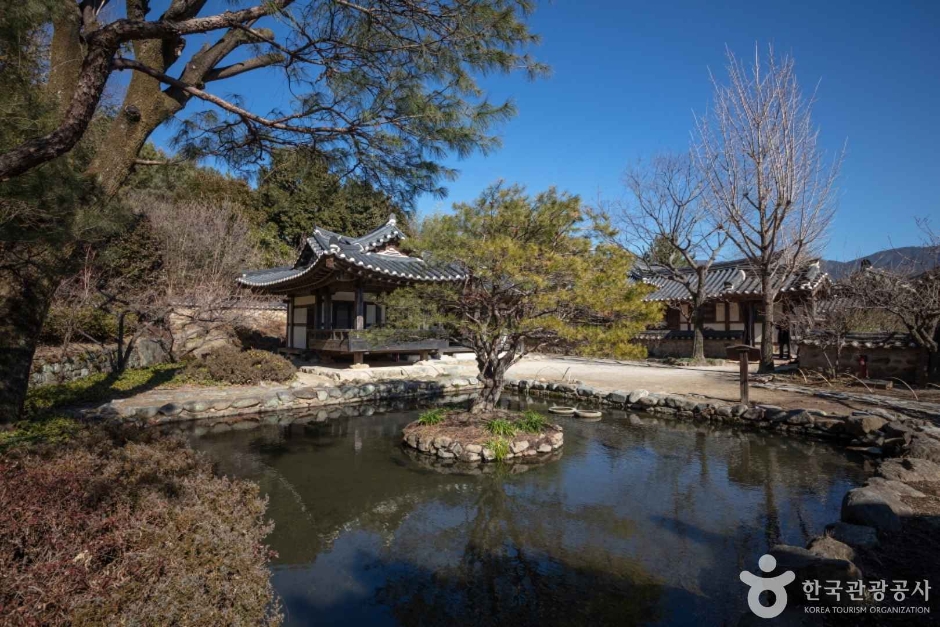
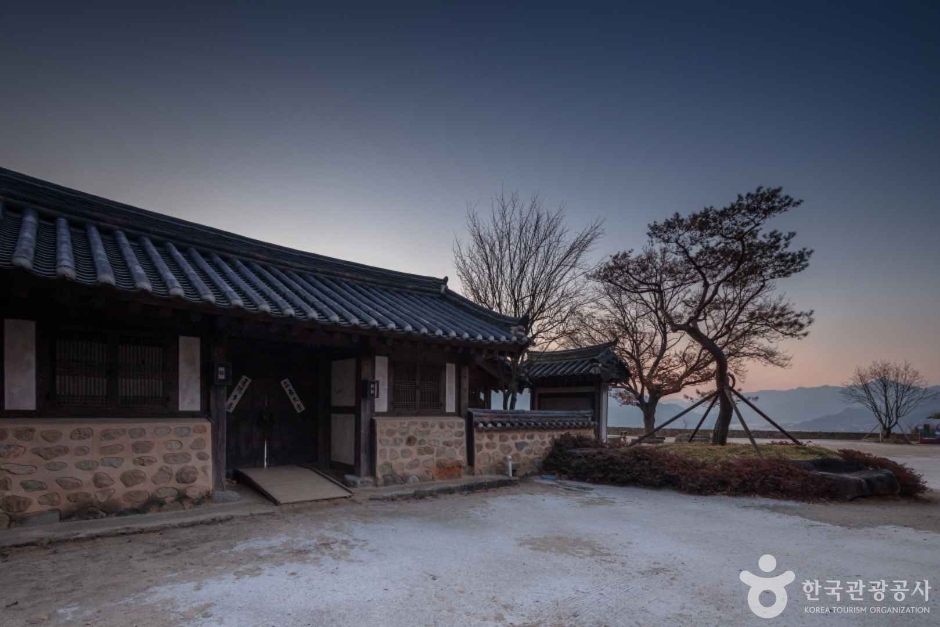
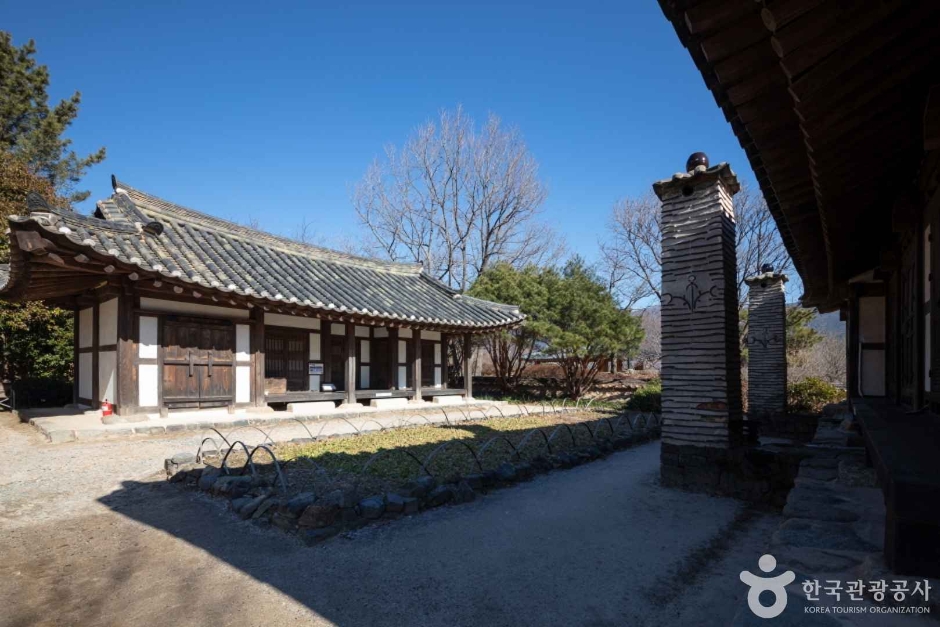
Agyang Pyeongsari, famous as the setting of Park Kyung-ni’s epic novel , is land richly blessed by the Seomjin River. Following the Pyeongsa-ri paddy field path, two pine trees stand tall in the middle of the field, warmly welcoming visitors, and thatched cottages unfold like a painting along the foothills of Jirisan. Among them, the tile-roofed house resembling a whale’s back is the Choe Champan Residence, the backdrop of Park Kyung-ni’s . In Pyeongsari, which serves as the background for this epic novel covering our Korean people’s grand narrative from the Donghak Revolution to modern history, the Choe Champan house is realized as 14 hanok buildings, and a drama set for reproducing late Joseon period lifestyles is also established. Every autumn, the nationwide literary festival “Toji Literature Festival,” celebrating writers from across the country, is held here, establishing the area as a literary village.
This is a jacheop-guk (freshwater clam soup) specialty restaurant located about 3 minutes towards Hwagae near Hadong Police Station on a main city street. Jaecheop is known as a popular hangover soup because it activates liver function, relieves fatigue, and restores vitality. The owner, who has 11 years of cooking experience, personally prepares the dishes using only natural jaecheop from the Seomjin River, resulting in excellent taste. The jaecheop soup flavored with natural buchu (wild chive) from the foothills of Jirisan is fragrant and rich, while the raw jaecheop mixed with spicy vinegar sauce and various vegetables is wonderfully sweet, sour, and chewy. A large framed photo depicting jaecheop harvesting in front of the Seomjin River adds visual interest.
Hadong Songnim Park was created in 1745 (the 21st year of King Yeongjo of Joseon) by Jeon Cheonsang, the provincial governor, to protect Hadong-eup (then called Cheongha-eup) from the sea breeze of Gwangyang Bay and the sandy wind of the Seomjin River. At its establishment, about 1,500 pine trees were planted, but currently, including successor trees, around 900 remain. The old pines that have endured for about 260 years, the clear waters of the Seomjin River, and the expansive white sandy beach create a picturesque scene that captivates poets and guests. For this reason, Hadong is called the land of white sand and green pines and bamboo. Hadong Songnim has historically been a site for women's flower play gatherings, and the white sandy beach in front of the pine forest serves as an inland beach where seawater comes in, used by locals and tourists as a place for nature study and leisure. On the first full moon of the lunar year, a large bonfire reflecting the wishes of the people of Hadong is lit on the white sand, serving as a place of harmony with neighbors from Jeollado.
근대 사회에 이르기까지 전통서당의 맥을 끊임없이 이어온 30년 전통 청학동 명륜학당은 일반적인 놀이위주나 오락형태의 체험학습 서당이 아닌 이 땅의 주체인 자신이 어떻게 하면 성공과 행복을 만들고 사랑과 존경을 만드는가를 즉, 삶의 도리와 실천 예절을 일깨우는 학당이다.
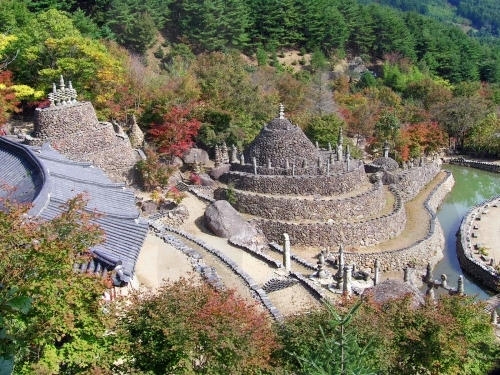
Located in Mugye-ri, Cheongam-myeon, deep in the embrace of Jirisan, the sacred mountain of the Korean people, Samseonggung sits about 1.5 km along the mountain path of Cheonghak-dong at an elevation of 850m. The precise name of Samseonggung is Baedalseongjeon Samseonggung. It was established by Kang Min-joo (Hanpul Seonsa) from this area in 1983 by restoring the ancient Sodo of the Gojoseon era. It enshrines Hwanin, Hwanung, and Dangun, the ancestral spirits of the people, as Baedalminjok Seongjeon, serving as a shrine that preserves the ethnic lineage of Seondo, the indigenous Daoist path, and functions as a place of practice for Shinseondo, the Dao of immortality. Hanpul Seonsa and his disciples, continuing the Seondo tradition passed down from old times, stacked about 1,500 stone towers that blend harmoniously with the surrounding forest, giving off an exotic atmosphere. These stone towers are called Wonryeok Sotdae here. In the Samhan period, sacred places called Sodo where they held ceremonies for the heavenly deity were marked by sotdae—wooden poles with goose carvings placed high in trees to forbid common people's entry. Like prayers at a village shrine, wishes are made while building sotdae from stones at the foot of Jirisan to restore the old Sodo. By stacking 3,333 sotdae, the sacred hall is formed to reclaim the unique spiritual culture of our people and create a world of Hongik Ingan, serving as a base for those who train in martial arts, singing, dance, and music.
Sign up to feature your channel.
(As a member, you can add your Instagram, YouTube, and blog links in My Page, and we’ll show them with every comment you write.)
““Stayed near Hongdae and did a night café tour. Perfect city views and vibes.””
Guest comments do not display social media links or profile cards.
Share a short tip about this place.
Or leave a quick comment as a guest.
Photo attachments are available after login.
No reviews yet. Be the first to share your experience!