
Slow Moments in Agyang, a Designated Slow City in Gyeongsangnam-do Hadong-gun · schedule Other · distance 20.1km · 6 stops · highlights Hadong Songnim P…
Agyang in Hadong-gun, where the Seomjin River and Jirisan harmonize, is the fifth Slow City designated in Korea. In particular, Agyang-myeon is the setting of the novel and drama 'Toji,' where you can sequentially encounter the Agyang fields, Dongjeong-ri pine trees, and Choi Champan's house, all locations featured in the story. It is also worth visiting Gososan Fortress, which offers views of Jirisan's ridges and the winding Seomjin River, as well as the Maeam Tea Culture Museum in Agyang-eup.
This course is a sample one-day itinerary. Save it as-is or expand it into an AI itinerary.
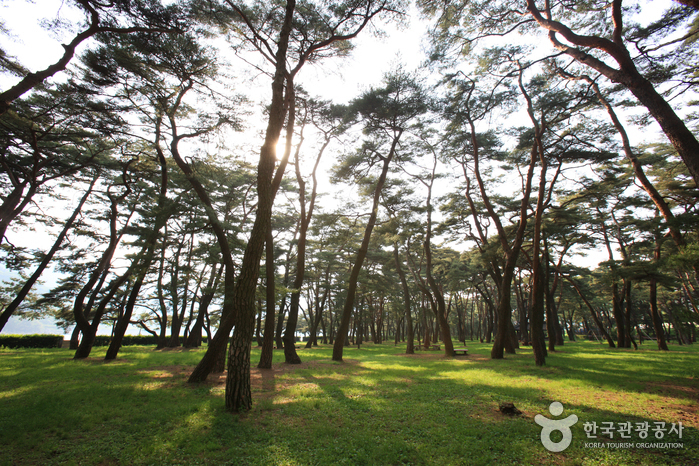
Hadong Songnim Park was created in 1745 (the 21st year of King Yeongjo of Joseon) by Jeon Cheonsang, the provincial governor, to protect Hadong-eup (then called Cheongha-eup) from the sea breeze of Gwangyang Bay and the sandy wind of the Seomjin River. At its establishment, about 1,500 pine trees were planted, but currently, including successor trees, around 900 remain. The old pines that have endured for about 260 years, the clear waters of the Seomjin River, and the expansive white sandy beach create a picturesque scene that captivates poets and guests. For this reason, Hadong is called the land of white sand and green pines and bamboo. Hadong Songnim has historically been a site for women's flower play gatherings, and the white sandy beach in front of the pine forest serves as an inland beach where seawater comes in, used by locals and tourists as a place for nature study and leisure. On the first full moon of the lunar year, a large bonfire reflecting the wishes of the people of Hadong is lit on the white sand, serving as a place of harmony with neighbors from Jeollado.
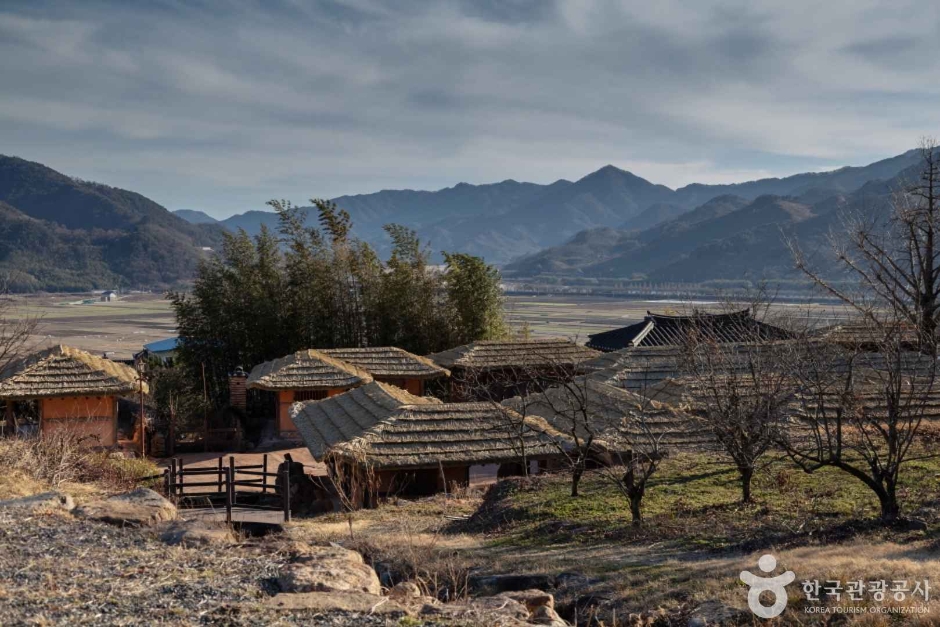
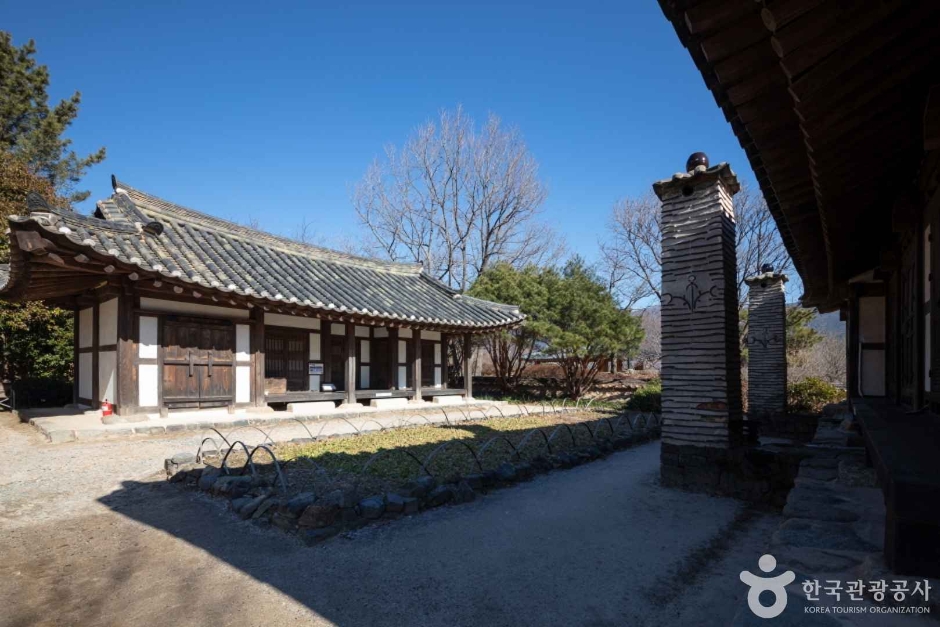
Pyeongsari Field is the first of three reasons why Park Kyung-ni's novel 'Toji' was set in this area of Agyang-myeon, Hadong-gun. This generous field is enough to support two or three affluent landowners, becoming the foundation where the story of the noble landlord family spanning three generations unfolds. During her lifetime, Park Kyung-ni said that among the three most pleasant sounds in the world was the sound of water flowing into dry rice paddies. Such a generous field embraces all life, sustaining the lives of many through the rice and barley it nurtures. Pyeongsari Field, boasting the widest plain among the 500-ri watercourse of the Seomjin River, spans over approximately 830,000 pyeong. The field includes many tourist attractions such as the Choi Champan House hanok, Bubu Pine, Dongjeong Lake, Dongjeong Lake Sculpture Park, and the Park Kyung-ni Literature Museum.
하동군은 위로는 지리산, 아래로는 남해와 접해있다. 서쪽으로는 섬진강을 경계로 전라도 땅인 구례, 광양과 맞붙어 있어 지리산의 장엄함과 바다의 시원함, 섬진강의 평화스러움이 한데 어울린 고장이다. 고소성은 평사리 뒷산의 지리산에서 뻗어 내려온 성제봉 산줄기 중턱 300m 고지에 위치한다. 험한 산줄기를 등지고, 서남쪽으로는 섬진강과 동정호를 눈 아래 둔 천연의 요충지로 남해에서 호남으로 통하는 목을 쥐고 있는 위치에 있다.
[여여식당] 섬진강 재첩의 명맥을 이어가고 있는 여여식당은 섬진강의 맑은 물에서 자라난 재첩으로 요리해 낸다. 뽀얀 국물이 시원하여 술국으로도 좋은 재첩국은 다른 양념을 하지 않고 소금으로만 간을 맞춘다. 국뿐만 아니라 회로 먹으면 재첩의 쫄깃한 맛을 즐길 수 있다. [하옹촌] 하동나들목에서 하동 읍내 쪽으로 들어가는 길목 양쪽에 말끔한 새 건물이 몇 채 들어섰다. 바로 하동군에서 섬진강 재첩을 보존하고 육성하기 위해 특별 조성한 하동재첩특화마을이다. 이곳에 자리한 하옹촌은 14년째 재첩을 잡는 정강근 사장이 운영한다. 이 지역 어촌계장이기도 한 정강근 사장은 섬진강 재첩을 널리 알리고, 재첩을 좋아하는 사람들에게 믿고 먹을 만한 공간이 필요하다는 생각에 하옹촌을 열었다고 한다.
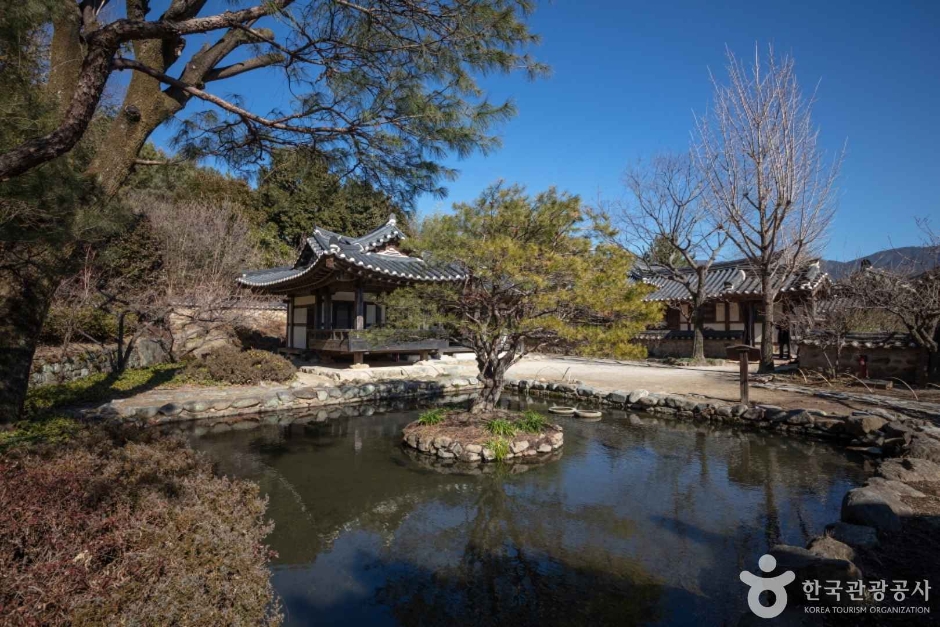
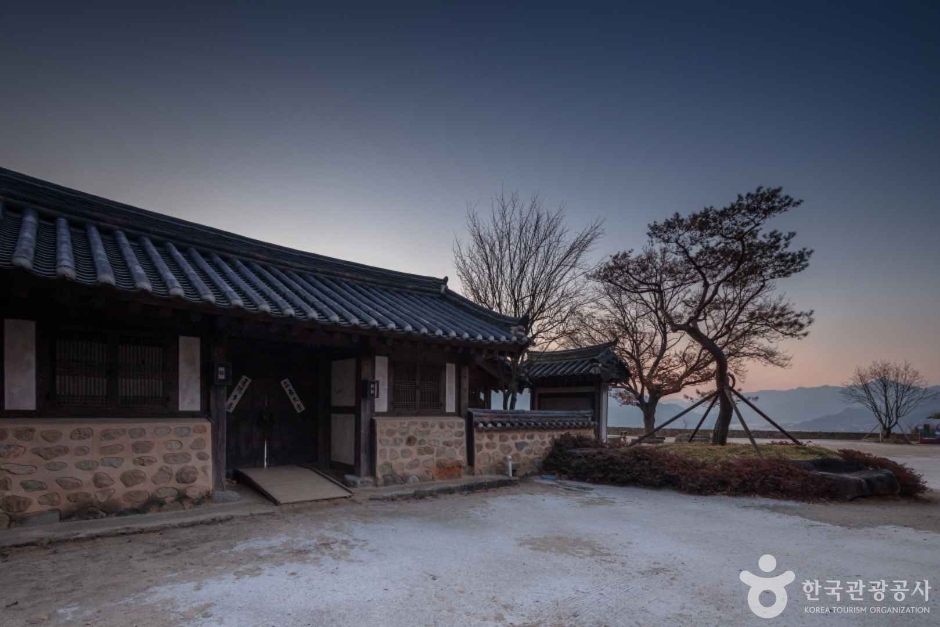
Agyang Pyeongsari, famous as the setting of Park Kyung-ni’s epic novel , is land richly blessed by the Seomjin River. Following the Pyeongsa-ri paddy field path, two pine trees stand tall in the middle of the field, warmly welcoming visitors, and thatched cottages unfold like a painting along the foothills of Jirisan. Among them, the tile-roofed house resembling a whale’s back is the Choe Champan Residence, the backdrop of Park Kyung-ni’s . In Pyeongsari, which serves as the background for this epic novel covering our Korean people’s grand narrative from the Donghak Revolution to modern history, the Choe Champan house is realized as 14 hanok buildings, and a drama set for reproducing late Joseon period lifestyles is also established. Every autumn, the nationwide literary festival “Toji Literature Festival,” celebrating writers from across the country, is held here, establishing the area as a literary village.
Slow City refers to a city that pursues the aesthetics of living slowly. On February 6, 2009, Hadong-gun Agyang-myeon was registered by the Slow City International Coordination Council, becoming the fifth Slow City certified in South Korea. Hadong Agyang has three distinct scents. The scene from the novel is preserved exactly as Seo-hee of the Choi Champan House in Pyeongsari looks down on the wide rice field ridges of Agyang. Hadong has many tributaries along with the Seomjin River, creating frequent fog and high humidity, as well as a large temperature difference between day and night, making it easy to cultivate tea trees in soil well-suited for tea tree growth.
Sign up to feature your channel.
(As a member, you can add your Instagram, YouTube, and blog links in My Page, and we’ll show them with every comment you write.)
““Stayed near Hongdae and did a night café tour. Perfect city views and vibes.””
Guest comments do not display social media links or profile cards.
Share a short tip about this place.
Or leave a quick comment as a guest.
Photo attachments are available after login.
No reviews yet. Be the first to share your experience!


![Hadong Agyang-myeon, Gyeongnam [Slow City] 1](https://tong.visitkorea.or.kr/cms/resource/24/3589524_image2_1.jpg)
![Hadong Agyang-myeon, Gyeongnam [Slow City] 2](https://tong.visitkorea.or.kr/cms/resource/25/3589525_image2_1.jpg)
![Hadong Agyang-myeon, Gyeongnam [Slow City] 3](https://tong.visitkorea.or.kr/cms/resource/26/3589526_image2_1.jpg)
![Hadong Agyang-myeon, Gyeongnam [Slow City] 4](https://tong.visitkorea.or.kr/cms/resource/27/3589527_image2_1.jpg)