Searching for Heritage Sites from Daegu Basin to Central Plains in Gyeongsangbuk-do Gyeongsan City · schedule Other · distance 72.3km · 4 stops · highli…

Gyeongsan is a region with deep history, once home to Apdokguk, a local state of Silla before the Three Kingdoms period. Many ancient stone tombs have been found here. The area has been developed into a beautiful park, ideal for enjoying autumn scenery. Particularly, the Yeongnam University Museum, which has extensive research on Silla relics, offers many sights to see.
This course is a sample one-day itinerary. Save it as-is or expand it into an AI itinerary.
This tumuli cluster from the early Three Kingdoms period is located in Imdangdong, Joyongdong, and Aplyangeup areas of Gyeongsan-si, Gyeongsangbuk-do. It features stone-cist tombs and chamber tombs dug into stone walls excavated by Yeungnam University Museum in 1982, and was designated as a historic site in 2011. The tomb types include wooden coffins (mokgwanmyo), jar tombs (onggwanmyo), stone-cist tombs (jeokseokmokgwakmyo), and stone chamber tombs (hoenghyeolsik seoksilmyeo). Excavated artifacts consist of various gold and silver ornaments (jars), iron weapons including ring-hilted large swords (hwantudaedo), and earthenware. Based on these artifacts, these are believed to be the tombs of regional rulers at that time. According to Samguksagi, in the 23rd year of King Pasa, the king of Apdokguk surrendered to Silla. Apdokguk is presumed to have been near Aplyangmyeon where Imdangdong tombs are located, providing insight into early small-state relations during the Three Kingdoms period. Imdangdong artifacts and tomb structures resemble early Gyeongju tomb finds and share similarities with Gaya culture, indicating cultural exchange. Approximately ten tombs are distributed in the low, flat hills around Joyongdong, Gyeongsan-si. The earthen mounds covering the tombs have mostly disappeared but remaining ones are circular. Inside are jar tombs (onggwanmyo), pit-style stone-cist tombs (su-hyeolsik seokgwakmyo), and stone chamber tombs (hoenghyeolsik seoksilmyeo), with pit-style stone-cist tombs being most common. These vary from simple coffins to double coffins enclosing both the body and burial goods. Artifacts include various earthenware, gilt-bronze crowns, belts, earrings (ornaments), weapons, horse gear, and clay products.
영남대학교 박물관은 국내의 역사·고고·예술·민속 및 인류학 분야의 자료, 특히 대구·경산 지역에서 발굴, 조사되는 신라·가야문화의 자료를 종합적으로 수집·보관·전시하여 이에 관한 자료의 조사연구에 기여하며, 향토문화의 전승·발전과 인류문화 발전을 도모하고자 설립되었다.
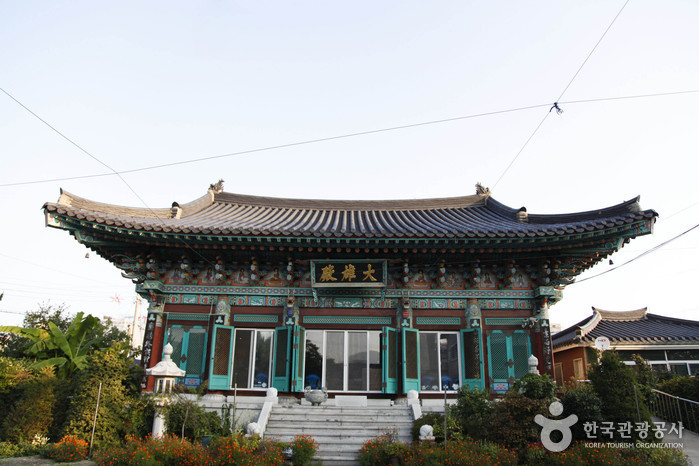
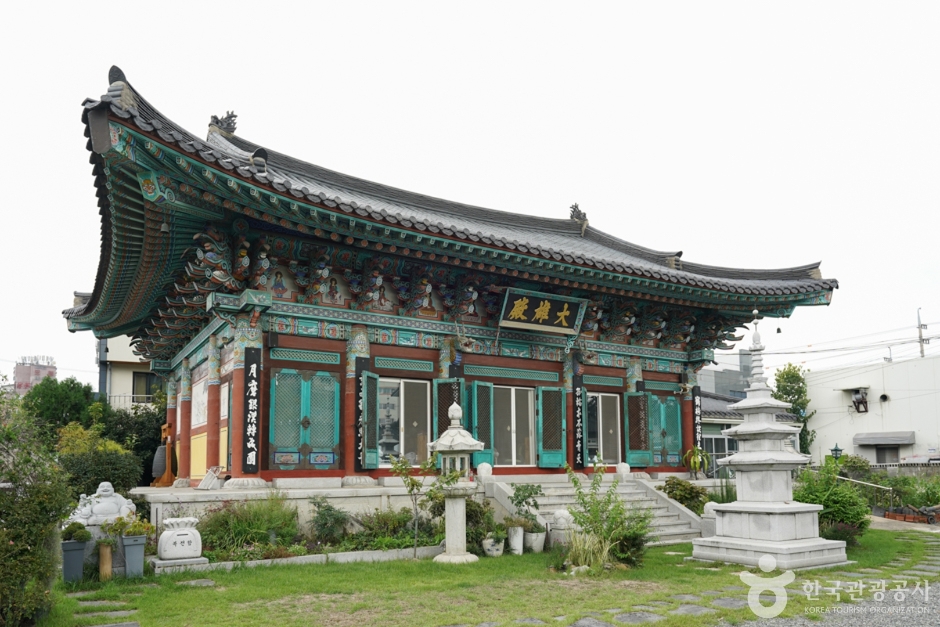
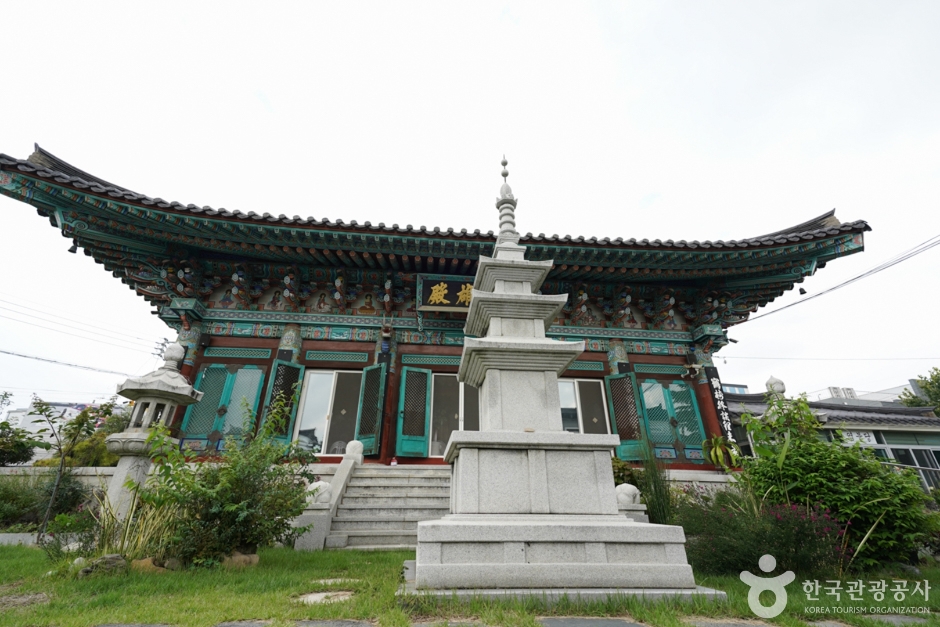
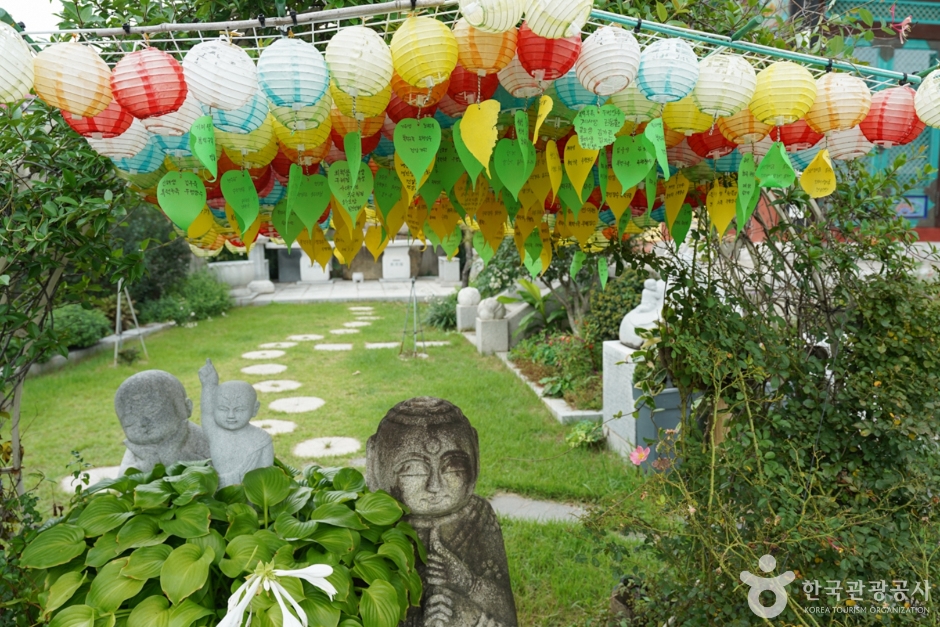
Hye Gwangsa, affiliated with the Korean Buddhist Beophwa sect, was founded in 1931. The temple buildings of Hye Gwangsa were originally built during the Japanese colonial period by a Japanese monk named 'Tuhyeon,' who relocated a building formerly used as the guesthouse of Jaein-hyeon in the Joseon Dynasty to this site and constructed it as a Japanese-style temple to propagate Japanese Buddhism. It is said the Japanese monk chose this location because it was the center of Gyeongsan at the time and was a feng shui auspicious site shaped like a lotus flower floating on water. After liberation, a Korean monk named Hye Gwang who had lived in Japan resided here, abandoning Japanese-style Buddhism and registering the temple under the Korean Buddhist Beophwa sect. At this time, the temple was named Hye Gwangsa after the abbot's Dharma name, and a Buddhist altar painting enshrined in the current Daeungjeon was brought from a temple in Korea, firmly establishing its status as a temple of the Korean Buddhist Beophwa sect. However, over time, Hye Gwangsa gradually declined and was on the verge of near abandonment until 1975, when Venerable Hye Mun of the Beophwa sect was newly appointed abbot, rebuilt the Daeungjeon, transformed the temple into its present form, and has served here to this day.
Seongju Gyeongsan-ri Seongbak Forest is a forest created outside the west gate of Seongju Eupseong (town fortress), where 52 royal willow trees aged 300 to 500 years grow. According to records in the 『Gyeongsanji』 and 『Seongsanji』, it is said to have been made following feng shui principles to prevent the unexplained deaths of children outside the west gate during the mid-Joseon period. Beyond its simple name as a forest outside the fortress, it is a valuable space containing diverse history and life stories of Seongju. Composed solely of old royal willow trees forming a monospecific forest, it has academic value and is a traditional village forest created according to the village’s feng shui, history, culture, and faith, thus it is designated and protected as a natural monument for its high values in local identity, folklore, and historicity. It also serves as a traditional village protective forest (Bibolim), reflecting the ancestors’ traditional view of nature to preserve the village's scenery, which adds significant academic value. Currently, Seongbak Forest is used as a space for festivals and various events, as well as for residents’ walking and sports activities, serving as a multifunctional space. The royal willows turn light green in April to May, and in August, the forest is spectacularly decorated with the purple blooms of wild Liriope spicata.
Good places to stop and rest after the course

Booking and payment continue on a partner site.
Check rooms & price
Booking and payment continue on a partner site.
Check rooms & price
Booking and payment continue on a partner site.
Check rooms & price
Booking and payment continue on a partner site.
Check rooms & price
Booking and payment continue on a partner site.
Check rooms & priceSign up to feature your channel.
(As a member, you can add your Instagram, YouTube, and blog links in My Page, and we’ll show them with every comment you write.)
““Stayed near Hongdae and did a night café tour. Perfect city views and vibes.””
Guest comments do not display social media links or profile cards.
Share a short tip about this place.
Or leave a quick comment as a guest.
Photo attachments are available after login.
No reviews yet. Be the first to share your experience!