Road to discover the history of Daejeon in Gyeongsangnam-do Gyeongsangnam-do · schedule Other · distance 48.7km · 4 stops · highlights Unjusanseong, Bea…
Standing in the courtyard of Biamsa Temple, an 810-year-old zelkova tree seems to tell ancient stories. History is embedded everywhere on this land. From the history held by even a single stone or a single tree on the path, we seek the way to live today.
Source: More Charming the Longer You Stay, Chungcheong
This course is a sample one-day itinerary. Save it as-is or expand it into an AI itinerary.
Unjusanseong, also known as Gosan Sanseong, is a Baekje period site located around Unjusan Mountain (459.7m above sea level), at the boundary of Jeondong-myeon Migok-ri, Cheongsong-ri, and Jeonui-myeon Donggyo-ri and Sinjeong-ri. It is a mountain fortress built using the terrain of Unjusan, boasting a grand scale with a circumference of approximately 3,210m, width of 2m, and height between 2 and 8m. The basin-shaped mountain terrain and beautiful natural scenery create outstanding ambiance. The stone walls maximize natural terrain: the north and east walls follow ridges extending west and south from Unjusan's summit, the south wall encloses a ridge, and the west wall crosses the western ridge. Overall, the northern area is higher in elevation, while southwest is lower. Gate sites exist at the west, south, and north gates but are mostly collapsed, making accurate forms difficult to determine. Unjusanseong consists of inner and outer fortress structures, making it an important resource for ancient mountain fortress studies. Inside are remains of gates, buildings, and wells, with a circular altar near the summit presumed for rain rituals. Baekje period pottery and roof tiles, along with Goryeo and Joseon period ceramics and tiles, have been excavated, showing historical traces over long years. After Baekje's fall in 660, the fortress was the last battleground of the Baekje Revival Movement led by Pungwang, Boksin, and General Dochim. At the entrance is Gosan Temple, and annually on the Saturday closest to the 8th day of the 9th lunar month, the Gosan Festival is held to honor King Uija of Baekje's downfall period, Pungwang of the revival period, and the spirits of those who sacrificed during the movement.
Bear Tree Park, located in Sejong Special Self-Governing City, opened in May 2009. It was developed from plants and animals nurtured for over 50 years by founder Lee Jae-yeon, growing into the current Bear Tree Park. On a 330,000㎡ (100,000 pyeong) site, more than 1,000 species and about 400,000 flowers and trees coexist with koi, moon bears, and spotted deer. Starting with the colorful pond inhabited by over 100 koi, visitors can directly see hundreds of moon bears and brown bears playing. There is an observatory providing a panoramic view of the park, Bear Tree Garden blooming all year round, and a petting zoo exhibiting baby moon bears, deer, peacocks, mandarin ducks, and more. The park also includes Songbaekwon, a pine garden collecting rare pine trees; Hagyegjeongwon, a summer garden harmonizing dead trees and incense trees; a rose garden with thousands of roses; a wildflower hill featuring native wildflowers; a bonsai garden with various bonsai trees; a tropical greenhouse garden gathering rare tropical plants found in Korea; Mangyeongbiwon, full of cacti, succulents, and petrified wood; Hyangnudongsan, a cedar grove with over 100-year-old incense trees; and Songpawwon, a European-style garden shaped like a map of Korea with an 800-year-old zelkova tree. Over 1,000 koi, previously scattered across several outdoor ponds, gather in one place to survive the warm winter, creating a spectacular sight. Visitors can witness a whirlwind of koi gathering when food is scattered.
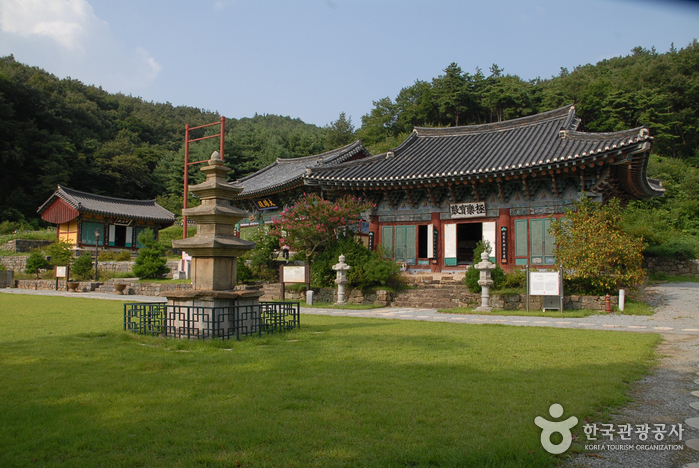
The traditional temple Biamsa is said to have been founded by Doseon Guksa at the end of the Unified Silla period, but the exact history is unknown. The national treasures, including the Gye-yu Inscription Amitabha Buddha Stele and the cultural assets such as the Gi-chuk Inscription Amitabha Buddha Stele and Maitreya Bodhisattva Ban'gasa Statue discovered at Biamsa, are kept at the National Cheongju Museum. The closed roof inside Biamsa’s Geungnakbojeon Hall, restored in 1657, has been newly designated as a treasure due to its elaborate and splendid craftsmanship. Half of the cultural heritage excavated in Sejong City reportedly comes from Biamsa, making it a representative historical and cultural heritage site of Sejong City. The 860-year-old zelkova tree at Biamsa is another attraction; in olden times when farming was fundamental, villagers predicted the year's harvest by observing how the leaves sprouted on the tree in early spring. If leaves sprouted from the bottom up, it was believed to be a bad harvest, and if from the top down, a good one. The inscription in front of the tree reads “Not a single person has come by.” After parking at Biamsa parking lot, rather than going straight up to the temple, follow the stairs behind the restroom up the mountain a bit to view Biamsa at a glance. Surrounded by forest and with few visitors, it allows one to fully experience the charm of an ancient mountain temple.
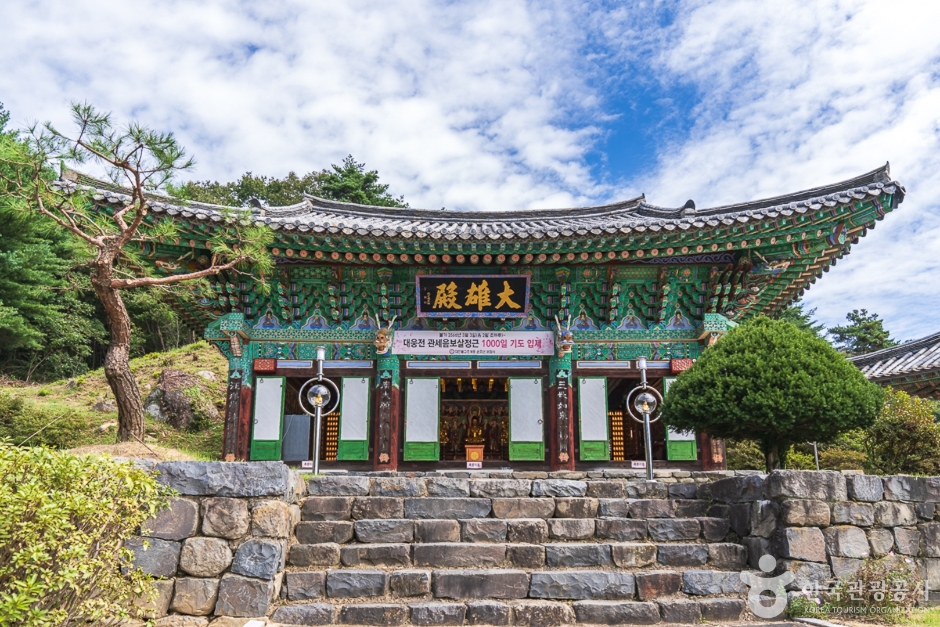
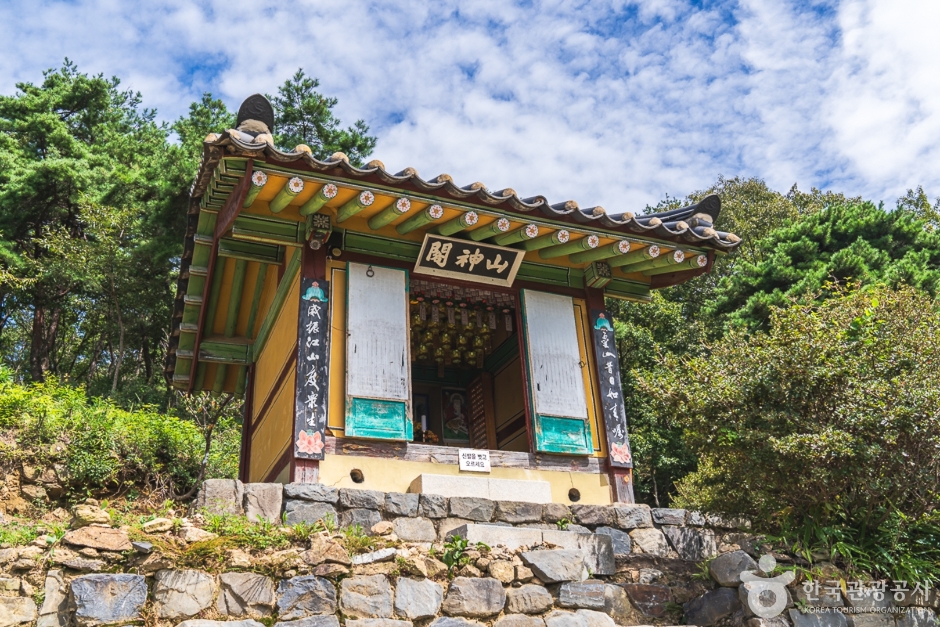
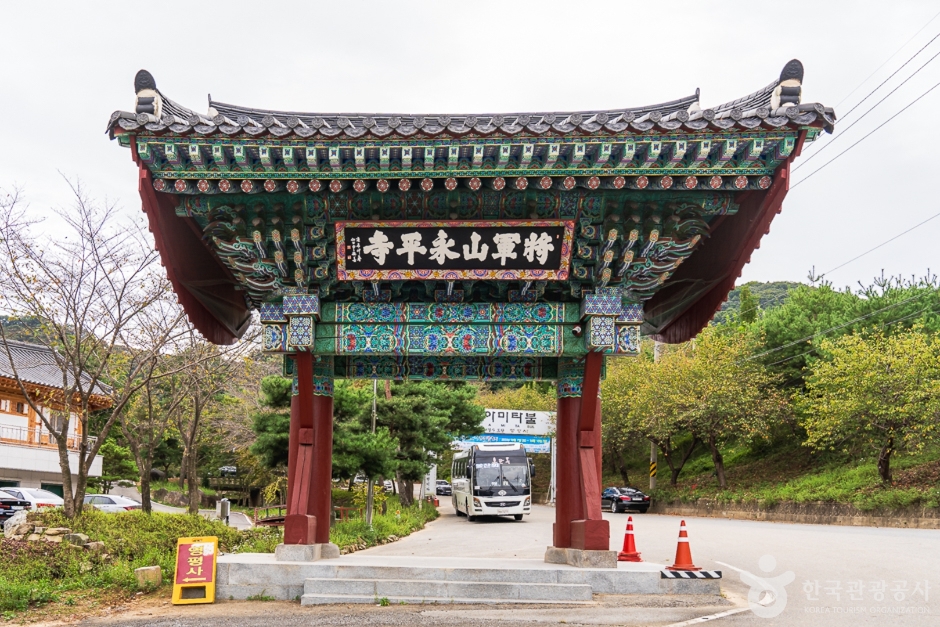
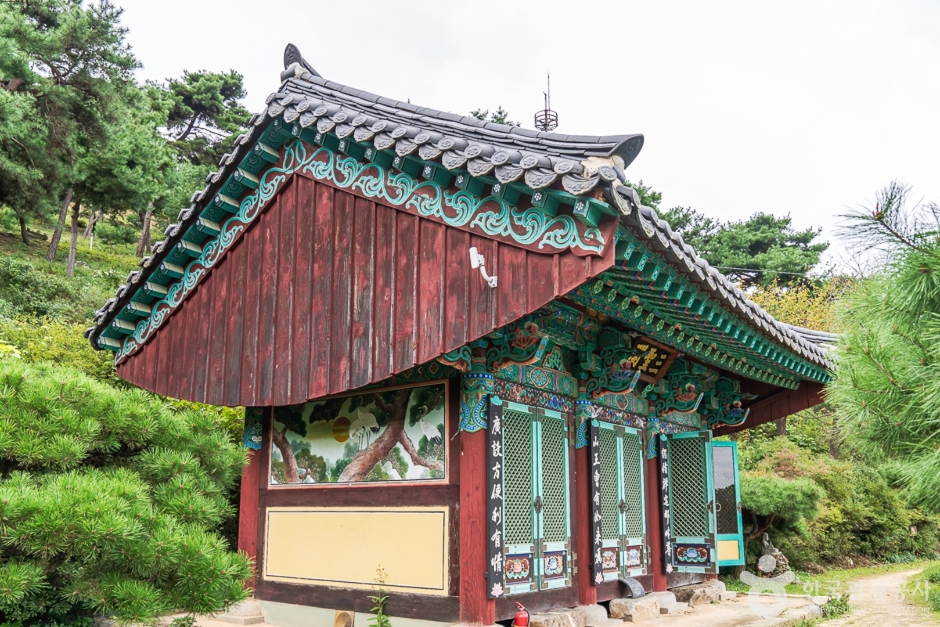
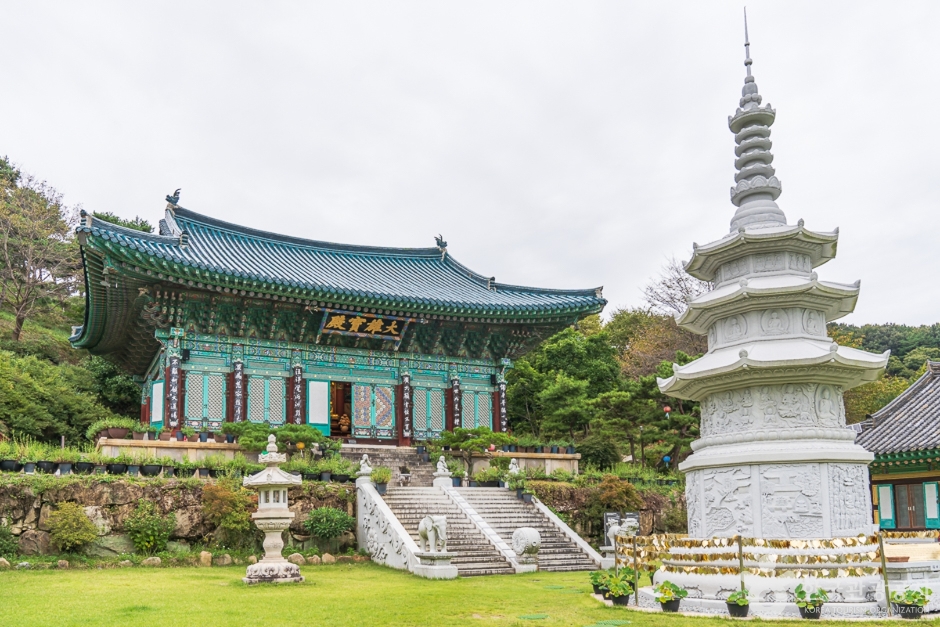
Yeongpyeongsa Temple is a traditional Korean temple located in Janggun-myeon, Sejong City, and is a branch temple of Magoksa Temple in the Jogye Order of Korean Buddhism's 6th district. It features traditional buildings and three cave hermitages. The founding monk, Hwanseong Geunsa, named the temple Yeongpyeongsa with a vow that not only the residents of this temple but also those who visit briefly, hear its name, or simply think of it would attain immortal happiness, and that all creatures living here, including small animals and even birds flying overhead, would find peace. Yeongpyeongsa is also famous for its double cherry blossoms, and in autumn, the temple grounds and surrounding mountains are covered with clusters of white Gujeolcho flowers, creating a splendid view. The Janggun Mountain Gujeolcho Flower Festival held every October has become a nationally recognized festival. The temple operates various types of temple stays, including day, experiential, and rest-oriented programs, and sometimes offers special programs linked to traditional cultural events such as the Nakwhanori (falling flower play) festival.
Sign up to feature your channel.
(As a member, you can add your Instagram, YouTube, and blog links in My Page, and we’ll show them with every comment you write.)
““Stayed near Hongdae and did a night café tour. Perfect city views and vibes.””
Guest comments do not display social media links or profile cards.
Share a short tip about this place.
Or leave a quick comment as a guest.
Drag & drop or click to add images (up to 6)
No reviews yet. Be the first to share your experience!