Woljeonggyo Bridge, a bridge from the Unified Silla period, was lost during the Joseon Dynasty but was restored through over 10 years of research and verification, with full restoration completed in April 2018. According to the Samguk Sagi, it was built in the 19th year of Gyeongdeok of Unified Silla (760) and served to connect Wolseong and Namsan in Gyeongju. During restoration design data collection and excavations from November 26, 1984, to September 8, 1986, the existence of a wooden bridge was confirmed for the first time. Subsequently, construction from 2008 to 2013 restored the bridge to a length of 66.15m, width of 13m, and height of 6m. From April 2016, two gate pavilions were constructed at both ends of the bridge and were completed in April 2018. The second floor of the pavilions houses an exhibition hall with video materials of the restoration process and artifacts excavated. The bridge’s appearance can be fully appreciated during the day, while at night Woljeonggyo offers a different charm, making it a popular site for Gyeongju night views. From the stepping stones set in front of Woljeonggyo, you can enjoy a gentle view of the bridge shimmering over the river.
경주 인왕동 사지는 인용사의 터로 추정된다. 『삼국유사』에 등장하는 인용사는 태종 무열왕의 둘째 아들인 김인문(629~694)의 안녕을 비는 절이다. 기록에 따르면 고구려 멸망 이후 당나라는 신라까지 정벌하려 하면서 당에 머물고 있던 김인문을 감옥에 가두었다. 신라 사람들은 그의 귀국을 기원하며 관음도량을 열었으나, 효소왕 3년(694)에 김인문이 귀국하던 중에 죽자 그의 극락왕생을 빌며 미타도량으로 바꾸었다. 인용사는 신라에서 승려나 왕이 아닌 개인을 위해 세운 최초의 사찰로서 당시 신앙의 형태를 보여준다.
2002년~2011년까지 국립경주문화재연구소가 4차례에 걸쳐 발굴 조사하였다. 신라의 전형적인 쌍탑식 가람배치로, 유례가 드문 亞자형 건물 터를 비롯하여 탑지, 금당지, 강당지, 회랑지, 연지와 우물 등이 확인되었다.
Gyeongju Jaemaejeong is a well that belonged to General Kim Yusin's house during the Silla period. It was constructed by stacking granite stones like bricks, and this area is presumed to have been the site of the general’s house. It is said that when General Kim Yusin returned from the battlefield after a long time and then went back to war, he passed in front of his house without seeing his family, had water drawn from the well, drank it on his horse, and said, "The taste of my home water remains the same as before," before leaving. In 1993, an excavation was conducted covering an area of 70 meters around Jaemaejeong. The well is 5.7 meters deep, the widest part is 1.8 meters, and the diameter of the bottom is 1.2 meters, made with brick-like dressed stones. Next to the well is a stone pavilion containing a monument inscribed by I Man-un in the 9th year of King Gojong of Joseon (1872).
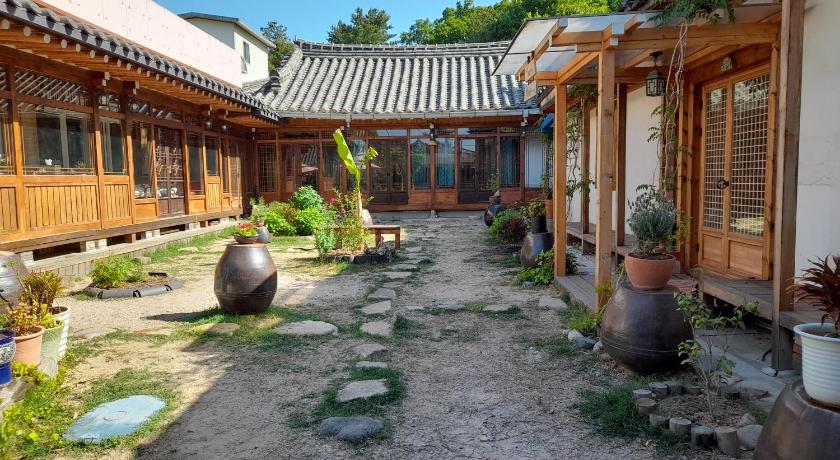
Gyeongju Gyocheon Village is the site of the 'Gukhak,' the first national university of Silla, established in the 2nd year of King Sinmun of Silla (682). This educational institution evolved over time, becoming the Hyanghak in the Goryeo period and later the Hyanggyo in the Joseon period. The village's names such as 'Gyodong,' 'Gyocheon,' and 'Gyori' all originate from the presence of the Hyanggyo. Around Gyocheon Village, numerous stories from the Samguk Yusa are hidden throughout the area. These include Gyerim, where Kim Al-ji was born; the site of Muncheon Bridge (蚊川橋) linking the love of Monk Wonhyo and Princess Yoseok; Jaemaejeong, where Kim Yushin lived; Woljeonggyo Bridge and tales of Monk Chungdam and Dohwa-nyeo; King Jinji's love stories; and Cheomseongdae created by Queen Seondeok. Gyocheon Village retains many traditional Hanok houses and the Hyanggyo centered around the Choi family mansion. Nearby valuable Silla heritage sites such as Wolseong, Woljeonggyo, Cheomseongdae, Gyerim, and ancient tombs make this a special place where Silla and Joseon culture coexist. The village has been newly restored and developed to preserve the original cultural heritage while serving as a tourist destination where visitors can enjoy the sites. The restoration of Woljeonggyo Bridge, the largest wooden bridge in Korea, allows visitors to experience the grandeur of traditional wooden architecture. At night, the bridge is illuminated with colorful lights, creating a popular nighttime sightseeing course for many tourists.
Sungmundae means to honor learning and was a government office during the Silla period responsible for storing and managing royal books and overseeing education for the Eastern Palace. Gyeongju City and the Cultural Heritage Administration explained that the name Sungmundae was given to the Wolsong excavation operation facility to widely promote and inherit the brilliant thousand-year history of Silla. It is expected to serve as an exhibition hall for artifacts unearthed from the Silla royal palace and to showcase research achievements from the excavation process.
This is the ancestral home of the Gyeongju Choi family, located on the site traditionally said to be where Silla's 'Yoseokgung' once stood. The family has lived here for nine generations, and although the house is said to have been built around 1700, the exact date is unknown. The building consists of a sarangchae (men's quarters), anchae (main quarters), and daemoonchae (main gate building), with the daemoonchae containing small rooms and a large storage. The sarangchae was opposite the inner courtyard but burned down in November 1970 along with the detached building, and only the site remains. The anchae behind the sarangchae site is shaped like an open 'ㅁ', but the main building has a 'ㄷ' shaped floor plan, harmonizing with a 'ㄱ' shaped sarangchae and a '一' shaped middle gate building. There is also a separate family shrine (gamyoh) northwest of the anchae, with a straight path leading south that is notable. A flower garden behind the anchae adds beauty to the composition, and it is highly regarded as an important cultural resource for preserving the typical form of a Joseon Dynasty yangban residence. The designation name was originally Gyeongju Choi Sik House (慶州崔植氏家屋), but since the Gyeongju Choi family lived here for generations and the house is widely known as the 'Gyodong Choi Buja House,' the name was changed to 'Gyeongju Gyodong Choi Family Old House' on January 29, 2007. (Source: Cultural Heritage Administration National Cultural Heritage Portal)