Located in Tap-dong, Gyeongju-si, this site consists of four mounded tombs and one circular tomb. It was designated a historic site on August 27, 1969. The internal structure is unknown, but the tombs’ external appearance is similar to other Three Kingdoms period Silla tombs in Gyeongju, round mounded tombs made by piling earth. Tomb No. 1 is the largest, with a height of 10m; Tomb No. 2 is gourd-shaped and has two burial mounds for two people. Such large circular mounded tombs appeared in Silla after the 4th century and are not from the era of Park Hyeokgeose. According to the Samguk Sagi, it is the burial site of Park Hyeokgeose, the founder of Silla, his queen Alyeongbuin, and three early Silla kings of the Park clan: the 2nd King Namhae, the 3rd King Yuri, and the 5th King Pasa. The Samguk Yusa records that after Park Hyeokgeose died, his body scattered into five parts seven days later, and his queen died soon after; people tried to bury them together, but a large snake interfered, so the five parts were buried separately. This gave rise to the names Oreung (Five Tombs) or Saryeong (Snake Tomb). To the east of the Oreung is Sungdeokjeon, which houses the memorial tablet of the founder king, and behind it is Alyeongjeong, preserved as related to Queen Alyeongbuin’s birth.
The Five Royal Tombs (called Oreung in Korean) have been officially designated Historic Site No. 172 and are the final resting places of four kings of the Park clan—King Park Hyeokgeose (founder of the Silla Kingdom), King Namhae, King Yuri, and King Jabi—and one queen (Queen Aryeong, wife of King Park Hyeokgeose).
To the east of the royal tombs lies Sungdeokjeon Shrine, which holds the ancestral tablet of King Park Hyeokgeose. Behind the shrine is the Aryeongjeong Well, said to be the birthplace of Queen Aryeong.
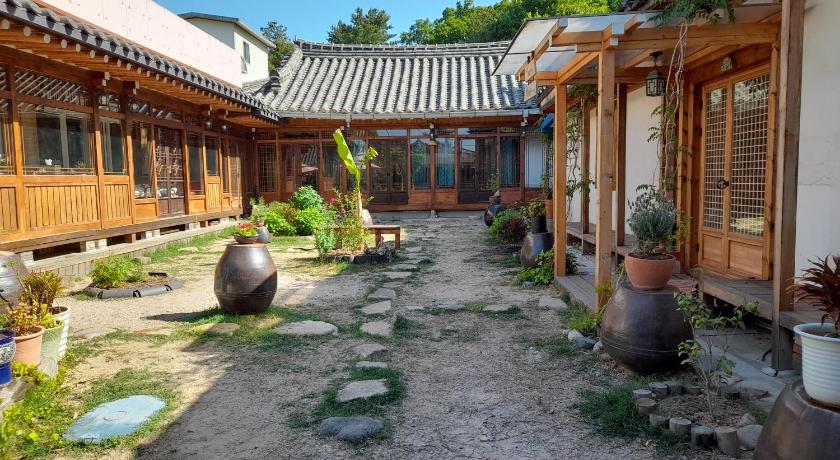
Kkotmaeul Gyeongju Korean Medicine Hospital is a health tourism destination combining two modern concerns: health and travel. Situated on a spacious 3,404.97m² (1,030 pyeong) site, it is equipped with various medical devices related to health management. The hospital environment and facilities, made up of traditional Hanok-style buildings, harmonize well with Gyeongju as a tourist city. Widely known for being selected as the Republic of Korea's first designated hospital, Kkotmaeul Gyeongju Korean Medicine Hospital serves as a driving force behind the government's 'Health Tour to Korea' policy, with all staff dedicated to diligently implementing programs. Hanbang Internal Medicine: the most basic department for diagnosis and treatment in Korean medicine. Hanbang Gynecology: subdivided into infertility clinic, women's disease clinic, adolescence, unmarried women clinic, prenatal clinic, postnatal care clinic, and menopause clinic to address women's physiological characteristics by integrating traditional diagnostic methods with modern medical diagnostics for more objective and accurate treatment. Acupuncture and Moxibustion Department: a place where all treatments using the essence of Korean medicine, acupuncture (針灸) and cupping therapy, are available.
Kkotmaeul Gyeongju Korean Medicine Hospital is a health tour destination combining health and tourism, which can be considered a key topic for modern people. It is equipped with various medical device facilities related to health management on a spacious site of 1,030 pyeong, and the hospital environment and facilities, consisting of traditional hanok, harmonize well with the tourist city of Gyeongju.
As widely known, Kkotmaeul Gyeongju Korean Medicine Hospital has played a leading role in the government's "Health Tour to Korea" policy, and being selected as the first designated hospital in Korea, all staff strive earnestly to carry out the programs.
* Korean Medicine Internal Medicine: The most basic department for diagnosis and treatment in Korean medicine.
* Korean Medicine Gynecology: Subdivided into infertility clinic, female diseases clinic, puberty, unmarried women clinic, prenatal clinic, postpartum care clinic, and menopause clinic according to women's physiological characteristics. Traditional diagnostic methods are combined with modern medical diagnostic methods for more objective and accurate understanding and treatment.
* Acupuncture and Moxibustion Department: A place where all treatments using acupuncture (鍼灸) and cupping, which are considered the essence of Korean medicine, are available.
* Kkotmaeul Clinic: Equipped with equipment such as X-ray, gastrointestinal fluoroscopy, infrared thermography, osteoporosis test, clinical pathology tests, and ultrasound. Additionally, programs to manage various adult diseases and vascular laser treatment for obese patients are notable.
Woljeonggyo Bridge, a bridge from the Unified Silla period, was lost during the Joseon Dynasty but was restored through over 10 years of research and verification, with full restoration completed in April 2018. According to the Samguk Sagi, it was built in the 19th year of Gyeongdeok of Unified Silla (760) and served to connect Wolseong and Namsan in Gyeongju. During restoration design data collection and excavations from November 26, 1984, to September 8, 1986, the existence of a wooden bridge was confirmed for the first time. Subsequently, construction from 2008 to 2013 restored the bridge to a length of 66.15m, width of 13m, and height of 6m. From April 2016, two gate pavilions were constructed at both ends of the bridge and were completed in April 2018. The second floor of the pavilions houses an exhibition hall with video materials of the restoration process and artifacts excavated. The bridge’s appearance can be fully appreciated during the day, while at night Woljeonggyo offers a different charm, making it a popular site for Gyeongju night views. From the stepping stones set in front of Woljeonggyo, you can enjoy a gentle view of the bridge shimmering over the river.
경주 인왕동 사지는 인용사의 터로 추정된다. 『삼국유사』에 등장하는 인용사는 태종 무열왕의 둘째 아들인 김인문(629~694)의 안녕을 비는 절이다. 기록에 따르면 고구려 멸망 이후 당나라는 신라까지 정벌하려 하면서 당에 머물고 있던 김인문을 감옥에 가두었다. 신라 사람들은 그의 귀국을 기원하며 관음도량을 열었으나, 효소왕 3년(694)에 김인문이 귀국하던 중에 죽자 그의 극락왕생을 빌며 미타도량으로 바꾸었다. 인용사는 신라에서 승려나 왕이 아닌 개인을 위해 세운 최초의 사찰로서 당시 신앙의 형태를 보여준다.
2002년~2011년까지 국립경주문화재연구소가 4차례에 걸쳐 발굴 조사하였다. 신라의 전형적인 쌍탑식 가람배치로, 유례가 드문 亞자형 건물 터를 비롯하여 탑지, 금당지, 강당지, 회랑지, 연지와 우물 등이 확인되었다.