Gyeongju Night Tour Shining with Lights in Gyeongsangbuk-do Gyeongju · schedule Other · distance 11.1km · 5 stops · highlights Gyeongju Bomun Tourist Co…

Gyeongju, the city that first comes to mind when thinking of school trips, is a noble city where the culture and history of Silla lie dormant. However, Gyeongju does not sleep at night. The nighttime views of Cheomseongdae or Gyerim, which are more beautiful at night, will become unforgettable memories.
This course is a sample one-day itinerary. Save it as-is or expand it into an AI itinerary.
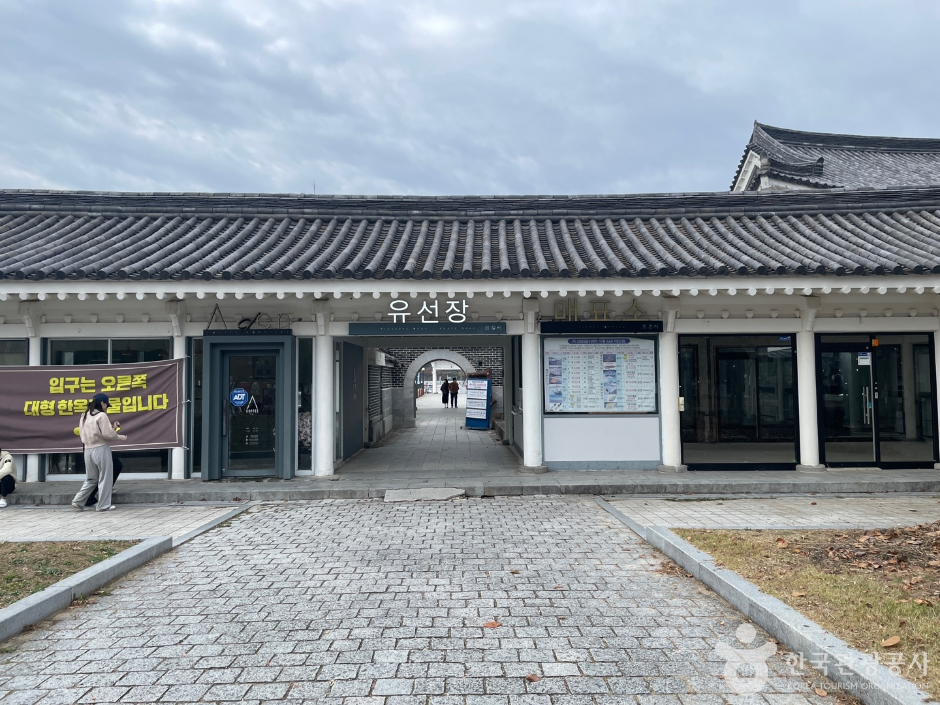
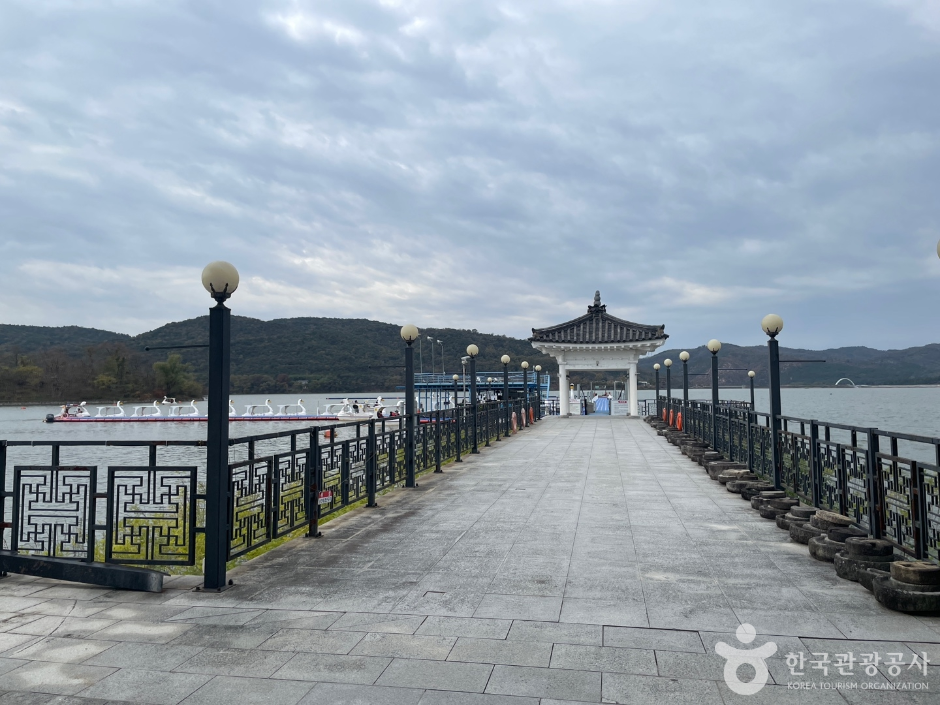
The Gyeongju Bomun Complex is situated about 10 km east of Gyeongju city center on the site of the old Myeonghwal Mountain fortress, developed around Bomun Lake. The entire area is designated as a hot spring zone and a tourism special district, with fully established infrastructure such as roads, electricity, communications, and water supply and drainage. It is evolving into an international-level integrated tourist resort with plans to develop a convention city and connect with the Gampo tourist complex. Covering a total land area of 8,000,036 m² (2.42 million pyeong), Gyeongju Bomun Complex offers top-class international hotels, family-oriented condominiums, golf courses, various water facilities, walking trails, Bomun Lake, and a historic fountain, making it Gyeongju's beloved multi-purpose tourist and leisure site. The Gyeongju area is especially abundant in cherry trees, not limited to a specific location but throughout the entire city, which distinguishes it from other regions. During the cherry blossom season in April, wherever you go is filled with cherry blossoms, with the areas around Bomun Lake and Bulguksa Park standing out spectacularly. On windy days, petals fall like snowflakes, creating a magical scenery.
Gyeongju Donggung Palace and Wolji Pond is the site of a Silla royal palace's auxiliary palace. Used as the eastern palace where princes resided along with other annex buildings, it was a place for banquets during national celebrations or when welcoming important guests. After the fall of Silla, wild geese and ducks flew here, leading to the former name Anapji, derived from 'geese an' and 'duck ap.' In the 1980s, earthenware shards with the inscription 'Wolji' — meaning 'pond where the moon shines' — were unearthed. Historical records state that in the 14th year of King Munmu’s reign (674), a large pond was dug with three islands in the center and twelve mountain peaks built to the north and east of the pond. Beautiful flowers and trees were planted, and rare birds and animals were raised. This confirms that the site was indeed Wolji in Silla times, and the name was changed in 2011 to Gyeongju Donggung Palace and Wolji. Around the pond of Imhaejeon Hall, which suffered damage such as railways being built during the Japanese occupation, 26 building sites including corridors were identified in a 1975 excavation combined with dredging. Among them, three sites believed to be Silla-era buildings, including one presumed to be Imhaejeon in 1980, and Wolji were restored to the present state. Many relics were excavated here; among them, bricks engraved with a peony pattern bear the inscription 'Joro 2nd year (680),' supporting that Imhaejeon was built during King Munmu’s reign. Numerous bowls and plates were also found, believed to have been used in daily life, unlike those unearthed from Silla tombs. Though Imhaejeon was part of the auxiliary palace, its importance was significant, and Wolji is recognized as a representative relic of the original Silla palace site. The pond’s edges are curved so that the entire pond cannot be seen from any single viewpoint, an ingenious design allowing a small pond to feel like a vast ocean, showcasing the wisdom of the Silla people. The eastern palace had 27 buildings including Imhaejeon, with only three restored today. The brilliant lighting reflecting the restored buildings and Wolji’s surface makes it one of Gyeongju’s premier nightscape spots.
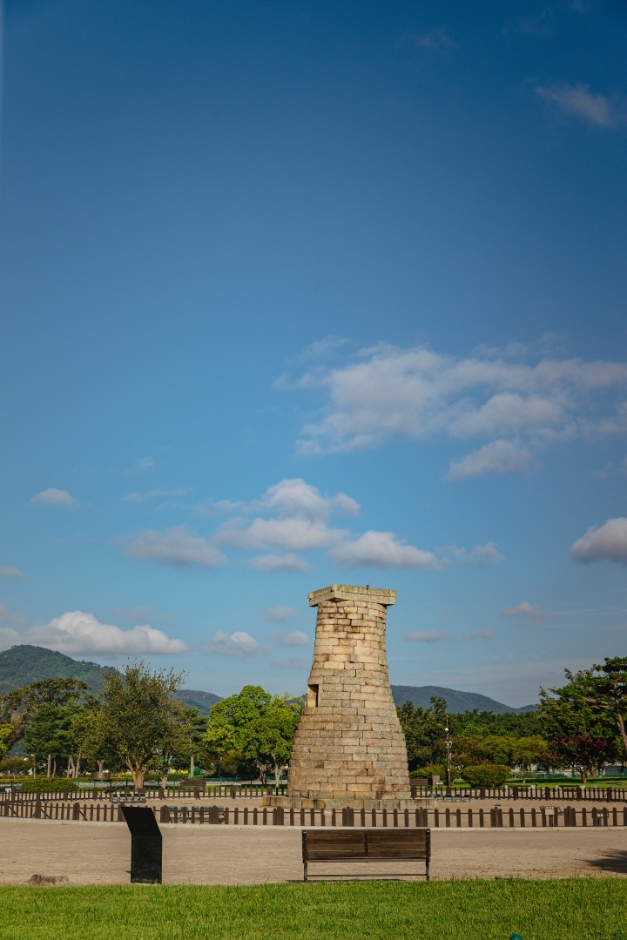
Cheomseongdae is estimated to have been built during the reign of Queen Seondeok, the 27th ruler of Silla, and is one of the landmarks symbolizing Gyeongju. It stands about 9 meters tall and features a base foundation supporting a cylindrical body shaped like a bottle, topped with a well-shaped (井) peak. The cylindrical section is built with 27 layers of fan-shaped stones. A window facing southeast has a lower part filled with rough stones and an upper part hollowed out up to the peak. The eastern half of the peak, sealed with a board, has long stones interlocking in the shape of the well (井) character, with ends protruding outside. Similar features appear on the 19th-20th and 25th-26th layers, suggesting the use of internal ladders. Historical records state, "People are meant to climb through the center," indicating that ladders were placed outside to enter through the window and climb up for astronomical observation. Each stone of Cheomseongdae holds symbolic meaning: its round upper and square lower shapes represent heaven and earth. The approximately 365 stones symbolize the days of the year; the 27 stone layers refer to Queen Seondeok, the 27th ruler; including the peak yields 29 or 30 layers, symbolizing the lunar month's days. The 12 layers above and below the central window represent the 12 months and 24 solar terms of the year. Cheomseongdae was used to calculate celestial movements to determine farming seasons and also to predict the nation's fortune. ◎ Travel information to experience the charm of Korean Wave - The drama features Cheomseongdae, a landmark representing Gyeongju and the world's oldest astronomical observatory, where characters Bogyum and Jia, linked by a special past, crossed paths. Besides its high historical value, the site attracts many visitors for seasonal flowers and plants, ideal for outings.
This forest is located between Cheomseongdae and Wolseong, and it is a historic place with a legend that Alji, the progenitor of the Gyeongju Kim clan, was born here. During the reign of King Talhae of Silla, Hoegong heard a rooster crowing in this forest and found a golden box glowing on a tree branch. He reported this to the king, who personally came and lowered the box. When the lid was opened, a baby boy appeared, so he was named Kim Alji and the forest, originally called Sirim or Gurim, was renamed Gyerim. Gyerim was also used as a national name for Silla. The spacious forest is densely filled with old trees such as zelkovas, and a small stream flows from north to west. Although the king made Alji crown prince, the throne later passed to King Pasa of the Park clan, and Alji did not become king. From King Naemul's generation, the Kim clan became the royal family of Silla. Within the area stands a monument erected in 1803 during King Sunjo's reign that records Kim Alji's birth. As a sacred forest near the Silla royal palace, it is revered as the birthplace of the Silla Kim royal family, and even now, royal paulownias and zelkovas shade the sky. Along the trail connecting Daereungwon, Gyerim, and Banwolseong, yellow rapeseed flowers bloom in spring, adding to the charm of the historic site.
Gyeongju Gyocheon Village is the site of the 'Gukhak,' the first national university of Silla, established in the 2nd year of King Sinmun of Silla (682). This educational institution evolved over time, becoming the Hyanghak in the Goryeo period and later the Hyanggyo in the Joseon period. The village's names such as 'Gyodong,' 'Gyocheon,' and 'Gyori' all originate from the presence of the Hyanggyo. Around Gyocheon Village, numerous stories from the Samguk Yusa are hidden throughout the area. These include Gyerim, where Kim Al-ji was born; the site of Muncheon Bridge (蚊川橋) linking the love of Monk Wonhyo and Princess Yoseok; Jaemaejeong, where Kim Yushin lived; Woljeonggyo Bridge and tales of Monk Chungdam and Dohwa-nyeo; King Jinji's love stories; and Cheomseongdae created by Queen Seondeok. Gyocheon Village retains many traditional Hanok houses and the Hyanggyo centered around the Choi family mansion. Nearby valuable Silla heritage sites such as Wolseong, Woljeonggyo, Cheomseongdae, Gyerim, and ancient tombs make this a special place where Silla and Joseon culture coexist. The village has been newly restored and developed to preserve the original cultural heritage while serving as a tourist destination where visitors can enjoy the sites. The restoration of Woljeonggyo Bridge, the largest wooden bridge in Korea, allows visitors to experience the grandeur of traditional wooden architecture. At night, the bridge is illuminated with colorful lights, creating a popular nighttime sightseeing course for many tourists.
Good places to stop and rest after the course

Booking and payment continue on a partner site.
Check rooms & price
Booking and payment continue on a partner site.
Check rooms & price
Booking and payment continue on a partner site.
Check rooms & price
Booking and payment continue on a partner site.
Check rooms & priceSign up to feature your channel.
(As a member, you can add your Instagram, YouTube, and blog links in My Page, and we’ll show them with every comment you write.)
““Stayed near Hongdae and did a night café tour. Perfect city views and vibes.””
Guest comments do not display social media links or profile cards.
Share a short tip about this place.
Or leave a quick comment as a guest.
Photo attachments are available after login.
No reviews yet. Be the first to share your experience!