
Cozy spring trip filled with yellow dogwood blossoms in Jeollanam-do Gurye County · schedule Other · distance 59.7km · 3 stops · highlights Gurye Sansuy…

Gurye is the hometown that preserves Korea's first Sansuyu cultivation site. The path leading from Gyecheok Village, where a 1,000-year-old Sansuyu mother tree remains, to Hyeoncheon Village and Sangwi Village offers the most beautiful travel experience at the threshold of spring. The yellow Sansuyu flowers and the heartwarming village stone wall scenery are all unforgettable sights.
This course is a sample one-day itinerary. Save it as-is or expand it into an AI itinerary.
Sansuyu Village in Wianwol-gye, Sandong-myeon, Gurye-gun, is filled with yellow Sansuyu flowers every March. This area produces over 70% of the country's Sansuyu, and the sunlight and exposure conditions in September create the nation's best-quality Sansuyu. As a mountain ecological village, Sansuyu Village hosts a Sansuyu Festival in spring, Surak Waterfall in summer, a Sansuyu Berry Festival in autumn, and offers the best relaxation with the winter scenery of Manbokdae, all providing travel therapy. It is located adjacent to section 7 of the Jirisan Dullegil, with mountain trails from Sangwi to Myobongchi and from Dangol to Seongsamjae, plus rest at the Jirisan hot springs, offering a well-being trip combining health and relaxation.
Cheoneunsa Temple is located 9 km north of Gurye-eup, at the entrance of the Jirisan loop road. It was established in 828 (the 3rd year of King Heungdeok of Silla) by Monk Deokun and the Indian monk ‘Sri’, originally called Hwacheonyangsa. Together with Hwaeomsa, it is counted among the three great temples of Jirisan. The temple burned during the Japanese invasions of Korea but was rebuilt in 1610 (the 2nd year of King Gwanghae of Joseon) by Monk Hyejeong. It burned again in 1676 (the 2nd year of King Sukjong), was rebuilt the following year, and then was damaged by fire in 1773 (the 49th year of King Yeongjo). Monk Hyeam rebuilt it in 1775 (the 51st year of Yeongjo), and it has remained since then. Originally named Gamrosa for its clear, cold spring water said to clear the mind, the temple once housed over a thousand monks and was promoted as the best southern temple during King Chungnyeol of Goryeo’s reign. After the Japanese invasions, when the temple was rebuilt, a large viper often appeared by the spring and was killed, after which the spring dried up. In 1677 (the 4th year of King Sukjong), the temple was renamed Cheoneunsa, meaning “Hidden Spring.” Following the renaming, mysterious fires and disasters occurred frequently, which locals attributed to killing the viper guarding the temple’s spirit. When calligrapher Lee Gwang-sa, one of Joseon’s four top calligraphers, wrote a flowing-script signboard for Cheoneunsa, fires ceased. Even today, in the quiet at dawn, the sound of flowing water is said to be faintly heard from the temple gate’s signboard.
지리산은 우리나라 야생화의 30%인 1,323종을 보유한 야생화의 보고이다. 구례군 농업기술센터는 1988년부터 용담꽃을 시작으로 분화재배 기술, 노고단 향수, 구례소리 전통향, 캐릭터 상품 개발 등 야생화 관련 연구를 지속해 온 야생화의 메카로서 전국 유일의 야생화 압화 전시관, 잠자리 생태 전시관, 농경유물 전시관, 전통 작물 전시관, 야생화 자연학습원, 야생화 재배학습원 등으로 구성되어 있다.
Good places to stop and rest after the course

Booking and payment continue on a partner site.
Check rooms & price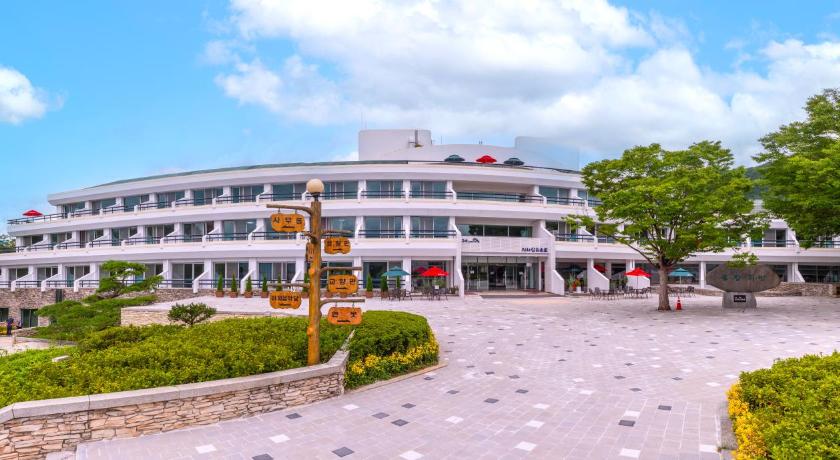
Booking and payment continue on a partner site.
Check rooms & priceSign up to feature your channel.
(As a member, you can add your Instagram, YouTube, and blog links in My Page, and we’ll show them with every comment you write.)
““Stayed near Hongdae and did a night café tour. Perfect city views and vibes.””
Guest comments do not display social media links or profile cards.
Share a short tip about this place.
Or leave a quick comment as a guest.
Photo attachments are available after login.
No reviews yet. Be the first to share your experience!


