The Bear Maiden Legend Flows Downriver in Chungcheongnam-do Gongju City · schedule Other · distance 54.5km · 6 stops · highlights 마곡사, Gongsanseong Fort…

Gomanaru was the gateway to the princess, a ferry crossing where boats traveled along the Geum River from the West Sea during the Baekje period. It is also the place where the legend of the Bear Woman, who longed for the human world, was born. Today, the Bear Shrine remains at Gomanaru. If you have enough time, explore the main tourist attractions of the princess that started from Gomanaru.
This course is a sample one-day itinerary. Save it as-is or expand it into an AI itinerary.
“마곡사 사적입안”의 기록에 따르면, 640년(신라 선덕여왕 9)에 자장이 창건하였으며, 고려 명종 때 1172년 보조국사가 중수하고, 범일이 재건하였으며, 다시 도선국사가 중수하고, 순각이 보수하였다. 조선시대에도 세조가 이 절에 들려 ‘영산전’이라고 사액을 한 일이 있다. 창건 당시에는 30여 칸의 대사찰이었는데, 현재는 대웅보전(보물 801)·대광보전(大光寶殿:보물 802)·영산전(보물 800)·사천왕문·해탈문(解脫門) 등이 있을 뿐이다. 이 밖에 사보로는 5층 석탑(보물 799)·범종(梵鐘:지방유형문화재 62), 괘불(掛佛) 1폭, 목패(木牌), 세조가 타던 연(輦), 청동 향로(지방유형문화재 20)가 있고, 《감지금니묘볍연화경(紺紙金泥妙法蓮華經)》 제6권(보물 270) 및 《감지은니묘법연화경》제1권(보물 269)이 있다.
Gongsanseong Fortress is a representative fortress of the Baekje period and was the mountain fortress protecting Gongju when it was the capital of Baekje. It served as the Baekje capital until the 16th year of King Seong of Baekje (538) when the capital was moved to Buyeo, and afterward was a regional administrative center until the Joseon Dynasty, making it a historically significant site. It is a valley-enclosed fortification (pogokhyeong 산성) located on a hill by the Geumgang River, originally built as an earthen fortress, later reconstructed as a stone fortress in the Joseon period. The exact construction date is unknown. In Baekje, it was called Ungjinseong, during Goryeo Gongjusanseong or Gongsanseong, and after King Injo fled there during Yi Gwal's Rebellion (1623) in Joseon, it was called Ssangsusanseong. After Baekje's fall, King Uija stayed briefly, and it was a base for Baekje restoration movements. During Unified Silla, Kim Heon-chang's Rebellion (822) took place here. The fortress is roughly rectangular, about 800m east-west and 400m north-south. Gate sites are confirmed on all sides; the south gate Jinnamru and north gate Gongbukru remain. The east and west gates only had sites remaining; in 993, Yeongdongru was restored at the east gate site and Geumseoru at the west gate site. Defensive facilities such as secret gates, citadels, ancient towers, watchtowers, and water gates remain. Inside are Ssangsujeong Pavilion, Yeongeunsa Temple, Yeonji Pond, Imryugak Site, and Manharu Site. Numerous relics including lotus-patterned roof tiles, Baekje roof tiles, pottery, and artifacts from Goryeo and Joseon periods have been excavated. Walking along the fortress wall offers panoramic views of Gongju city. During the Baekje Cultural Festival, a floating bridge connects from Gongsanseong to Geumgang Shingwan Park. At Geumseoru, one can witness the dignity of the Baekje Kingdom in the ‘Ungjin Fortress Water Gate Guard Duty Change Ceremony,’ and the night view at Geumgang Shingwan Park allows beautiful appreciation of Gongsanseong Fortress.
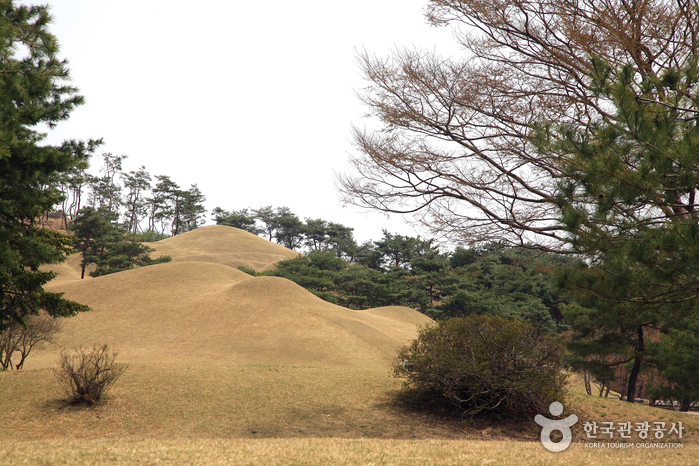
공주시 금성동과 웅진동에 연접한 옛 지명은 공주읍 송산리 宋山의 남쪽 경사면에 자리하고 있는 웅진시대(475~538) 백제의 왕과 왕족들의 무덤이다. 원래 17기의 무덤이 있었지만 현재는 무령왕릉을 포함하여 1~6호분까지 7기만 복원되어 있다. 이들 무덤은 만들어진 형태에 따라 굴식돌방무덤[橫穴式石室墳]과 벽돌무덤[塼築墳]의 두 종류로 구분된다.
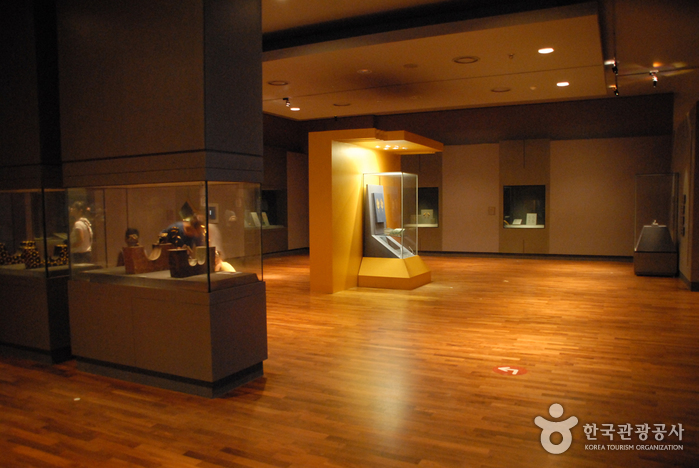
충청남도 공주시 웅진동에 있는 국립 박물관으로 공주를 비롯한 충청남도 지역에서 출토된 중요 유물을 보관·전시하고, 유적 발굴 조사와 해외 문화재 조사 등을 통한 학술 연구 활동을 수행하며, 지역민을 위한 다양한 문화 교육프로그램을 운영하는 평생 학습 기관으로서의 기능을 수행하기 위하여 건립되었다.
Gomanaru is a historic scenic site spread over the low hills west of the Tomb of King Muryeong, including the Geumgang River and Yeonmisan Mountain, and the riverside ferry area. It is the birthplace of the Gongju region and is associated with a legend involving a bear and humans. Gomanaru was the old name of Gongju; 'Goma (固麻)' is the old word for bear, written in hanja as 'Ungjin (熊津)'. During the reign of Silla's King Sinmun, it was called Ungcheonju (熊川州), and during King Gyeongdeok's reign, Ungju (熊州), changing to Gongju (公州) during the reign of Goryeo's Taejo in 940, which remains today. It was a transportation route when King Munju of Baekje moved the capital to Ungjin, a station for General So Jeongbang of the Silla-Tang allied forces to attack Baekje by ascending the Geumgang, and after Baekje's fall, the site of the Ungjin Governor's Office, making it the center of Baekje history and an international transportation hub. It was also a state sacrificial site from Baekje to the Joseon period, with remains of the Ungjindan (熊津壇) where sacrifices were offered to the water god of the Geumgang River, was a place of living for common people, and served as a water route, rich with the sorrows of the people, giving it great historical value. A beautiful and sad legend about a maiden bear and a woodcutter is told here; on the northern slope of Yeonmisan behind Gomanaru stands the Bear Cave overlooking Gomanaru, said to be where the legendary bear lived. The village built a bear shrine near the ferry to appease the bear's grudge and pray for village safety. Gomanaru not only holds great historical value as the center of Baekje history but also features a broad sandy beach along the Geumgang River and a pine forest of over 450 trees harmonizing with the river and Yeonmisan Mountain, creating a beautiful landscape of outstanding historical, cultural, and scenic value. (Source: National Heritage Administration)
Gyeryongsan Ceramic Art Village is located in Banpo-myeon, Gongju-si. It covers an area of about 5,000 pyeong and was established in 1993 as a community village by 18 ceramic artists in their 30s to early 40s who majored in ceramics at universities. The village aims to preserve and restore traditional iron-painted buncheong porcelain and develop into a ceramic cultural space where tradition and the future coexist. It is the first ceramic village in the country where residents moved in simultaneously. Since its establishment, 12 ceramic artists have been consistently active in producing works. It has become a famous spot on Gyeryongsan through events such as the Iron-Painted Buncheong Porcelain Festival and ceramic experience programs.
Good places to stop and rest after the course

Booking and payment continue on a partner site.
Check rooms & price
Booking and payment continue on a partner site.
Check rooms & priceSign up to feature your channel.
(As a member, you can add your Instagram, YouTube, and blog links in My Page, and we’ll show them with every comment you write.)
““Stayed near Hongdae and did a night café tour. Perfect city views and vibes.””
Guest comments do not display social media links or profile cards.
Share a short tip about this place.
Or leave a quick comment as a guest.
Photo attachments are available after login.
No reviews yet. Be the first to share your experience!

![Gongsanseong Fortress, Gongju [UNESCO World Heritage] 1](https://tong.visitkorea.or.kr/cms/resource/68/2678668_image2_1.jpg)
![Gongsanseong Fortress, Gongju [UNESCO World Heritage] 2](https://tong.visitkorea.or.kr/cms/resource/70/2678670_image2_1.jpg)
![Gongsanseong Fortress, Gongju [UNESCO World Heritage] 3](https://tong.visitkorea.or.kr/cms/resource/72/2678672_image2_1.jpg)
![Gongsanseong Fortress, Gongju [UNESCO World Heritage] 4](https://tong.visitkorea.or.kr/cms/resource/73/2678673_image2_1.jpg)