How delicious is grilled eel from the river estuary in Jeonbuk Special Self-Governing Province Gochang County · schedule Other · distance 7km · 4 stops…

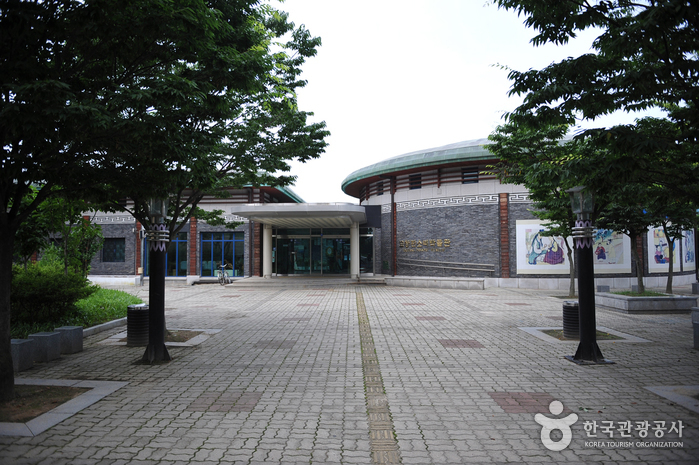
The Gochang Pansori Museum was established on the site of the old house of Dongni Shin Jae-hyo, a theorist, reviser, and patron of pansori, to commemorate many famous pansori singers such as Jin Chae-seon and Kim So-hee, and to inherit and develop the tradition of pansori.
This course is a sample one-day itinerary. Save it as-is or expand it into an AI itinerary.
고창판소리박물관은 판소리의 이론가이자 개작자, 후원가였던 동리 신재효 및 진채선, 김소희 등 다수의 명창을 기념하고 판소리 전통을 계승 발전시키기 위하여 동리 신재효 선생의 고택 자리에 설립되었다.
Sin Jae-hyo Old House was the home of Sin Jae-hyo (1812–1884), a theorist of pansori and the person who consolidated pansori. It is estimated to have been built in the first year of Cheoljong (1850) and is known to have been rebuilt by his son in Gwangmu 3 (1899). Originally a modest thatched-roof sarangchae (men's quarters), it was used as an annex of the Gochang police station before being designated a national intangible cultural heritage site, after which the state took over management and restored its original appearance. The building has a '一'-shaped floor plan with six bays at the front and two bays at the side, featuring a thatched roof. The interior comprises one kitchen, two rooms, one daecheong (main hall), and one integrated room. A half-bay wooden porch (toemaru) is installed along the front's five bays excluding the kitchen. The double-leaf folding door between the kitchen and the rooms and the absence of doors in the rooms on both sides of the daecheong are unique architectural features, making it historically significant as Sin Jae-hyo’s birthplace.
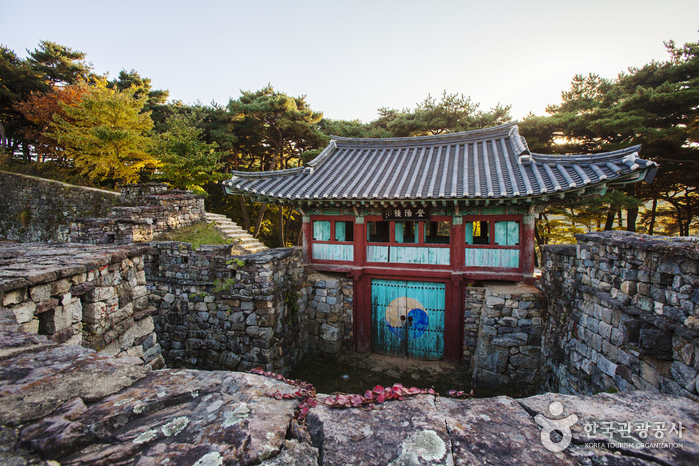
There are various theories about the construction date of Gochang Eupseong Fortress, but inscriptions found during repair of the government office building, historical documents, and characters engraved on fortress stones indicate construction was divided by section and shared among 19 counties and prefectures of Jeolla Left and Right provinces from the 32nd year of King Sejong of Joseon (1450) to the 1st year of Danjong (1453). Among the inscriptions are those of Mujang Simeon and Mujang Jong, and on the eastern gate bastion wall, the inscription "Gye-yu-so Chuk Gam Dong Song Ji Min (癸酉所築監董宋芝玟)" remains, which can be interpreted as showing that the fortress was built in Gye-yu year and that Mujang-hyeon participated in construction. Records about Gochang Eupseong first appear in Sinjeung Dongguk Yeoji Seungram (新增東國輿地勝覽) under Gochang Hyeon fortress section. Though published in the 25th year of King Jungjong (1530), the name "Sinjeung" only appears in the appendix, so the fortress construction date compresses to before the 17th year of King Seongjong (1484) based on the second revision by Kim Jong-jik and others mandated by the king. Mujang-hyeon was formed in the 17th year of King Taejong (1417) by merging Musong-hyeon and Jangsa-hyeon, so the Gye-yu year of construction must be after 1417, confirming Gochang Eupseong was built in 1453, a Gye-yu year. According to legend, stepping on stones of Gochang Eupseong while wearing a stone on your head grants longevity without illness and arrival at the Gate of Paradise after death, which leads to an annual fortress-walking event. The ritual is believed effective only during the leap month when gates to the afterlife open, with the leap month of March regarded as best. Especially significant are the dates of the 16th, 17th, and 20th days, believed to be when the gates open. Walking one lap cures leg ailments, two laps bring health and longevity, and three laps ensure ascension to paradise. Participants must carry a palm-sized stone on their heads and complete three laps, then leave the stones in designated areas. Emphasis on the leap March likely serves to firm the fortress after winter swelling, and carrying stones adds weight to strengthen the structure.
'Pungcheon eel' refers not to a place name but to locations where freshwater and seawater meet in rivers connected to the West Sea or South Sea, where tidal ranges are large. These places are often called Pungcheon (風川) because waves swirl and fierce winds arise. Gochang's 'Gaetbeol Pungcheon eel' is the most famous Pungcheon spot in Jeollado, where eels are raised in tidal flats meeting sea and freshwater without feeding. This results in flesh that is notably chewy compared to other eels. The plump and mild eel dipped in sweet and salty soy sauce has a taste that clings to the tongue, exemplifying true savory flavor.
Good places to stop and rest after the course

Booking and payment continue on a partner site.
Check rooms & priceSign up to feature your channel.
(As a member, you can add your Instagram, YouTube, and blog links in My Page, and we’ll show them with every comment you write.)
““Stayed near Hongdae and did a night café tour. Perfect city views and vibes.””
Guest comments do not display social media links or profile cards.
Share a short tip about this place.
Or leave a quick comment as a guest.
Photo attachments are available after login.
No reviews yet. Be the first to share your experience!