
Journey to the Bronze Age in Jeonbuk Special Self-Governing Province Gochang County · schedule Other · distance 11km · 4 stops · highlights Gochang Eups…

Gochang, along with Hwasun in Jeonnam and Ganghwa in Incheon, is a region where dolmen sites are registered as a World Cultural Heritage. Enjoy a time travel back to the Bronze Age at the Dolmen Museum, where you can closely examine the history and structure of dolmens along with the dolmen cluster of over 2,000 stones. Several walking trails are established around the dolmen cluster, making it an excellent walking course.
This course is a sample one-day itinerary. Save it as-is or expand it into an AI itinerary.
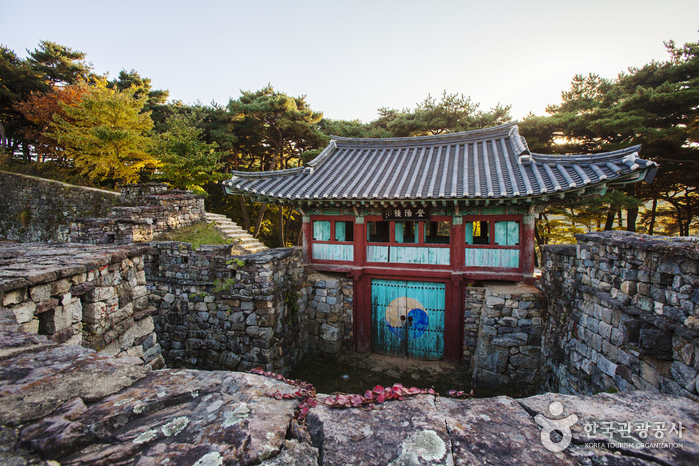
There are various theories about the construction date of Gochang Eupseong Fortress, but inscriptions found during repair of the government office building, historical documents, and characters engraved on fortress stones indicate construction was divided by section and shared among 19 counties and prefectures of Jeolla Left and Right provinces from the 32nd year of King Sejong of Joseon (1450) to the 1st year of Danjong (1453). Among the inscriptions are those of Mujang Simeon and Mujang Jong, and on the eastern gate bastion wall, the inscription "Gye-yu-so Chuk Gam Dong Song Ji Min (癸酉所築監董宋芝玟)" remains, which can be interpreted as showing that the fortress was built in Gye-yu year and that Mujang-hyeon participated in construction. Records about Gochang Eupseong first appear in Sinjeung Dongguk Yeoji Seungram (新增東國輿地勝覽) under Gochang Hyeon fortress section. Though published in the 25th year of King Jungjong (1530), the name "Sinjeung" only appears in the appendix, so the fortress construction date compresses to before the 17th year of King Seongjong (1484) based on the second revision by Kim Jong-jik and others mandated by the king. Mujang-hyeon was formed in the 17th year of King Taejong (1417) by merging Musong-hyeon and Jangsa-hyeon, so the Gye-yu year of construction must be after 1417, confirming Gochang Eupseong was built in 1453, a Gye-yu year. According to legend, stepping on stones of Gochang Eupseong while wearing a stone on your head grants longevity without illness and arrival at the Gate of Paradise after death, which leads to an annual fortress-walking event. The ritual is believed effective only during the leap month when gates to the afterlife open, with the leap month of March regarded as best. Especially significant are the dates of the 16th, 17th, and 20th days, believed to be when the gates open. Walking one lap cures leg ailments, two laps bring health and longevity, and three laps ensure ascension to paradise. Participants must carry a palm-sized stone on their heads and complete three laps, then leave the stones in designated areas. Emphasis on the leap March likely serves to firm the fortress after winter swelling, and carrying stones adds weight to strengthen the structure.
General Jeon Bong-jun, the central figure and leader of the Donghak Peasant Revolution, was born on December 3, 1855, in Dangchon Village, Jukrim-ri 63, Gochang-eup, where he lived until about age 13. At that time, there were a seodang (private village school), anchae (main quarters), and sarangchae (men's annex), all of which were destroyed during the Donghak Peasant Revolution. Due to his small stature, about five cheok tall, he was nicknamed Nokdu and became known as General Nokdu. The Donghak Peasant Revolution, led by General Jeon Bong-jun, was a national movement against exploitation and oppression by the feudal ruling class and a movement to defend national sovereignty against imperialist foreign invasions. It served as the starting point for the Gabo Reform and was the first popular uprising to raise the banner of national protection and people’s welfare. Jeon Bong-jun's birthplace is recognized as a symbolic site where the greatest revolutionary event in Korean history was planned and led by its top leader, and it has been designated as a Jeollabuk-do monument.
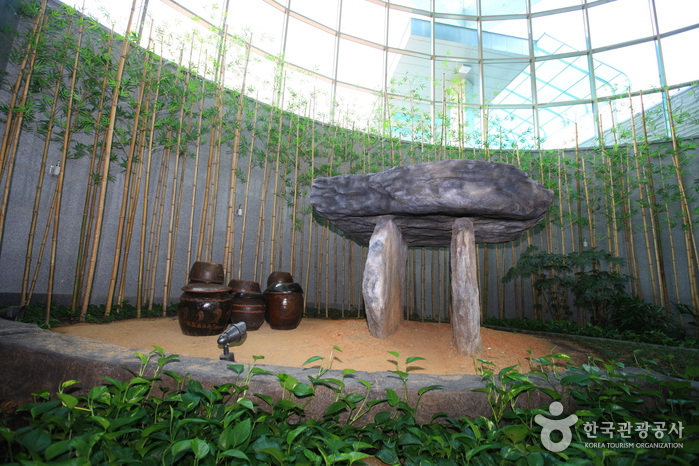
고창고인돌박물관은 청동기시대의 각종 유물 및 생활상과 세계의 고인돌문화를 한눈에 살펴볼 수 있다. 상설전시관은 전체 전시공간에 대한 관람정보와 상징전시 공간으로 구성하였다. 주제전시실의 전시내용을 압축해서 상징전시로 전시내용에 대한 관심과 흥미를 불러일으킴으로써 적극적인 관람 욕구를 유도하고 관람분위기를 조성하였다.
Dolmens are a representative burial style of the Bronze Age, with more than 30,000 known to be distributed across Korea. They are densely concentrated in the southwestern coastal areas of the Korean Peninsula, including Jeonnam and Jeonbuk. As of 2003, 2,632 dolmens in 424 clusters were known in Jeonbuk. Notably, as of 2023, Gochang-gun alone holds about 1,748 dolmens, over 65% of Jeonbuk’s total. The Gochang Dolmen Site is clustered around Joklim-ri, Sanggap-ri, and Dosan-ri, and was designated a UNESCO World Cultural Heritage Site in December 2000. It forms the largest single cluster in Korea, featuring various types of dolmens such as table-type, checkerboard-type, and open-type in one area. The site also includes a quarry that provides insight into dolmen construction processes, serving as important material for understanding the evolution of dolmens in Northeast Asia. The World Heritage Committee recognized its value based on criterion (iii) for being unique or exceptionally old. Gochang offers exploration courses: Course 1 to Course 5 cover 1.8 km around Joklim-ri of Gochang-eup and Sanggap-ri of Asan-myeon, and Course 6 covers 1.7 km in Dosan-ri of Gochang-eup, preserving the appearance of diverse dolmens from 3,000 years ago.
Good places to stop and rest after the course

Booking and payment continue on a partner site.
Check rooms & price
Booking and payment continue on a partner site.
Check rooms & priceSign up to feature your channel.
(As a member, you can add your Instagram, YouTube, and blog links in My Page, and we’ll show them with every comment you write.)
““Stayed near Hongdae and did a night café tour. Perfect city views and vibes.””
Guest comments do not display social media links or profile cards.
Share a short tip about this place.
Or leave a quick comment as a guest.
Photo attachments are available after login.
No reviews yet. Be the first to share your experience!



![Gochang Dolmen Site [UNESCO World Heritage] 1](https://tong.visitkorea.or.kr/cms/resource/20/3018320_image2_1.jpg)
![Gochang Dolmen Site [UNESCO World Heritage] 2](https://tong.visitkorea.or.kr/cms/resource/21/3018321_image2_1.jpg)
![Gochang Dolmen Site [UNESCO World Heritage] 3](https://tong.visitkorea.or.kr/cms/resource/23/3018323_image2_1.jpg)
![Gochang Dolmen Site [UNESCO World Heritage] 4](https://tong.visitkorea.or.kr/cms/resource/24/3018324_image2_1.jpg)