Walking the largest mountain fortress in Korea in Busan Dongrae-gu · schedule Other · distance 15.8km · 4 stops · highlights Chungnyeolsa, Geumgang Park…

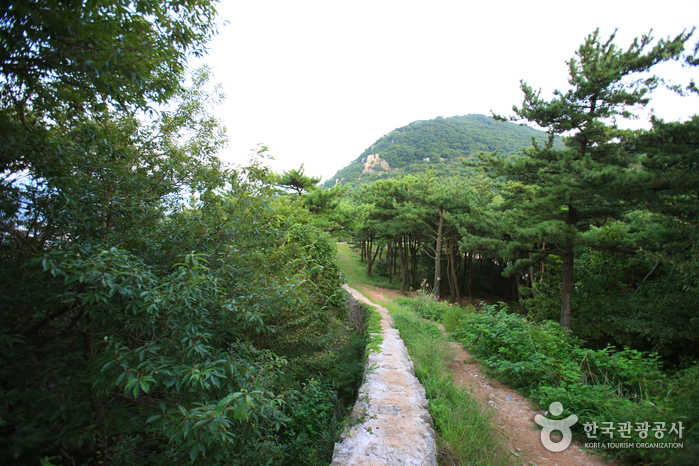
Walk along the longest mountain fortress in the country and discover the true nature of Geumjeongsan, a famous mountain protecting Busan. Geumjeongsanseong is a massive fortress stretching about 17,000 meters, connecting Dongnae, Yangsan, and Gijang. A popular route among many is taking the cable car from Geumgang Park to Geumjeongsan, starting at the South Gate, passing the First Watchtower, and descending to Sanseong Village.
This course is a sample one-day itinerary. Save it as-is or expand it into an AI itinerary.
Chungnyeolsa enshrines the memorial tablets of patriots who died defending the Busan area during the Imjin War, including Dongnae Magistrate Song Sang-hyeon, Busanjin Commander Jeong Bal, and Dadaejin Commander Yun Heung-sin. It was designated as a Busan Gwangyeok-si Tangible Cultural Asset on June 26, 1972. In 1605 (Seonjo 38), then-Dongnae Magistrate Yoon Hwon built Songgongsa at Nongjusan outside the south gate of Dongnae Eupseong to enshrine Song Sang-hyeon's tablet and hold annual rites. Following a memorial by Seonwisa Lee Min-gu, Songgongsa was renamed Chungnyeolsa in 1624 (Injo 2). In 1652 (Hyojong 3), Dongnae Magistrate Yoon Mun-geo relocated Chungnyeolsa to its current site (Allak-dong), building a lecture hall (Sojuldang) and east and west dormitories (boarding houses) in front of the shrine, naming it Allakseowon to teach future generations the patriotism and scholarship of the patriots led by Song Sang-hyeon. Despite Heungseon Daewongun's 1871 (Gojong 8) order to abolish seowons, Allakseowon was spared due to its unique establishment and still exists today. The current Chungnyeolsa was renovated in 1978 and includes the main shrine (Bonjeon), Uiyeolgak, a memorial hall, a purification monument, a monument with Song Sang-hyeon's famous sayings, and the Chungnyeol Tower. Annual rites are conducted by the city on May 25, and additional rites are held at Allakseowon within Chungnyeolsa on the lunar calendar dates of the 2nd and 8th month 중정일 (Jungjeongil).
This place was originally created by a Japanese merchant who made part of the Geumjeong Mountain foothills his private garden, and after liberation, it was designated as a park and named 'Geumgang Park.' The name 'Geumgang' comes from the mountain Geumjeong being so beautiful it was called 'So Geumgang,' meaning 'Little Geumgang,' referencing the famous Geumgang Mountain. Located in the city center, it is a park bustling with visitors throughout all four seasons and loved as a resting place anyone can enjoy. The park contains various cultural facilities including the Busan Folk Arts Hall, opened in September 1974 to discover, inherit, and promote the traditional folk arts of the Dongnae area, and the Busan Maritime Natural History Museum, Korea's first museum specializing in world maritime natural history. The Geumgang Park Cable Car is also a must-see attraction. Built in 1966, the cable car has operated for a long time, preserving its old red and yellow vintage appearance. Additionally, the park features sports facilities, the Imjin Dongnae Cemetery designated as Local Cultural Property Monument No. 13, and seven memorial monuments.
Uses directly cultivated ingredients such as wild greens, medicinal herbs, acorn jelly, and pesticide-free vegetables. Its menu includes unique traditional dishes designated as Busan local food, such as black goat charcoal grill, duck bulgogi, native chicken, Sanseong local wine, and pajeon, which are popular not only among Korean guests but also foreign visitors. To help customers improve their physical strength, it offers large exercise facilities including a 300-pyeong jokgu court and volleyball court, and has ample indoor parking space for about 30 cars for worry-free parking.
Geumjeongsanseong Fortress is built along the ridges and valleys on the top of Geumjeongsan Mountain. It was constructed as a refuge and resistance fortress by the Dongnae residents who suffered severe damage during the Imjin War. It is the largest mountain fortress in Korea. In 1707, Han Baeha, the Dongnae magistrate, built an inner fortress dividing it into northern and southern sections due to its wide area, and supplemented facilities such as watchtowers and armories. In 1806, Dongnae magistrate Oh Hanwon repaired the fortress, built a new east gate, constructed gatehouses at the west, south, and north gates, and stationed defense troops. There is a fortress village within Geumjeongsanseong where Sanseong Makgeolli, a traditional Korean folk rice wine, is produced. The village also has many restaurants and cafes, making it a good tourist spot for visitors to rest. To reach Geumjeongsanseong, visitors can use private cars or public buses.
Good places to stop and rest after the course

Booking and payment continue on a partner site.
Check rooms & price
Booking and payment continue on a partner site.
Check rooms & priceSign up to feature your channel.
(As a member, you can add your Instagram, YouTube, and blog links in My Page, and we’ll show them with every comment you write.)
““Stayed near Hongdae and did a night café tour. Perfect city views and vibes.””
Guest comments do not display social media links or profile cards.
Share a short tip about this place.
Or leave a quick comment as a guest.
Photo attachments are available after login.
No reviews yet. Be the first to share your experience!