Camping trip in a bamboo forest in Jeollanam-do Damyang County · schedule Other · distance 14km · 6 stops · highlights Gwanbangjerim, Juknokwon, Deokin-…

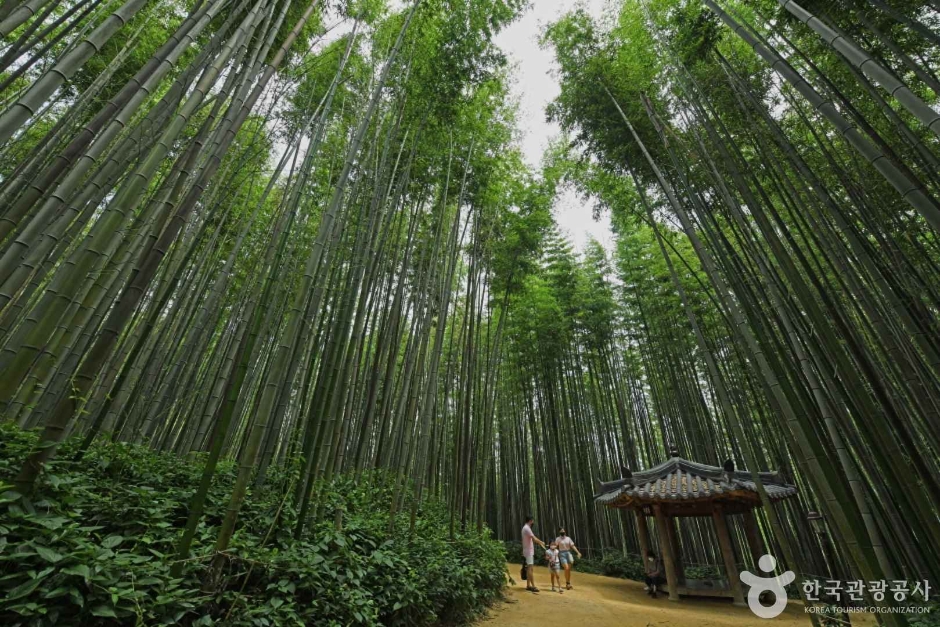
Damyang is known as the hometown of bamboo. You can fully enjoy bamboo-themed attractions such as Juknokwon, Daemokgol Theme Park, and the Bamboo Museum. Additionally, along the Yeongsangang River running through Damyang-eup, there are centuries-old Gwanbangjerim forest paths and the Metasequoia Road, known as one of the most beautiful roads in Korea, creating a journey where forests and paths blend together.
This course is a sample 2-day itinerary. Save it as-is or expand it into an AI itinerary.
Gwanbangje is an embankment on the Gwanbangcheon located from Namsan-ri Dongjeongja Village in Damyang-eup, passing through Subuk-myeon Hwanggeum-ri to Daejeon-myeon Gangui-ri, extending 6 km in length. It is famous because it forms a magnificent scenic forest along about 2 km. This forest is called Gwanbangjerim, covering an area of 49,228㎡ with trees estimated to be 300 to 400 years old densely growing there. Its beauty led to its designation as a natural monument on November 27, 1991, and in 2004 it won the grand prize at the 5th Beautiful Forest National Contest hosted by the Korea Forest Service. The main tree species include 111 Fraxinus rhynchophylla trees, 18 Zelkova trees, 9 cherry trees, 1 Amelanchier tree, 1 Carpinus tschonoskii, Gomui Malchae, and Quercus variabilis, totaling about 420 trees. Within the designated natural monument area, 185 old and large trees grow. Gwanbangjerim is also well-known as a summer retreat and a popular dating spot for young couples. Near Gwanbangjerim, the Chuseong Stadium is located on a floodplain, and in 2005 a sculpture park with folklore themes was established to add to the attractions. Gwanbangje was constructed and planted with trees by the magistrate Seong Iseong to control the water flow of Damyangcheon in the upper reaches of the Yeongsan River, and later in 1854 (5th year of King Cheoljong’s reign), magistrate Hwang Jongrim mobilized over 30,000 people with government funds to build it, hence the name Gwanbangje.
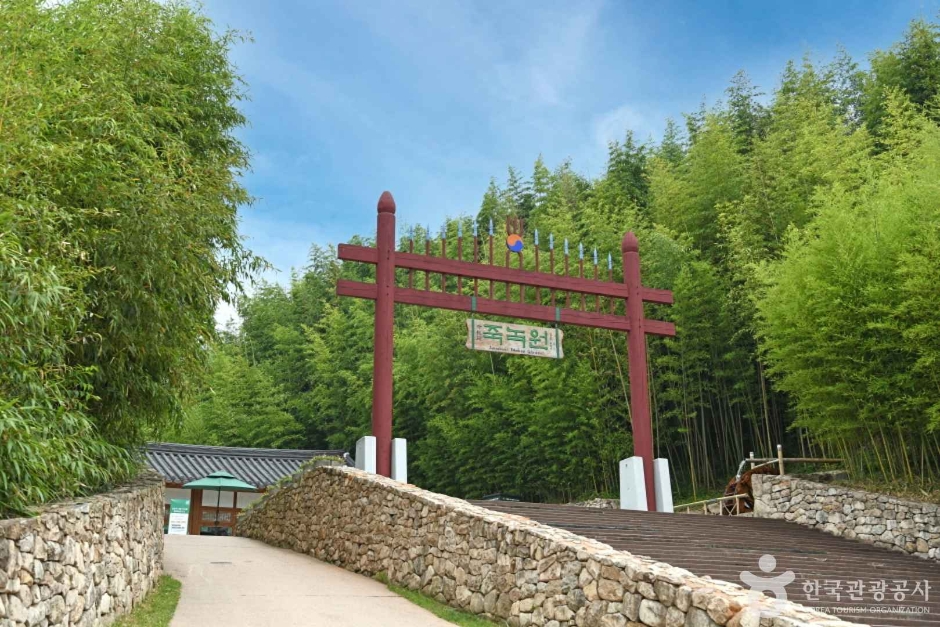
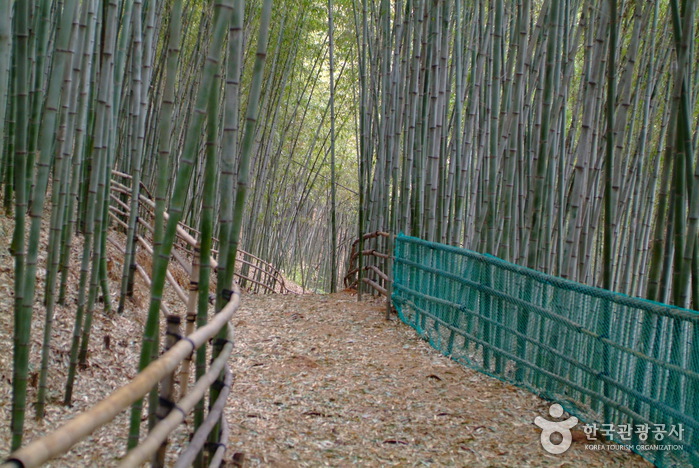
Juknokwon is a bamboo forest visible immediately to the left after passing Hyanggyo along Damyangcheon, the source of the Yeongsangang River, and Gwanbangjerim. It is a dense bamboo forest of about 160,000㎡, created by Damyang-gun around Seongan Mountain area and opened in May 2003. Climbing the stone steps at the entrance one by one, your stiff body relaxes, and the cool bamboo breeze refreshes your tired mind and body. Walking along the dense bamboo paths while hearing the rustling leaves feels refreshing as sunlight filters through the green bamboo leaves. Juknokwon is home to Jukrocha (竹露), a tea grown from dew that falls on bamboo leaves. After enjoying a bamboo forest bath, you can relax your mind with a cup of Jukrocha. There is a 2.2 km trail in Juknokwon for bamboo forest bathing, consisting of eight themed paths such as Unsudaetong-gil, Jukmagou-gil, and Philosopher's Path, all starting from Juknokwon Observatory. From the observatory, you can look down at Damyangcheon, the 300-year-old ancient trees of Gwanbangjerim in Damyang, and the famous Metasequoia tree-lined road. There is also an ecological exhibition hall, artificial waterfall, ecological pond, and outdoor performance hall, with lighting installed for nighttime strolls through the bamboo forest.
Deokin-gwan is a restaurant that opened in 1963 under the name 'Deokin Restaurant' and has continued its history for over 60 years. It is operated by Park Gyu-wan, designated as Korea Food Master No. 82 in the field of meat (garigui) production. Initially, it served traditional Korean set meals based on ribs, but it has now established itself as a restaurant specializing in tteokgalbi. It uses Korean beef cow ribs marinated in the master's secret sauce.
대나무골은 청정호수 담양호 중심으로 추월산과 고지산 골짜기에 부채살처럼 펼쳐진 분지에 자리 잡고 있다. 이곳은 약 30년 동안 대나무를 심고 관리한 대나무 숲으로 둘러싸여 아름다운 자연경관을 자랑한다. 봄이면 대밭에 땅심을 뚫고 치솟는 죽순은 장관을 이루고 텃새들이 찾아와 알을 품는 서식지이기도 하다.
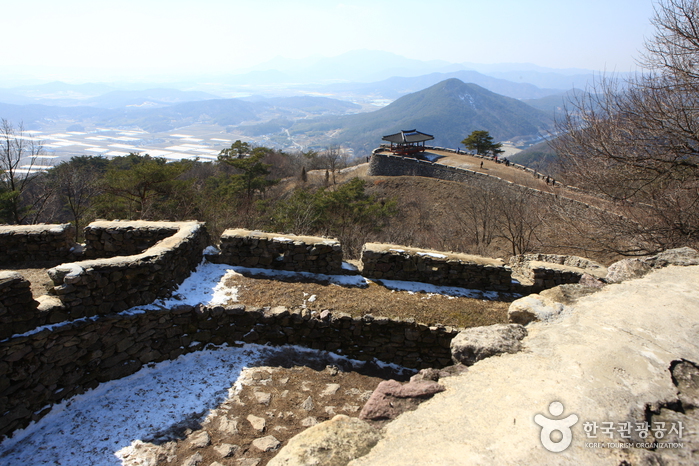
Geumseongsanseong, located on Geumseongsan mountain which forms the boundary between Geumseong-myeon of Damyang-gun and Sunchang-gun in Jeollabuk-do, is a stone fortress considered one of the three great mountain fortresses of Honam. It was first constructed during the Three Kingdoms period, and after the Imjin War, the fortress was repaired and an inner fortress was built. In the 4th year of King Hyojong’s reign, the fortress was restored with fortress tablets, establishing it as a strong military base. Inside were grain storehouses holding 16,000 seom (traditional grain measurement) of military provisions, and about ten government and military buildings including a guesthouse and Boguksa temple, but these burned down during the Donghak Peasant Movement. There are sites of the east, west, south, and north gates, and except for these four passages, the steep cliffs prevent access, providing excellent geographical defensibility. Due to these features, it became a militia stronghold along with Namwon Fortress during the Imjin War and saw fierce fighting during the 1894 Donghak Peasant Movement. From the summit, Damyang-eup and the plains are visible at a glance, along with Mudeungsan and Chuwolsan mountains, and Damyangho lake spreads below. Damyangho lake is an 11-minute vehicle ride from Geumseongsanseong and near Soryuji, the Damyang Geumseong Auto Camping Site offers camping opportunities.
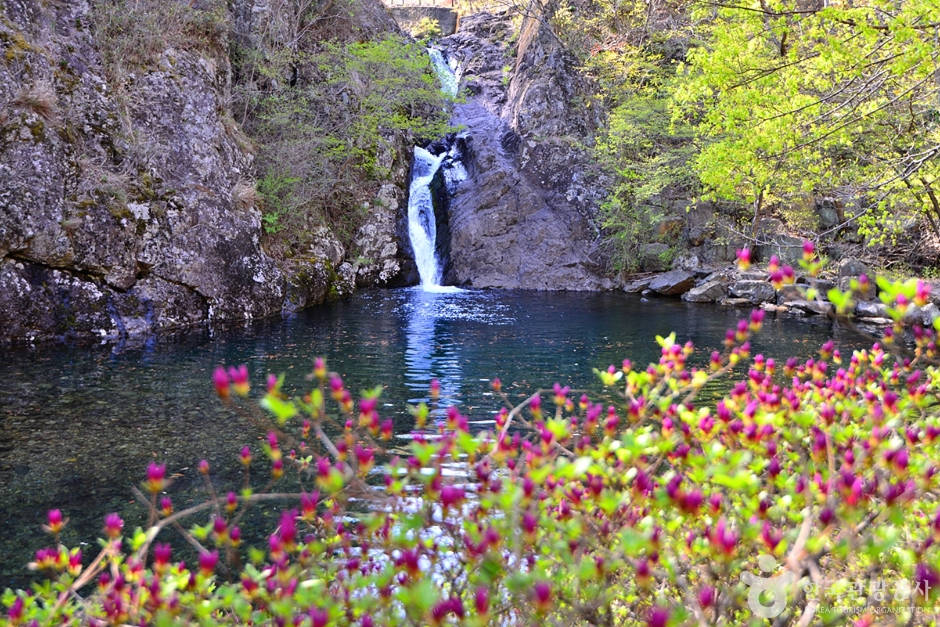
Gamagol Valley is located around Yongchubong (523m) in Yongyeon-ri, Yong-myeon, Damyang-gun, extending over 4 km in all directions. Although the mountain is not very high, the valley covers a wide area of 311,000㎡ with a beautiful landscape of clear water, rocky formations, and a dense forest. Along the valley from the entrance, you will find numerous big and small waterfalls and ponds that invite you to pause. The well-formed forest provides ample shade, and resting areas are conveniently placed along the way. Deeper inside along the valley road, there is the Gamagol Ecological Park, which requires an admission fee. Bathing is prohibited in the ecological garden, but water play is possible downstream in the Gamagol Valley. While the natural scenery is less prominent there, the paths are well paved, and camping sites, pensions, and restaurants are located nearby, allowing for lodging and meals alongside camping and water activities. Damyang Lake, where Gamagol Valley converges, is adjacent, with Damyang Resort about 16 km, a 20-minute drive away, and Damyang-eup about 24 minutes by car.
Good places to stop and rest after the course

Booking and payment continue on a partner site.
Check rooms & price
Booking and payment continue on a partner site.
Check rooms & priceSign up to feature your channel.
(As a member, you can add your Instagram, YouTube, and blog links in My Page, and we’ll show them with every comment you write.)
““Stayed near Hongdae and did a night café tour. Perfect city views and vibes.””
Guest comments do not display social media links or profile cards.
Share a short tip about this place.
Or leave a quick comment as a guest.
Photo attachments are available after login.
No reviews yet. Be the first to share your experience!